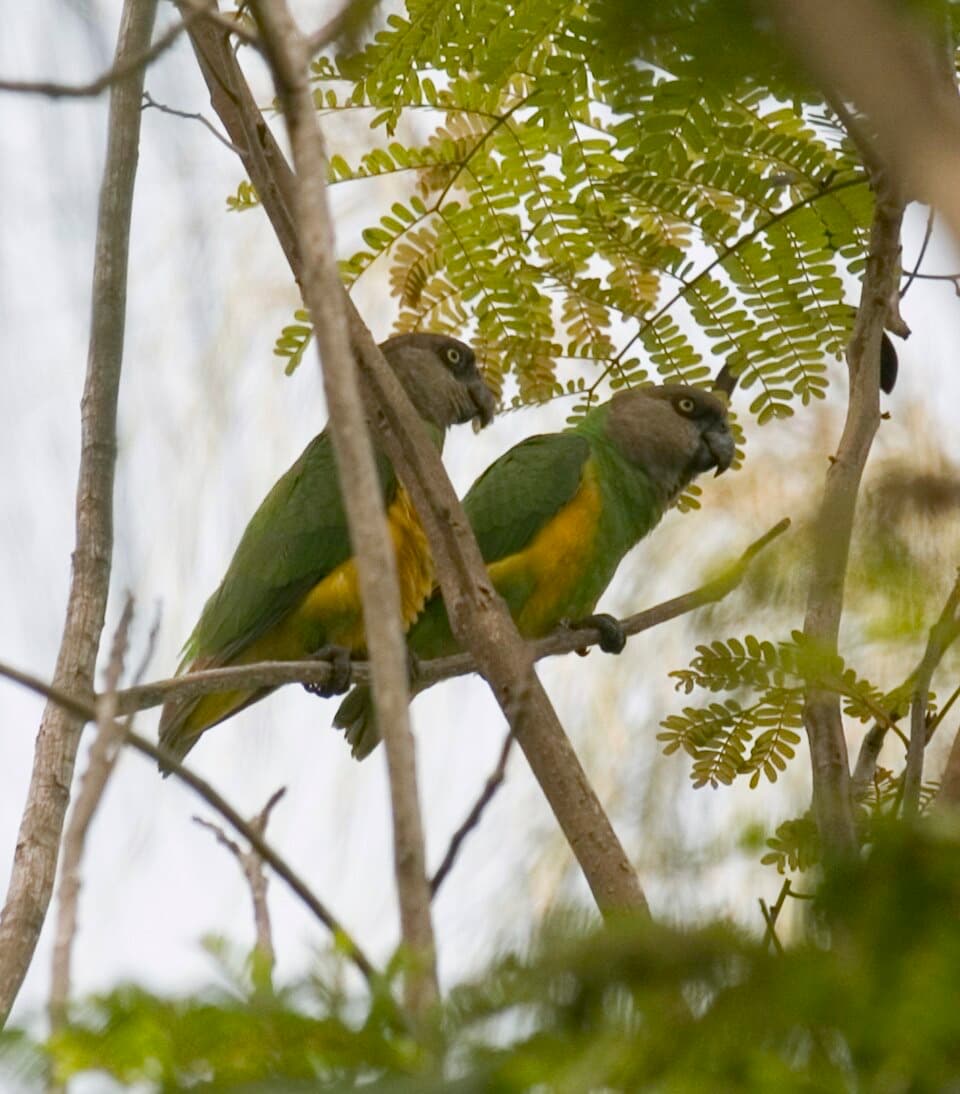
Senegal Parrot
Also known as Senegal, Yellow-bellied Senegal
- Adult size
- about 23 cm long, 120–170 g
- Lifespan
- 25–40 years
- Origin
- West Africa (Senegal to Cameroon and Chad)
- Company
- Tends to bond with one person; needs handling by the whole household
- Playful
- Curious
- Fairly Quiet
- Loyal
About the Senegal Parrot
The Senegal parrot is a compact, stocky parrot with a charcoal-grey head, green back and a yellow-to-orange 'vest' on its belly, found in savannah and open woodland across West Africa. It belongs to the Poicephalus group, which also includes Meyer's and red-bellied parrots.
Senegals offer a lot of personality in a medium-sized, relatively quiet bird, which makes them a popular choice for people who want a parrot but cannot cope with screaming. They are long-lived, often reaching 25 years or more.
Temperament
Senegals are playful, curious and often a little comical, lying on their backs and hanging upside down. They are known for bonding strongly to one person and can become jealous or nippy towards others if not handled by the whole household. Their vocal range is mostly whistles, clicks, beeps and a few words, with a sharp but not ear-splitting call. Some individuals are naturally cautious and need patience with new objects.
Cage & housing
Provide a cage of at least around 60 cm wide, 50 cm deep and 80 cm tall, with bar spacing of about 1.5–2 cm and a play stand for time outside. Senegals chew enthusiastically, so supply soft wood and plenty of toys. A position against a wall in the family room helps them feel secure. Keep them in a smoke-free home away from kitchen fumes.
Diet
Feed a pellet base with plenty of vegetables, greens and some fruit. Seeds and nuts work best as training rewards rather than a staple, as Senegals put on weight easily. They often enjoy cooked sweet potato, peas and corn. Avoid avocado, chocolate and caffeine.
Company & enrichment
Senegals are inventive foragers and enjoy puzzle toys, shreddable materials and small foot toys. Getting several family members to train and treat the bird helps prevent a one-person bond becoming a problem. Short, upbeat training sessions suit their attention span. Rotate toys weekly to keep them curious.
Nails, beak & bathing
Most enjoy a light misting or a dish bath. Nails can get sharp and may need trimming by an avian vet. Clean the cage and perches regularly.
Health
Senegals can develop respiratory infections and aspergillosis, a fungal infection of the airways, particularly in dusty or poorly ventilated homes or when vitamin A is lacking. Psittacine beak and feather disease affects Poicephalus parrots. Feather plucking and obesity can develop with boredom and seed-heavy diets. A yearly avian vet check is recommended.
Prone to
- Respiratory infections
- Aspergillosis
- Psittacine beak and feather disease
- Feather plucking
- Obesity
Call a vet if you notice
- Breathing difficulty or a change in voiceEmergency
- Fluffed and inactiveEmergency
- Feather plucking or abnormal feathers
- Weight gain or loss
- Change in droppings or appetite
A vet with experience of exotic pets is best placed to help. Find one before you need them.
Common questions
Are Senegal parrots good for flats?
They are among the quieter parrots and often suit flats, though they still whistle and call, especially in the morning and evening.
Do Senegal parrots talk?
Some learn a handful of words, but they are better known for whistles, clicks and sound effects such as microwave beeps.
Why does my Senegal only like one person?
Senegals naturally bond closely with one person. Having other family members offer treats, train and handle the bird helps it stay friendly with everyone.
Are Senegal parrots good for beginners?
They can be a reasonable first parrot for someone prepared to train consistently and give daily attention, though they still live for decades.
Written by the Petopedia editorial team to our editorial standards. General guidance, not veterinary advice.