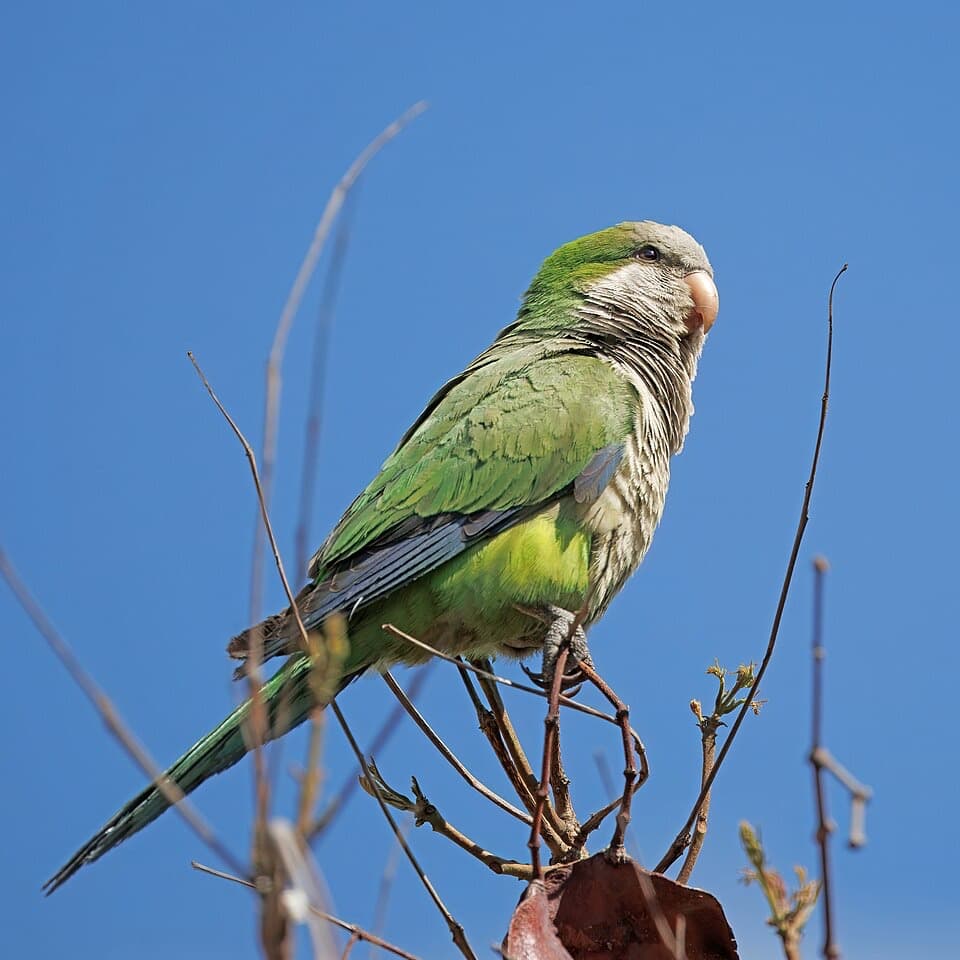
Quaker Parrot
Also known as Monk parakeet, Quaker parakeet
- Adult size
- 28–30 cm long, 90–150 g
- Lifespan
- 20–30 years
- Origin
- Temperate South America (Argentina, Uruguay, Paraguay, southern Brazil, Bolivia)
- Company
- Highly social; needs daily attention and involvement in family life
- Chatty
- Confident
- Industrious
- Territorial
About the Quaker Parrot
The quaker parrot, or monk parakeet, is a bright green parrot with a grey face and scalloped grey breast from the temperate grasslands and woodland of South America. Unlike almost all other parrots, wild quakers build large communal stick nests, sometimes with many separate chambers.
Their hardiness means escaped birds have founded feral colonies in many countries, sometimes building nests on electricity pylons. As a result, keeping, selling or breeding quakers is restricted or banned in some places, so check local rules before getting one.
Where they can be kept, quakers are popular for their talking ability and bold, comical character.
Temperament
Quakers are chatty, confident and highly vocal, often building a large vocabulary and using words in context. They can be fiercely protective of their cage and nest area, lunging at hands that reach in, even when they are gentle outside it. Their squawks are loud and grating, and many chatter for much of the day. Bored or stressed quakers may pluck or chew their own skin.
Cage & housing
Provide a cage of at least around 75 cm wide, 60 cm deep and 90 cm tall, with bar spacing of about 1.5–2 cm. Quakers love to rearrange their surroundings and will weave paper strips or twigs into the cage bars, so give them safe building materials but avoid closed nest boxes, which feed hormonal and protective behaviour. Two to three hours a day out of the cage on a play stand helps reduce cage aggression. As with any parrot, avoid using aerosols or heating non-stick pans near them.
Diet
Quakers are prone to obesity and fatty liver disease, especially on seed mixes rich in sunflower. Base the diet on pellets and add a generous daily portion of chopped vegetables and greens plus a little fruit. Cooked grains and pulses make good additions, and food hidden in paper parcels gives them extra work. Avocado and chocolate are poisonous.
Company & enrichment
Shredding and building are central to a quaker's day, so supply palm leaves, paper, cardboard and bird-safe twigs. They are quick learners and enjoy target training and word games. Training them to step out onto a perch rather than taking them from the cage can defuse territorial bites. Daily interaction keeps them tame and stops attention-seeking screaming.
Nails, beak & bathing
Quakers usually enjoy splashing in a shallow dish. Nails may need trimming. Wash food pots daily, as they often dunk food in their water.
Health
Obesity and fatty liver are common, and quakers are known for feather plucking and, in some birds, a more serious self-mutilation of the chest skin. Respiratory infections and psittacosis also occur. Weighing your bird regularly helps you spot problems early. An avian vet should investigate any plucking before it is assumed to be behavioural.
Prone to
- Obesity and fatty liver
- Feather plucking
- Self-mutilation
- Respiratory infections
- Psittacosis
Call a vet if you notice
- Breathing difficultyEmergency
- Open or bleeding wounds from self-bitingEmergency
- New feather plucking
- Weight gain or loss
- Change in droppings or appetite
A vet with experience of exotic pets is best placed to help. Find one before you need them.
Common questions
Why are quaker parrots illegal in some places?
Escaped quakers can form feral colonies, and some authorities treat them as a risk to crops or infrastructure. Rules vary between countries and regions, so check what applies where you live.
Do quaker parrots talk?
Many are excellent talkers and mimics, often picking up words quickly and using them in context.
Why does my quaker attack my hand in its cage?
Quakers are naturally protective of their nest area. Training the bird to step out by itself, removing nesting sites and handling it away from the cage usually helps.
Are quaker parrots loud?
Yes. Their squawks are harsh and frequent, though usually less ear-piercing than a sun conure's.
Written by the Petopedia editorial team to our editorial standards. General guidance, not veterinary advice.