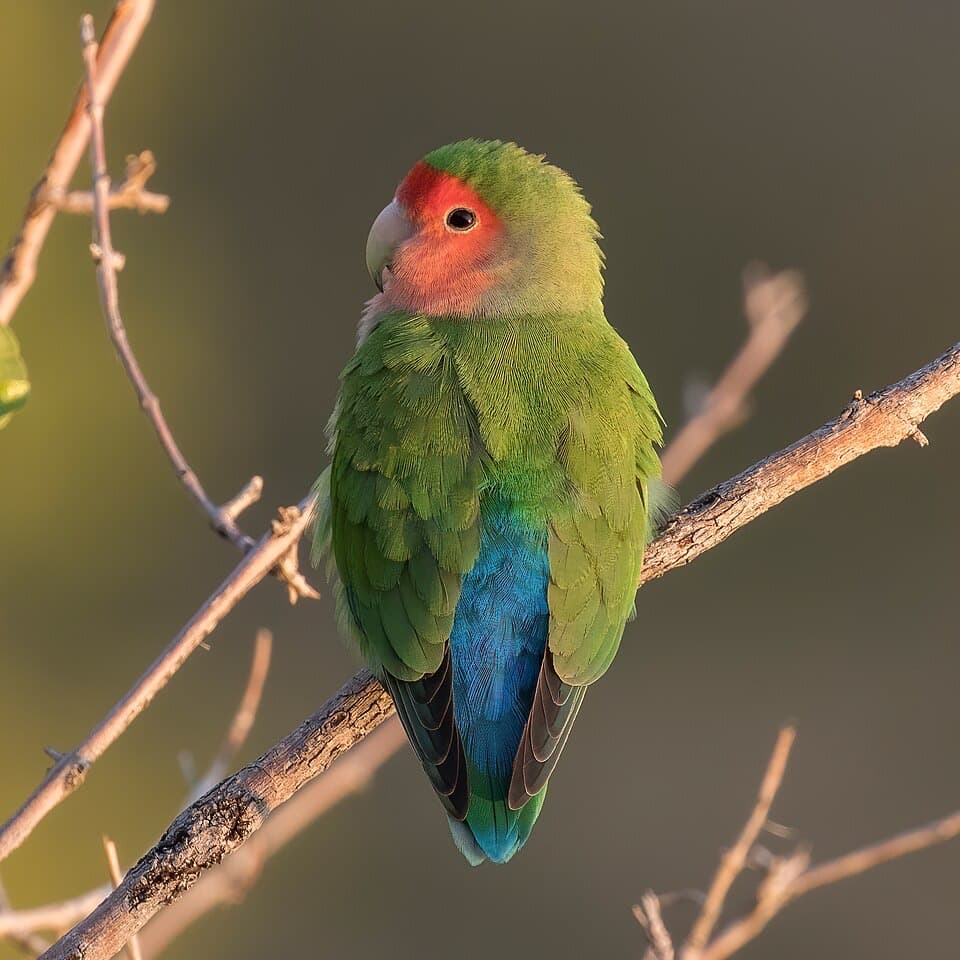
Lovebird (Peach-faced and Fischer's)
Also known as Rosy-faced lovebird, Peach-faced lovebird, Fischer's lovebird, Agapornis
- Adult size
- 13–17 cm long, 40–60 g
- Lifespan
- 10–15 years
- Origin
- South-western Africa (peach-faced); Tanzania (Fischer's)
- Company
- Pair or single with lots of attention; does not mix well with other species
- Feisty
- Energetic
- Loyal
- Mischievous
About the Lovebird (Peach-faced and Fischer's)
Lovebirds are small, stocky African parrots with short tails and big personalities. The peach-faced (rosy-faced) lovebird from Namibia and nearby regions and Fischer's lovebird from Tanzania are the two species most often kept as pets.
Despite their name, lovebirds can be feisty and territorial. They need plenty of attention, a spacious cage and careful introductions if kept with other birds.
Temperament
Lovebirds are energetic, bold and often surprisingly bossy for their size. A single hand-tame bird can bond closely with one person, while a pair tends to focus on each other but stays more confident. Many become nippy or territorial around their cage, especially hens in breeding condition. They can be aggressive towards other bird species and should not be housed with them.
Cage & housing
Provide a cage of at least around 60 cm long for one or two birds, with bar spacing of about 1–1.2 cm. Include natural branches, rope perches and plenty of chew toys, but avoid nest boxes unless you intend to breed, as they trigger hormonal behaviour. Keep them in a warm, draught-free room. Allow daily supervised time out of the cage.
Diet
Feed a quality pellet or a pellet and seed mix as a base, with daily fresh vegetables and greens. Lovebirds love to shred food, so offering whole pieces of vegetable or millet hung from the cage provides both nutrition and play. Fruit can be offered in small amounts. Avoid avocado, chocolate, caffeine, alcohol and salty foods.
Company & enrichment
Lovebirds are compulsive chewers and need a steady supply of paper, cardboard, palm leaf and soft wood toys. Hens may tuck strips of paper into their rump feathers to carry nesting material, which is normal. Foraging toys and puzzle feeders help burn energy. Gentle daily handling and target training keep single birds tame.
Nails, beak & bathing
Most lovebirds enjoy bathing in a shallow dish. Nails and beak usually stay trim with chew toys and varied perches. Clean dishes daily and replace shredded toys regularly.
Health
Lovebirds can suffer from psittacine beak and feather disease and polyomavirus, which are serious viral infections, so buying from a tested, reputable source matters. Feather plucking can develop from stress or boredom, and hens may lay eggs even without a mate, risking egg binding. Respiratory and liver disease are also seen. An avian vet can screen new birds for infections.
Prone to
- Psittacine beak and feather disease
- Polyomavirus
- Feather plucking
- Egg binding
- Chlamydiosis (psittacosis)
- Bite injuries from cage mates
Call a vet if you notice
- Fluffed up and inactiveEmergency
- Bleeding from a bite woundEmergency
- Straining to layEmergency
- Abnormal feather growth or loss
- Discharge from eyes or nostrils
A vet with experience of exotic pets is best placed to help. Find one before you need them.
Common questions
Do lovebirds die if kept alone?
No, that is a myth. A single lovebird can live a full life if it gets a great deal of daily attention, but a pair is often happier when owners are out at work.
Can lovebirds live with budgies or cockatiels?
It is not recommended. Lovebirds can be aggressive and may injure larger or smaller birds, even through cage bars.
Are lovebirds noisy?
They make frequent high-pitched chirps, especially in the morning and evening. They are not as loud as larger parrots but can be persistent.
Written by the Petopedia editorial team to our editorial standards. General guidance, not veterinary advice.