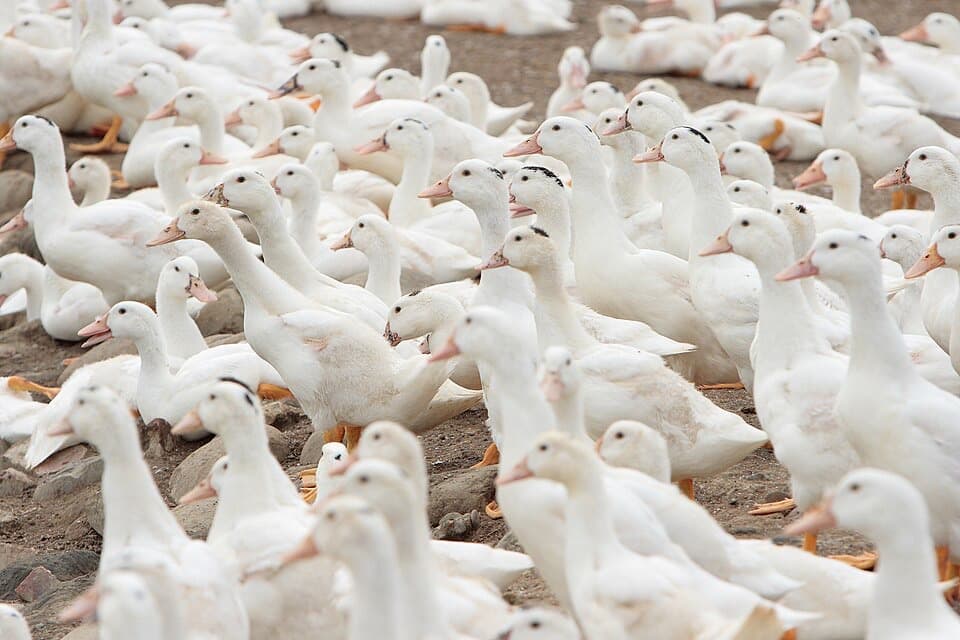
Pet Ducks
Also known as Domestic duck
- Adult size
- Varies by breed; call ducks around 0.5–1 kg, large breeds 3–5 kg
- Lifespan
- 8–12 years
- Origin
- Domesticated mainly from the mallard (and Muscovy duck in South America)
- Company
- Keep in pairs or groups; more females than males
- Social
- Messy
- Curious
- Hardy
About the Pet Ducks
Most domestic ducks descend from the wild mallard, while the Muscovy duck was domesticated separately in South America. Breeds range from small call ducks to large egg-laying and table breeds.
Ducks can be charming garden pets but are messy, need water to dip their heads and bathe in, and require secure housing from predators. Rules on keeping poultry may also apply to ducks in some countries.
Temperament
Ducks are social and should be kept in pairs or groups. Many become tame and follow their owners. Drakes can be pushy with females, so a ratio of more females than males is usually recommended. Call ducks are especially loud.
Cage & housing
Ducks need a secure house at night with dry bedding, and a predator-proof run by day. They need water deep enough to dip their whole head to keep eyes and nostrils clean, and ideally a pond or tub for bathing. Water must be cleaned often as it gets dirty quickly. Ducks do not usually roost on perches.
Diet
Feed a complete waterfowl or duck ration, with grit. Ducklings should not be fed medicated chick crumbs unless a vet advises it. Greens and insects are welcome extras. Clean drinking water should be on offer at all times with food.
Company & enrichment
Swimming, dabbling and foraging are their main activities. Scatter greens in water to encourage natural feeding. Allow time in a secure garden. Ducks enjoy company of their own kind.
Nails, beak & bathing
Ducks clean themselves with water. Check feet for injuries and keep bedding dry to prevent bumblefoot. Clean water containers and ponds regularly.
Health
Ducks can suffer from bumblefoot, angel wing in young birds fed too much protein, egg binding and worms. Avian influenza can affect ducks and may lead to housing orders in some places. Keep housing dry and clean. A vet experienced with poultry or waterfowl is valuable.
Prone to
- Bumblefoot
- Angel wing
- Egg binding
- Worms
- Avian influenza (notifiable in many countries)
Call a vet if you notice
- Sudden deaths or several sick birds — ; may need reportingEmergency
- Straining to layEmergency
- Lameness or swollen feet
- Eyes crusted or closed
- Wing feathers sticking outward in young birds
A vet with experience of exotic pets is best placed to help. Find one before you need them.
Common questions
Do ducks need a pond?
They need water deep enough to dip their heads, and ideally a pond or tub for bathing.
How many ducks should I keep?
At least two, and more females than males.
Are ducks noisy?
Female ducks quack loudly; call ducks are especially loud. Drakes are generally quieter.
Written by the Petopedia editorial team to our editorial standards. General guidance, not veterinary advice.