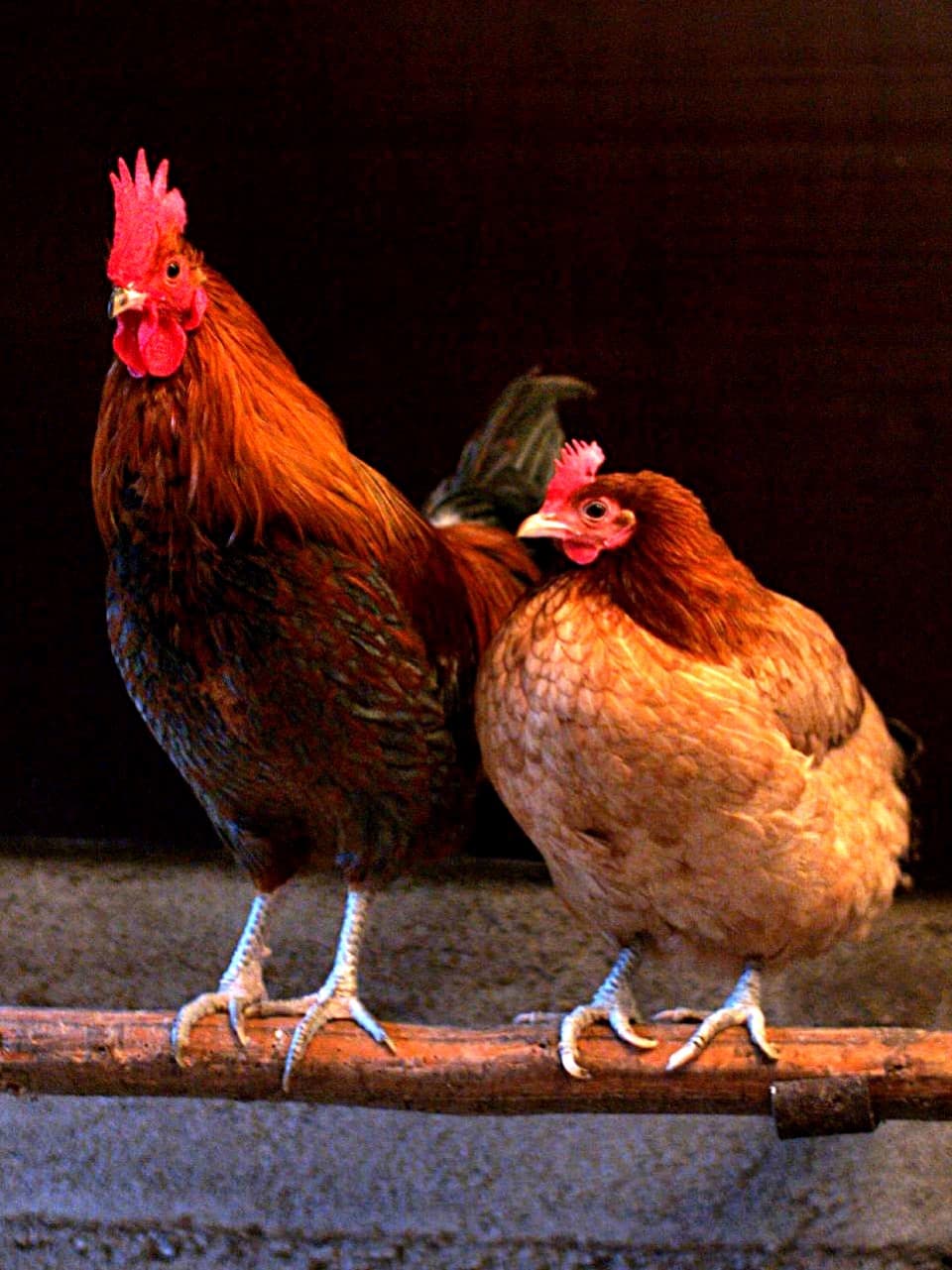
Backyard Chickens
Also known as Hens, Domestic chicken, Laying hens
- Adult size
- Varies by breed; bantams around 0.5–1 kg, large breeds 2.5–4 kg or more
- Lifespan
- 5–10 years
- Origin
- Domesticated in Asia from the red junglefowl
- Company
- Flock animals; keep at least three hens together
- Curious
- Sociable
- Busy
- Hardy
About the Backyard Chickens
Chickens descend mainly from the red junglefowl of South and South-East Asia and have been kept by people for thousands of years. Keeping a small flock of hens in a garden is popular for eggs, pest control and companionship.
Hens are sociable, curious animals with individual personalities, but they need secure housing, daily care, regular parasite checks and a plan for their non-laying years. Many countries have rules on keeping poultry, including registration in some places, so check local rules before you start.
Temperament
Hens are social and live in a strict pecking order, so they should always be kept in groups of at least three. Many become tame and enjoy being handled or following their owners around the garden. Cockerels are noisy and can be aggressive, and are often not allowed in residential areas. Breeds vary from docile to flighty.
Cage & housing
A secure coop with perches, nest boxes and good ventilation is essential, along with a predator-proof run. Foxes, rats, birds of prey and dogs are major threats, so lock hens in at night and use strong mesh, buried or skirted at the base. Allow as much outdoor space as possible; cramped hens are more likely to peck each other. Keep the coop dry and clean to reduce disease and parasites.
Diet
Feed a complete layer ration as the main diet, with grit available for digestion and oyster shell for extra calcium if needed. Kitchen scraps and treats should be limited, and some countries restrict feeding kitchen waste to poultry, so check local rules. Fresh water must always be available. Avoid mouldy food and avocado.
Company & enrichment
Hens love scratching, dust bathing and foraging, so provide a dry dust bath area and scatter grain or greens to encourage natural behaviour. Perches at different heights and objects to explore reduce boredom. Free-ranging in a secure garden is ideal. Handling young birds often makes them tamer.
Nails, beak & bathing
Hens keep themselves clean by dust bathing. Check feet, feathers and vents regularly for mites, lice and injuries. Clean out bedding regularly and check perches and crevices for red mite, which hide in the coop by day.
Health
Red mite is a common and serious pest that feeds on hens at night and can cause anaemia. Other problems include worms, egg peritonitis, respiratory infections, bumblefoot and crop disorders. Avian influenza outbreaks may lead to housing orders or other rules in some countries, so stay informed about local guidance. A vet experienced with poultry is worth finding before you need one.
Prone to
- Red mite
- Worms
- Egg peritonitis
- Respiratory infections
- Bumblefoot
- Crop impaction or sour crop
- Avian influenza (notifiable in many countries)
Call a vet if you notice
- Sudden deaths or several sick birds at once — ; may need reportingEmergency
- Straining without passing an eggEmergency
- Breathing difficulty or swollen face
- Pale comb or weight loss
- Lameness or swollen feet
- Swollen or squishy crop that does not empty overnight
A vet with experience of exotic pets is best placed to help. Find one before you need them.
Common questions
How many hens should I keep?
At least three, as hens are social and need companions. More hens need more space.
Do I need to register my chickens?
In some countries, poultry keepers must register even small flocks. Check your local rules.
Do hens need a cockerel to lay eggs?
No. Hens lay without a cockerel; eggs will simply be unfertilised.
How do I get rid of red mite?
Thorough cleaning of the coop, checking crevices and perches, and using treatments recommended by a vet are needed. Prevention through regular checks is important.
Written by the Petopedia editorial team to our editorial standards. General guidance, not veterinary advice.