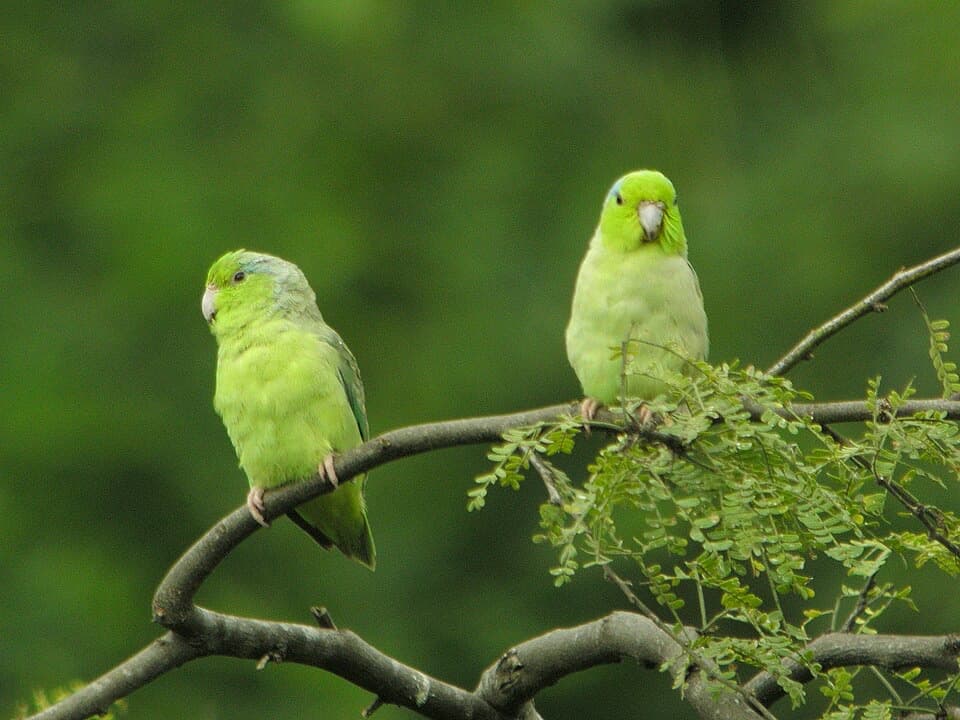
Pacific Parrotlet
Also known as Celestial parrotlet
- Adult size
- 11–14 cm long, 25–35 g
- Lifespan
- 15–20 years
- Origin
- Western Ecuador and north-western Peru
- Company
- Bonds well as a single bird with daily handling; never house with other species
- Feisty
- Confident
- Quiet
- Territorial
About the Pacific Parrotlet
The Pacific parrotlet is one of the smallest parrots kept as a pet, from the dry forest and scrub of western Ecuador and Peru. Males have cobalt blue on the rump, wings and a streak behind the eye, while females are mostly green, sometimes with a faint blue eye streak.
Breeders have produced blue, yellow, grey and other colour mutations. Whatever the colour, parrotlets have the attitude of a much larger parrot squeezed into a bird that weighs about as much as a few coins.
Their quiet voices make them a sensible choice for flats, but they need daily handling to stay tame and should never be housed with other bird species.
Temperament
Parrotlets are bold, confident and quick to defend what they see as theirs, especially their cage, a favourite person or a food bowl. A single hand-tame bird usually becomes very affectionate and likes riding on shoulders or hiding in a pocket, but it can revert to biting if handling stops for a few weeks. Pairs often bond so tightly to each other that they lose interest in people. Their calls are soft, chirpy tweets rather than screams.
Cage & housing
One bird needs a cage of at least around 45 cm in each direction, though wider is better, with bar spacing of about 1 cm. Letting the parrotlet step out on its own, rather than reaching in, reduces cage-guarding bites. Supervised time out of the cage each day is important; their small size makes doors, other pets and open water risky. Fumes from heated non-stick pans, aerosols and candles can overwhelm such a small bird very quickly.
Diet
Offer a small-sized pellet or a pellet and small parrot seed mix as a base, with finely chopped vegetables, leafy greens and sprouted seed daily. Parrotlets eat a surprising amount for their size and can drop weight fast if they stop eating, so a sudden loss of appetite is serious. Fruit can be offered in small pieces. Avocado and chocolate are poisonous to them.
Company & enrichment
Small foot toys, bells, paper to shred and miniature foraging puzzles suit their busy beaks. Short daily training sessions, using a tiny piece of millet as a reward, keep single birds tame and confident. Varied perch sizes and textures exercise their feet. Supervised floor or table-top play is a favourite.
Nails, beak & bathing
Offer a shallow bath several times a week; a few wet lettuce leaves in a dish often prompt an enthusiastic roll. Their tiny nails catch on fabric and may need careful trimming by an avian vet. Replace cage liners every few days.
Health
Injuries from fights are a real risk: parrotlets can attack much larger birds and often come off worse, with damaged beaks, toes or feet. Hens may lay eggs without a mate and can become egg-bound. Psittacosis, polyomavirus and respiratory infections also occur. A small bird can go downhill within hours, so act on signs of illness the same day.
Prone to
- Fight injuries to beak, toes and feet
- Egg binding
- Respiratory infections
- Psittacosis
- Polyomavirus
Call a vet if you notice
- Fluffed up and sleepyEmergency
- Bleeding from a beak or toe injuryEmergency
- Hen straining or sitting on the floorEmergency
- Not eating for even part of a day
- Breathing with a click or tail bob
A vet with experience of exotic pets is best placed to help. Find one before you need them.
Common questions
Are parrotlets good for flats?
Usually yes. Their calls are soft chirps, much quieter than conures or larger parrots, though they still make some noise.
How can I tell a male parrotlet from a female?
In the normal green colour, adult males have bright blue on the rump and wings and a blue streak behind the eye. Females are mainly green. Colour mutations can be harder to sex, and DNA testing is reliable.
Can a parrotlet live with a budgie or cockatiel?
It is not recommended. Parrotlets can be surprisingly aggressive and may attack larger birds, often getting badly hurt themselves.
Do parrotlets talk?
Some males learn a few words in a small, quiet voice, but many never talk.
Written by the Petopedia editorial team to our editorial standards. General guidance, not veterinary advice.