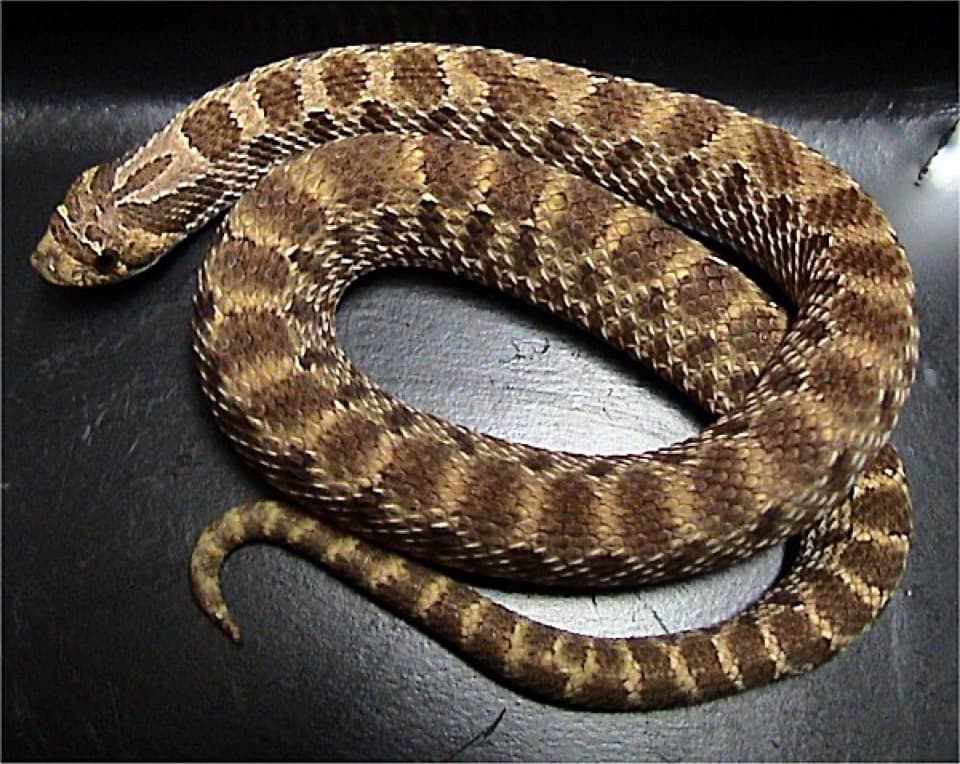
Western hognose snake
Also known as Hognose, Plains hognose snake, Heterodon nasicus
- Adult size
- Females 60–90 cm, males 40–60 cm
- Lifespan
- 15–20 years
- Origin
- Great Plains of North America, from southern Canada to northern Mexico
- Company
- Kept alone
- Theatrical
- Stout
- Burrowing
- Bluffing
About the Western hognose snake
The western hognose is a small, stout snake with an upturned snout used for digging in sandy and gravelly soils. It is famous for a dramatic defence display: hissing, flattening its neck and, if that fails, rolling over and playing dead with its mouth open.
Hognose snakes are rear-fanged and produce a mild venom used to subdue prey. Bites to people are uncommon and usually cause no more than local swelling, but anyone bitten who has a reaction should seek medical advice. Taxonomy is debated, with some authorities splitting the species.
Temperament
Despite their theatrical defensive behaviour, hognoses rarely bite defensively. Most become calm with handling, though young snakes often hiss and bluff. Bites are more likely during feeding when the snake mistakes a hand for food.
Enclosure, heat & light
Adult females, which are much larger than males, need at least around 90 x 45 x 45 cm, while males can live in slightly less. Provide a warm end and cool end with a thermostat-controlled heat source, checked with a thermometer. A deep, loose substrate for burrowing is important, along with hides at both ends and a shallow water bowl. Low-level UVB with shade is a reasonable addition.
Diet
Captive-bred hognoses usually eat frozen-thawed rodents, though some are picky and may need scenting with other prey. In the wild they eat toads, frogs and lizards. Juveniles are fed about weekly and adults every 7–14 days. They are prone to obesity, so feed appropriately for size.
Enrichment & handling
Deep substrate for digging is the most important enrichment. Leaf litter, cork bark and hidden food help encourage foraging. Handle low and gently; a hognose playing dead should be left alone to recover.
Shedding & hygiene
They shed in one piece, and a slightly humid hide helps with stubborn sheds. Spot-clean waste and refresh water. Wash your hands after handling.
Health
Common issues include obesity, feeding refusal, retained shed and respiratory infection. Some hognoses fast for long periods in winter, which can be normal if they are not losing weight. A vet visit is needed if weight drops or illness is suspected.
Prone to
- Obesity
- Feeding refusal
- Retained shed
- Respiratory infection
Call a vet if you notice
- Steady weight loss during a fast
- Open-mouth breathing or mucus
- Swelling around the mouth
- Repeated regurgitation
- Unresponsive for a long time after playing deadEmergency
A vet with experience of exotic pets is best placed to help. Find one before you need them.
Common questions
Are western hognose snakes venomous?
They have mild venom delivered through rear fangs, mainly for subduing prey. Bites to people are rare and usually cause only mild local effects, but seek medical advice if you react.
Why does my hognose play dead?
Playing dead is a defence behaviour. Leave the snake alone in a quiet place and it should recover on its own.
Are hognose snakes good for beginners?
Captive-bred hognoses are often recommended to beginners because of their small size and calm nature. Some can be picky eaters, which is the main challenge.
Written by the Petopedia editorial team to our editorial standards. General guidance, not veterinary advice.