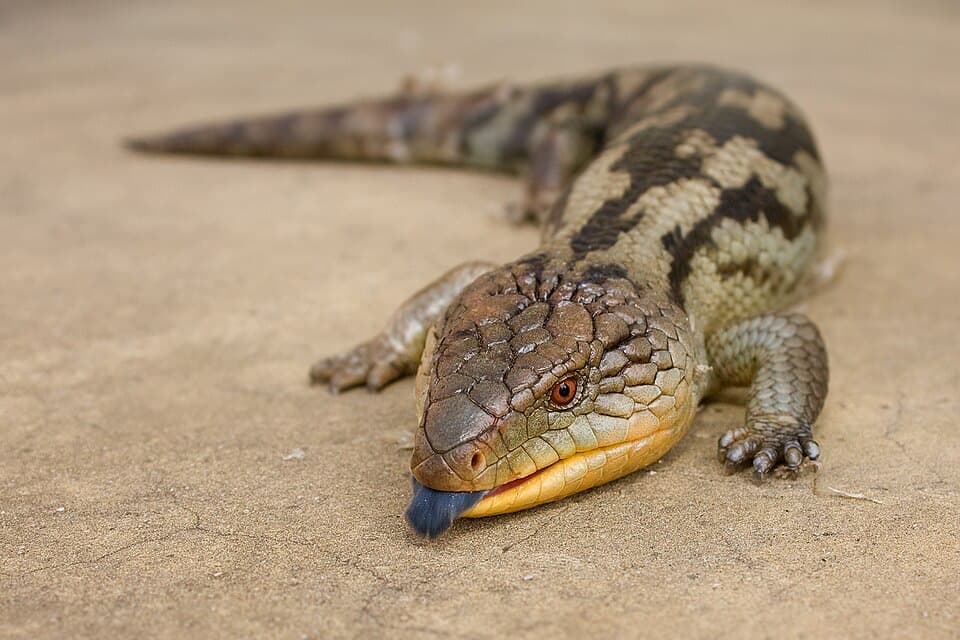
Blue-tongued skink
Also known as Blue-tongue, Bluey, Tiliqua
- Adult size
- 45–60 cm long
- Lifespan
- 15–20 years
- Origin
- Australia, New Guinea and parts of Indonesia
- Company
- Strictly solitary; adults fight if housed together
- Calm
- Robust
- Inquisitive
- Diurnal
About the Blue-tongued skink
Blue-tongued skinks are heavy-bodied, short-legged lizards that flash a vivid blue tongue to startle predators. Several species and subspecies are kept, with the northern blue-tongue from Australia and various Indonesian forms among the most common in the pet trade.
They are valued as robust, personable lizards that usually become relaxed with handling. They eat a varied omnivorous diet and are fairly forgiving, but they are large animals that need a spacious, heated floor-level enclosure and UVB for the long term.
Temperament
Captive-bred blue-tongues are typically calm and steady, though young skinks may hiss and puff up at first. Indonesian imports can be more defensive, at least initially. They are active by day and enjoy exploring, but they can bite hard if they mistake fingers for food.
Enclosure, heat & light
An adult needs a long, floor-based vivarium of at least 120 x 60 x 60 cm, with more floor space preferred. Provide a warm basking end and a cool end, controlled by a thermostat and checked with a thermometer, plus UVB across part of the enclosure. Australian species generally like moderate humidity, while Indonesian types need it higher, so find out which kind you have. A deep soil or bark-based substrate lets them burrow, and solid hides at both ends help them feel secure.
Diet
Blue-tongues are omnivores and do well on a mix of leafy greens and vegetables, some fruit, and animal protein such as gut-loaded insects, snails and occasional lean cooked meat or egg. Many keepers aim for more vegetables than protein in adults to avoid obesity. Dust food with calcium and provide a multivitamin as directed. Adults are usually fed a few times a week rather than daily.
Enrichment & handling
Burrowing substrate, logs to climb over and scattered food encourage foraging. Supervised time on a clean floor or outdoors on warm days, safely contained, adds variety. Lift with both hands under the body and wash hands before handling so food smells do not tempt a bite.
Shedding & hygiene
Skinks shed in patches; a humid hide or occasional shallow soak helps if pieces stick. Clean droppings and uneaten fresh food daily, as both spoil quickly. Wash your hands well after handling and keep the skink away from kitchen surfaces.
Health
Common problems include obesity, metabolic bone disease, respiratory infections in damp or cold conditions, retained shed and mouth rot. Indonesian skinks may carry parasites if wild-caught. An exotics vet can run a faecal test and advise on correct humidity for your type.
Prone to
- Obesity
- Metabolic bone disease
- Respiratory infection
- Retained shed
- Mouth rot
- Intestinal parasites
Call a vet if you notice
- Open-mouth breathing, wheezing or mucus
- Swelling, redness or cheesy material in the mouth
- Weakness or difficulty lifting the body
- Refusing food for more than a few weeks with weight loss
- Tissue protruding from the vent, or blood in droppingsEmergency
A vet with experience of exotic pets is best placed to help. Find one before you need them.
Common questions
Are blue-tongued skinks good pets for beginners?
Captive-bred skinks are among the more forgiving larger lizards and are often recommended to committed beginners. The main demands are space, UVB and a balanced omnivorous diet.
Do blue-tongued skinks bite?
They can and the bite is strong, but most bites happen when a skink mistakes a hand for food. Washing hands and avoiding feeding by hand reduces the risk.
Do blue-tongued skinks need UVB?
Yes, UVB is strongly recommended for calcium metabolism and overall health. Use a suitable reptile UVB light with a basking area and replace it on schedule.
Can blue-tongued skinks eat dog food?
Some keepers have historically used it, but it is not designed for reptiles and is easy to overfeed. A varied diet of vegetables, greens and appropriate animal protein is preferable, and a vet can advise if you are unsure.
Written by the Petopedia editorial team to our editorial standards. General guidance, not veterinary advice.