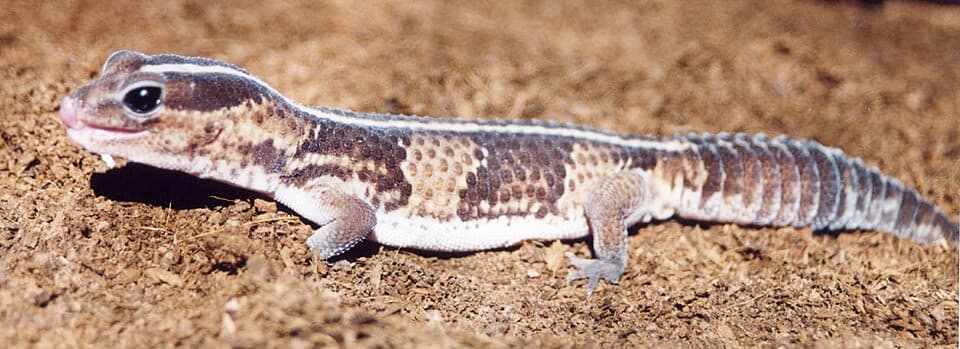
African fat-tailed gecko
Also known as Fat-tailed gecko, Hemitheconyx caudicinctus
- Adult size
- 18–23 cm long
- Lifespan
- 15–20 years
- Origin
- West Africa, from Senegal to Cameroon
- Company
- Best kept alone; males must never be housed together
- Placid
- Shy
- Nocturnal
- Sturdy
About the African fat-tailed gecko
The African fat-tailed gecko is a close relative of the leopard gecko, with the same eyelids and lack of climbing pads, but a softer look, a rounder head and warm brown banding. It comes from savanna and dry woodland in West Africa and spends much of the day under cover.
It is often described as a slightly shyer and more humidity-loving cousin of the leopard gecko. Captive-bred animals are increasingly available, but some imported stock still enters the trade, and wild-caught animals can carry parasites, so ask about origin when buying.
Temperament
Fat-tailed geckos are usually placid and slow, though often more retiring than leopard geckos. They spend daylight hours hidden and emerge at dusk to hunt. With patient, gentle handling many become comfortable resting on a hand.
Enclosure, heat & light
A single adult needs a ground-level vivarium of at least around 90 x 45 x 45 cm with a warm side and a cooler side, controlled by a thermostat and checked with a thermometer. They like somewhat more humidity than leopard geckos, so a damp moss hide is essential and a soil-based substrate that holds a little moisture works well. Provide several hides across the temperature range and low-level UVB with plenty of shade if you choose to include it. Avoid loose sand, which can be swallowed with food.
Diet
They eat live insects such as crickets, roaches, locusts and calci-worms, with fattier worms as occasional extras. Gut-load insects before feeding and dust them with calcium, adding a multivitamin regularly. Young geckos feed most days and adults every two to three days, with tail thickness a handy guide to condition.
Enrichment & handling
Cork bark, flat stones and leaf litter give a fat-tailed gecko places to explore without feeling exposed. Feeding at dusk with live insects lets it stalk prey naturally. Keep handling short and low to the ground until it is relaxed, and never grab the tail, which can drop off when the gecko is startled.
Shedding & hygiene
Shedding is easier with a humid hide; check the toes and tail tip for leftover skin. Clean droppings promptly and refresh damp moss before it sours. Always wash your hands after contact with the gecko or its enclosure.
Health
Recognised problems include retained shed in dry set-ups, metabolic bone disease, parasites in imported animals and tail loss. A faecal test at an exotics vet is sensible for any newly bought gecko. Watch for weight loss in the tail, which is often the first visible sign of illness.
Prone to
- Retained shed
- Metabolic bone disease
- Intestinal parasites
- Tail loss
- Impaction
Call a vet if you notice
- Rapid thinning of the tail
- Loose, smelly or bloody droppings
- Skin rings stuck around toes
- Weakness or twitching limbs
- Swelling or bleeding from the mouth
A vet with experience of exotic pets is best placed to help. Find one before you need them.
Common questions
What is the difference between a fat-tailed gecko and a leopard gecko?
They are related and look similar, but fat-tailed geckos come from West Africa, tend to be shyer, and need a little more humidity. Leopard geckos come from drier parts of Asia and are generally bolder.
Are African fat-tailed geckos good for beginners?
Captive-bred animals can suit a careful beginner who is happy with a gecko that is more watched than handled. Getting humidity right for shedding is the main extra challenge.
Do fat-tailed geckos drop their tails?
Yes. If frightened or grabbed they can shed the tail, which regrows with a different shape. Avoid handling by the tail and keep the enclosure clean while the stump heals.
Written by the Petopedia editorial team to our editorial standards. General guidance, not veterinary advice.