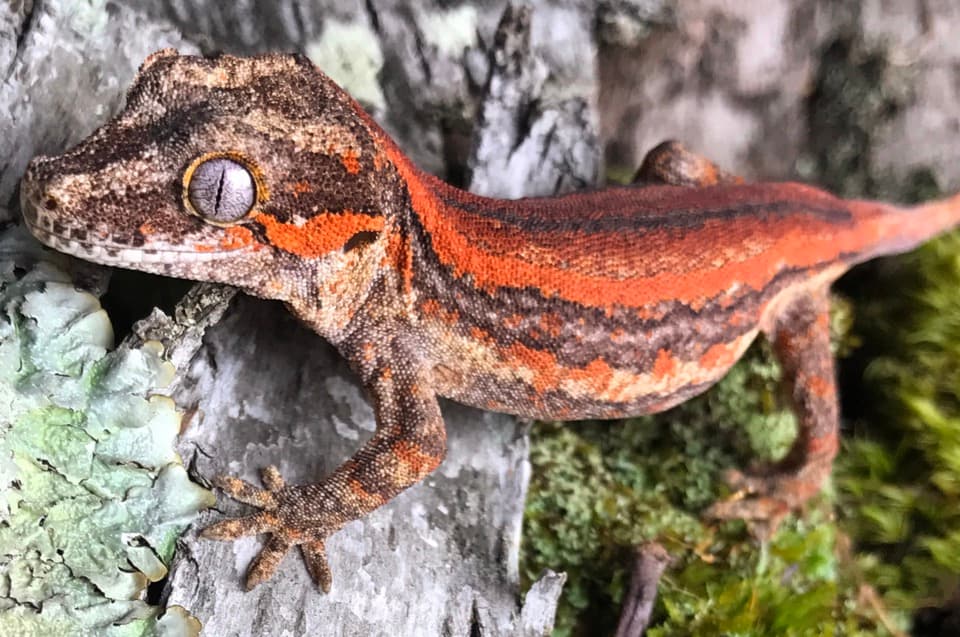
Gargoyle gecko
Also known as New Caledonian bumpy gecko, Rhacodactylus auriculatus
- Adult size
- 18–23 cm long including tail
- Lifespan
- 15–20 years
- Origin
- Southern New Caledonia
- Company
- Keep alone; they often bite tails and toes of cagemates
- Stocky
- Nocturnal
- Feisty
- Hardy
About the Gargoyle gecko
Gargoyle geckos are stocky, tree-dwelling lizards with small bony bumps on the head that give them their name. They come from the same island group as crested geckos and are kept in a similar way, but they are chunkier, can regrow a dropped tail, and are more inclined to nip.
Colours range from grey and brown to striped and blotched reds and oranges in captive-bred lines. They suit keepers who enjoy watching an active night-time animal rather than handling it frequently.
Temperament
Many gargoyle geckos are calm with people, but they are more likely than crested geckos to bite when nervous, especially as juveniles. They are nocturnal and spend the day hidden in cork or foliage. Their bite is usually more surprising than harmful.
Enclosure, heat & light
An adult needs a tall terrarium of at least around 45 x 45 x 60 cm with plenty of branches, cork tubes and plants. Room temperatures in the low to mid 20s °C usually suit them, with a gentle warm area if the room is cold; they tolerate slightly warmer conditions than crested geckos but should not be overheated. Misting in the evening and allowing partial drying during the day mimics their natural humidity cycle. Low-level UVB with shade is a sensible addition, and a moisture-retaining soil substrate helps with humidity.
Diet
Like crested geckos, they do well on a complete powdered diet mixed with water, alongside live insects. They are keen hunters, and some keepers feed insects more often than for crested geckos. Gut-load and dust insects with calcium, and replace powdered food before it dries out or spoils.
Enrichment & handling
Climbing routes, cork hides and live insects all encourage natural behaviour. Change the arrangement of branches now and then. Handle low over a soft surface and keep sessions brief; a gargoyle that is trying to escape or opening its mouth should be returned to its enclosure.
Shedding & hygiene
They shed regularly and usually eat the skin, and evening misting prevents stuck patches. Remove leftover food, droppings and any mould promptly. Wash hands after handling.
Health
Common issues mirror those of other New Caledonian geckos: metabolic bone disease on poor diets, retained shed and injuries from fighting. Tail-nipping is a known problem when gargoyles are housed together. An exotics vet can assess bone health and treat bite wounds before they become infected.
Prone to
- Metabolic bone disease
- Bite injuries from cagemates
- Retained shed
- Tail loss
Call a vet if you notice
- Open or swollen bite wounds
- Bent limbs, kinked tail or soft jaw
- Persistent refusal of food with weight loss
- Discharge or swelling around the mouth
- Limp and unresponsive after overheatingEmergency
A vet with experience of exotic pets is best placed to help. Find one before you need them.
Common questions
Do gargoyle geckos bite?
They can, especially when young or stressed, and more often than crested geckos. Bites rarely break skin badly, and calm, short handling usually reduces nipping over time.
Can a gargoyle gecko's tail grow back?
Yes, unlike crested geckos, gargoyle geckos can regenerate a lost tail, though the new one looks different. Losing it still costs them energy, so avoid stress and rough handling.
Can gargoyle geckos live with crested geckos?
No. Mixing species risks injury, stress and disease, and gargoyle geckos are known to bite other geckos. Each should have its own enclosure.
Written by the Petopedia editorial team to our editorial standards. General guidance, not veterinary advice.