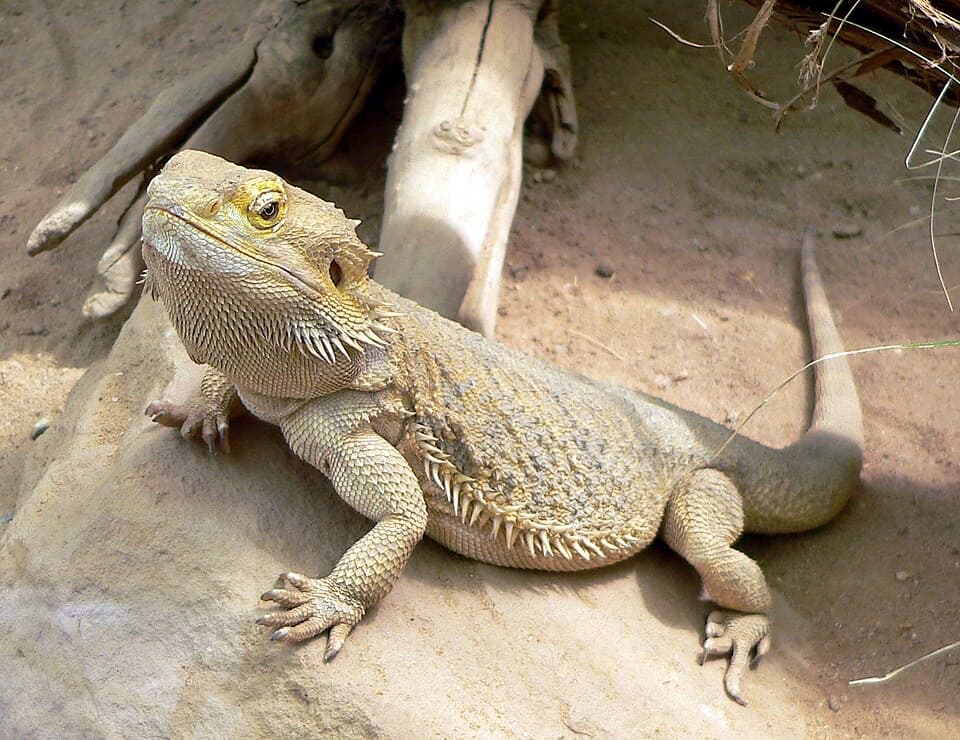
Bearded dragon
Also known as Central bearded dragon, Inland bearded dragon, Pogona vitticeps
- Adult size
- 40–60 cm long including tail
- Lifespan
- 10–15 years
- Origin
- Arid and semi-arid central and eastern Australia
- Company
- Keep alone; housing two together commonly leads to bullying and injury
- Tolerant
- Diurnal
- Inquisitive
- Expressive
About the Bearded dragon
The central bearded dragon is a sun-loving lizard from Australia's interior, named for the spiny throat pouch it puffs out and darkens when displaying. All pet bearded dragons are captive-bred, as Australia does not permit export of its wildlife.
They are one of the most popular pet lizards thanks to their relaxed nature and daytime activity. However, they are larger and more demanding than many people expect: an adult needs a big enclosure, strong UVB, intense basking heat and a diet that shifts from insects to mostly plants as it matures.
Temperament
Well-kept bearded dragons are usually tolerant and curious, and many seem to enjoy time out of the enclosure. They communicate with head-bobbing, arm-waving and beard darkening. Stress, illness or poor temperatures can make them flighty or dark and sullen. Males may become more territorial during the breeding season.
Enclosure, heat & light
An adult needs a vivarium of at least 120 x 60 x 60 cm, and many keepers and welfare groups now recommend larger. Provide a hot basking spot, often around 38–42 °C for adults, at one end and a cool end in the mid to high 20s °C, controlled by a thermostat and measured with a digital thermometer. Strong, high-output UVB across a large part of the enclosure is essential and tubes should be replaced on the maker's schedule because output fades before they stop glowing. Humidity should be low, and solid or soil-based substrates are preferred over loose calcium sand.
Diet
Juveniles need plenty of gut-loaded, calcium-dusted insects with some chopped greens, while adults should eat mostly leafy greens and vegetables with insects a few times a week. Good greens include rocket, watercress, dandelion leaves and spring greens; spinach and iceberg lettuce are poor choices. Too many insects, especially fatty worms, contributes to obesity and fatty liver in adults. Dust food with calcium and use a multivitamin regularly, following the label.
Enrichment & handling
Climbing branches, platforms at different heights, digging boxes and occasional supervised time in a safe room give bearded dragons variety. Some enjoy chasing insects released into a clean tub. Support the whole body when handling, with one hand under the chest and the other under the hips, and avoid holding them near a face, especially with children.
Shedding & hygiene
Bearded dragons shed in patches rather than one piece; a shallow warm soak can help loosen stubborn areas on toes and the tail tip. Never pull skin that is not ready to come away. Clean droppings daily, disinfect bowls regularly and wash hands thoroughly after handling, supervising young children closely.
Health
Metabolic bone disease from inadequate UVB or calcium is the classic problem, along with impaction, obesity, mouth rot and respiratory infections. A serious contagious fungal skin disease is recognised in bearded dragons and needs prompt veterinary care. Females can produce eggs without a male and may become egg-bound. Many slow down or stop eating in winter in a process called brumation, but get a vet check first to rule out illness before assuming it is normal.
Prone to
- Metabolic bone disease
- Impaction
- Obesity and fatty liver
- Egg binding
- Fungal skin disease
- Respiratory infection
Call a vet if you notice
- Trembling limbs, swollen legs or a soft lower jaw
- Gaping, wheezing or bubbles from the nose
- Yellow, crusting or brown skin patches
- A gravid female straining or lethargic and not layingEmergency
- No droppings for a week with a swollen belly
- Sudden collapse or inability to standEmergency
A vet with experience of exotic pets is best placed to help. Find one before you need them.
Common questions
How big a tank does a bearded dragon need?
An adult needs at least 120 x 60 x 60 cm, and bigger enclosures give more room for a proper temperature gradient and exercise. Hatchlings can start smaller but grow quickly, so many owners buy the adult size from the start.
Why is my bearded dragon not eating?
Common causes include low temperatures, failing UVB, stress after a move, shedding or seasonal brumation. If it is also losing weight, has unusual droppings or seems weak, see an exotics vet.
What is brumation?
Brumation is a natural winter slowdown when a bearded dragon sleeps more and eats little or nothing. Because illness can look similar, have a vet check your dragon before letting it brumate, and keep fresh water available.
Can bearded dragons live together?
They are solitary in the wild and housing two together often leads to one dominating the other, with stress, bitten toes and tails, and competition for basking spots. One dragon per enclosure is the safest approach.
Written by the Petopedia editorial team to our editorial standards. General guidance, not veterinary advice.