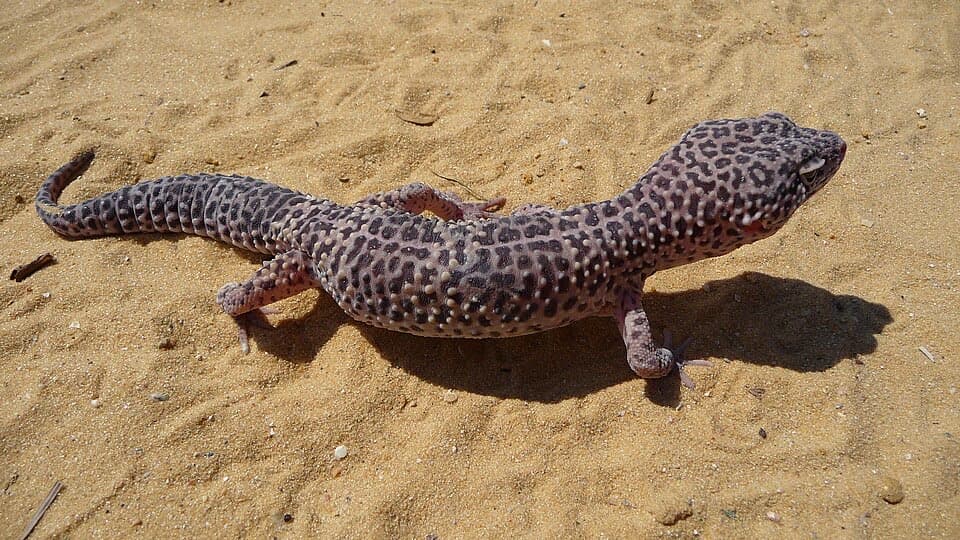
Leopard gecko
Also known as Common leopard gecko
- Adult size
- 18–25 cm long
- Lifespan
- 10–20 years
- Origin
- Afghanistan, Pakistan, north-west India, Iran and Nepal
- Company
- Best kept alone; never house two males together
- Docile
- Crepuscular
- Hardy
- Curious
About the Leopard gecko
The leopard gecko is a ground-dwelling lizard from rocky, dry grassland and scrub in South and Central Asia. Unlike many geckos it has movable eyelids and no sticky toe pads, so it walks rather than climbs glass. Wild-type animals are yellow with dark spots, but decades of captive breeding have produced a huge range of colour and pattern forms.
It is often recommended as a first lizard because it stays a manageable size, is active at dusk and dawn when owners are home, and usually tolerates gentle handling. That reputation can make people underestimate it: a leopard gecko can live well into its teens or beyond, and it still needs a properly heated set-up, a varied insect diet and a vet who understands reptiles.
Temperament
Most leopard geckos are calm and slow-moving once they settle, and many will walk onto a hand without fuss. Young animals can be jumpy and may squeak or wave their tail when nervous. They are crepuscular, so expect them to sleep in a hide through the day and explore in the evening. A frightened gecko can drop its tail as a defence; it grows back, but looks different and costs the animal fat reserves.
Enclosure, heat & light
A single adult needs a secure vivarium of at least around 90 x 45 x 45 cm, and bigger is better. Provide a warm end with an overhead heat source and a cooler end, with a surface hot spot commonly kept around 30–35 °C, controlled by a thermostat and checked with a digital thermometer. Low-level UVB is increasingly recommended and many keepers now include it alongside a shaded retreat. Offer at least three hides: warm, cool and a humid hide filled with damp moss to help with shedding. Solid substrates such as slate or a soil-sand mix suit adults better than loose calcium sand, which is linked to impaction.
Diet
Leopard geckos eat only live insects, such as crickets, locusts, roaches and calci-worms, with fatty waxworms kept as an occasional treat. Gut-load feeder insects with fresh vegetables and a quality feeder diet for a day or two before offering them. Dust insects with a calcium powder at most feeds and use a reptile multivitamin regularly, following the product label. Juveniles eat daily or close to it; adults are fed every few days and a plump tail is a good sign of condition.
Enrichment & handling
Rearrange hides and add rocks, cork and low branches occasionally so the gecko has new routes to investigate. Scatter-feeding or letting insects roam a clean tub encourages natural hunting. Handle close to the ground, scooping from beneath rather than grabbing from above, and never hold or pull the tail. Short, regular sessions in the evening tend to work best.
Shedding & hygiene
Leopard geckos shed in one go, usually eating the old skin, and a humid hide makes this easier. Check toes and the tail tip afterwards, as retained skin can tighten and cut off blood supply. Spot-clean droppings daily, as they tend to use one toilet corner, and wash your hands after handling or cleaning.
Health
Common problems include metabolic bone disease from poor calcium or vitamin D3 supply, impaction from loose substrate or oversized insects, and retained shed on the toes. A thin tail, wobbly gait, soft jaw or swollen belly are reasons to book an exotics vet. Cryptosporidiosis, a parasitic infection causing wasting, is a recognised concern in this species. Like all reptiles they can carry salmonella, so hygiene after handling matters.
Prone to
- Metabolic bone disease
- Impaction
- Retained shed on toes
- Cryptosporidiosis
- Tail loss
Call a vet if you notice
- Tail becoming thin and bony over a few weeks
- Not eating for more than two weeks alongside weight loss
- Wobbly walking, bent limbs or a rubbery jaw
- Old skin stuck on toes that are turning dark
- Straining, swollen belly and no droppings
- Prolapsed tissue from the ventEmergency
A vet with experience of exotic pets is best placed to help. Find one before you need them.
Common questions
Do leopard geckos need UVB?
They can survive without it if given vitamin D3 in their supplements, which is why older care guides left it out. Many reptile vets and experienced keepers now recommend low-level UVB with plenty of shade, as it supports natural behaviour and calcium metabolism.
Why did my leopard gecko drop its tail?
Tail dropping is a defence against predators and is usually triggered by fright or by the tail being grabbed or trapped. The tail regrows, but keep the enclosure very clean while it heals and see a vet if the stump looks swollen, discoloured or weepy.
Can two leopard geckos live together?
Males will fight and should never share. Some keepers house females together, but stress, bullying and competition for food are common, so a single gecko per enclosure is the safest choice.
How long can a leopard gecko go without eating?
Healthy adults store fat in their tails and may skip food for a while, especially in cooler months. If an adult refuses food for more than a couple of weeks while losing weight, or a juvenile stops eating at all, check temperatures and see an exotics vet.
Written by the Petopedia editorial team to our editorial standards. General guidance, not veterinary advice.