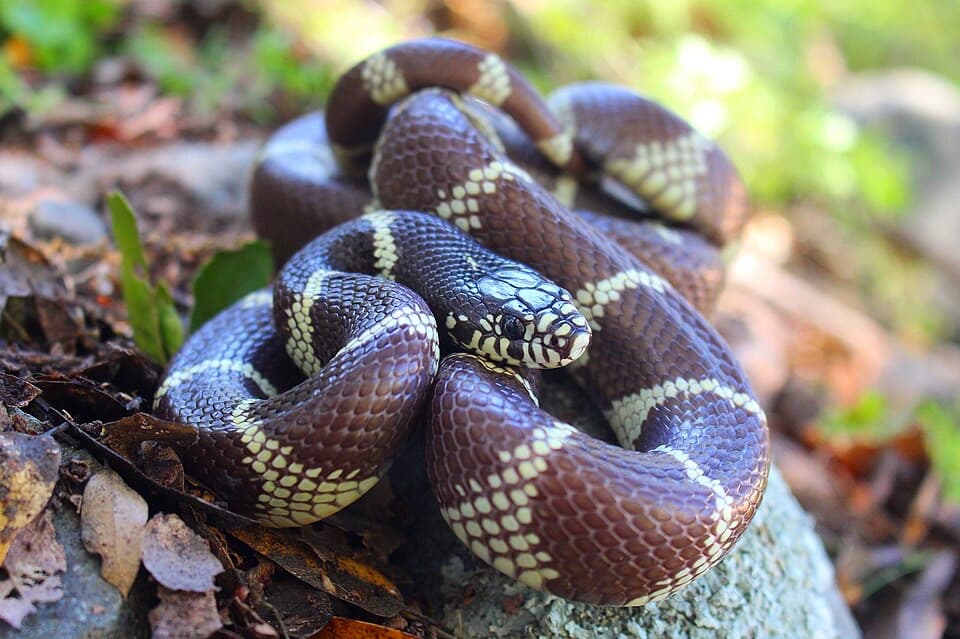
Californian kingsnake
Also known as California kingsnake, Lampropeltis californiae
- Adult size
- 90–120 cm long
- Lifespan
- 15–20 years
- Origin
- South-western United States and north-western Mexico
- Company
- Must live alone; kingsnakes eat other snakes, including their own kind
- Active
- Hardy
- Bold
- Food-driven
About the Californian kingsnake
The Californian kingsnake is a strong, non-venomous constrictor found in habitats from desert edges to farmland and woodland in the western United States and Mexico. It is famed for eating other snakes, including rattlesnakes, to whose venom it has some resistance.
Banded and striped forms occur naturally, and many more colour patterns exist in captivity. They are hardy, sturdy snakes that suit beginners, but their appetite means they must always be housed alone.
Temperament
Kingsnakes are active and inquisitive, and many settle well with regular handling. Juveniles often hiss, rattle their tails, musk or bite when frightened. Their strong feeding response means they may mistake a hand for food, especially near feeding time.
Enclosure, heat & light
An adult needs a secure vivarium of at least around 120 x 60 x 60 cm with locking doors. Provide a warm end and cooler end with a thermostat-controlled heat source and check temperatures with a thermometer. Low-level UVB can be included with plenty of shade. Use a burrowing substrate such as aspen or a soil mix, with hides at both ends and a sturdy water bowl.
Diet
Frozen-thawed rodents sized to the snake's widest point are the standard diet. Juveniles are fed about weekly and adults every 10–14 days. They are enthusiastic feeders, so use long tongs and avoid overfeeding, as obesity is common.
Enrichment & handling
Branches, cork logs and deep substrate provide climbing and burrowing opportunities. Rearranging furniture occasionally keeps the enclosure interesting. Lift the snake gently from the middle of the body after it has seen you, which reduces feeding strikes.
Shedding & hygiene
They shed in one piece every few weeks to months; a humid hide helps with shedding. Spot-clean daily, as musk and waste smell strongly. Wash your hands thoroughly after handling.
Health
Common problems include obesity, regurgitation after handling too soon after meals, respiratory infection and retained shed. Injuries from other snakes are possible if housed together. An exotics vet can help with any persistent appetite or breathing problems.
Prone to
- Obesity
- Regurgitation
- Respiratory infection
- Retained shed
- Snake mites
Call a vet if you notice
- Repeated regurgitation
- Mucus or bubbles from the mouth or nose
- Mouth swelling or discolouration
- Mites around the eyes
- Bite wounds from another snakeEmergency
A vet with experience of exotic pets is best placed to help. Find one before you need them.
Common questions
Can two kingsnakes live together?
No. Kingsnakes readily eat other snakes, including other kingsnakes, so each must live alone.
Do kingsnakes bite?
Juveniles may bite when frightened, and kingsnakes with a strong feeding response may strike at a hand smelling of food. Adults usually calm down with regular handling.
Are kingsnakes immune to rattlesnake venom?
They have a degree of resistance to the venom of some native rattlesnakes, which helps them prey on them. This does not mean they are fully immune to all venoms.
Written by the Petopedia editorial team to our editorial standards. General guidance, not veterinary advice.