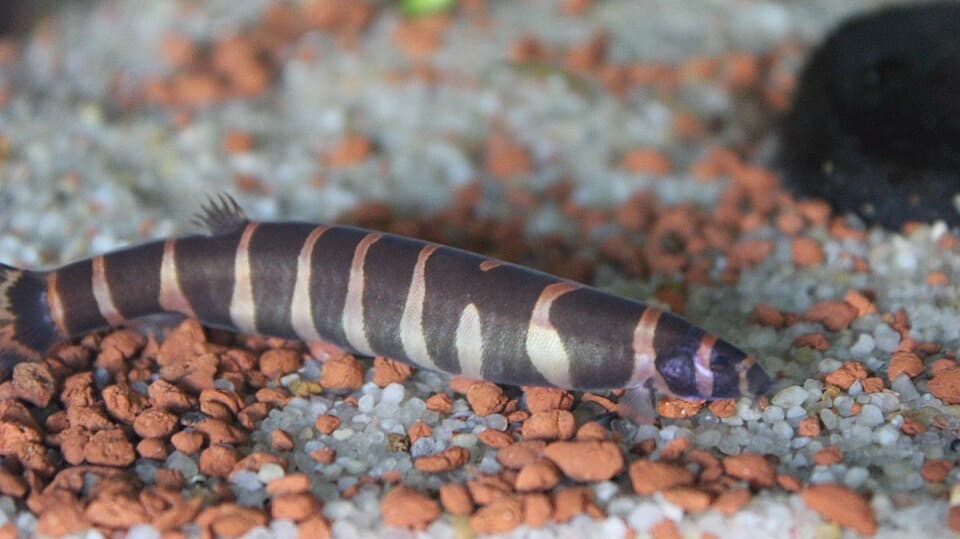
Kuhli loach
Also known as Coolie loach, Pangio kuhlii, Pangio semicincta
- Adult size
- About 8–10 cm
- Lifespan
- 5–10 years
- Origin
- Streams and swamps of South-East Asia, including Malaysia, Sumatra, Java and Borneo
- Company
- Keep in a group, ideally 5–6 or more
- Shy
- Nocturnal
- Peaceful
- Burrowing
About the Kuhli loach
Kuhli loaches are slender, eel-like fish with orange-pink bodies banded in dark brown. Several closely related species are sold under the same name and can be hard to tell apart.
They live among leaf litter and soft sediment in the wild and are shy, mostly nocturnal fish. Owners often see little of them during the day, though a well-settled group can become bolder.
Their thin bodies let them slip into the smallest gaps, so tanks need careful preparation to stop them disappearing into filters or behind equipment.
Temperament
Kuhli loaches are entirely peaceful and harmless to other fish. They are much more confident in a group, where they often pile together in hiding places. Avoid large or aggressive fish that might eat or harass them.
Tank & water
A group needs a tank of at least around 60 litres with a large floor area, kept at roughly 24–28°C. Soft sand is essential, as they burrow and sift through it, and plenty of caves, plants and leaf litter give them security. Cover filter intakes with a sponge or mesh and use a tight lid, as they can squeeze through tiny gaps. Subdued lighting encourages them out more often.
Diet
Kuhli loaches forage on the bottom, so they need sinking foods such as small pellets or wafers. Frozen or live foods like bloodworm, daphnia and brine shrimp are eagerly taken. Feeding shortly before lights out helps them get their share.
Behaviour & tank mates
Burrowing through sand and exploring leaf litter are their main activities. Offering several hiding places and areas of dense planting helps them feel secure enough to come out. A group of five or six or more shows far more natural behaviour than one or two.
Tank maintenance
Weekly partial water changes keep conditions stable; vacuum the sand surface lightly so you do not disturb burrowing fish. Check the filter intake and the space behind decor during maintenance, as loaches sometimes get stuck.
Health
Kuhli loaches have very small scales and are sensitive to poor water and to some aquarium treatments, so always tell an advisor which species are in the tank before using anything. They are prone to white spot and can suffer from skin and bacterial infections. Missing fish should be searched for carefully, as they may be trapped somewhere. Seek help from an aquatic vet or specialist if they show signs of illness.
Prone to
- White spot (ich)
- Skin infections
- Sensitivity to some treatments
- Injury from filter intakes
Call a vet if you notice
- Gasping at the surface or frantic swimming — test the waterEmergency
- White spots on the body
- Red patches or sores on the skin
- Thin, wasted appearance
- Lying exposed in the open during the day
An aquatic vet or experienced aquatic specialist is best placed to help. Find one before you need them.
Common questions
Why can't I see my kuhli loaches?
They are naturally shy and mostly active at night, often hiding in sand or decor during the day. A larger group and dimmer lighting can make them bolder.
Do kuhli loaches need sand?
Yes, soft sand is strongly recommended because they burrow and sift through it. Sharp gravel can damage their delicate skin.
How many kuhli loaches should I keep?
They do best in groups, with five or six or more often suggested. Single loaches tend to stay hidden.
Written by the Petopedia editorial team to our editorial standards. General guidance, not veterinary advice.