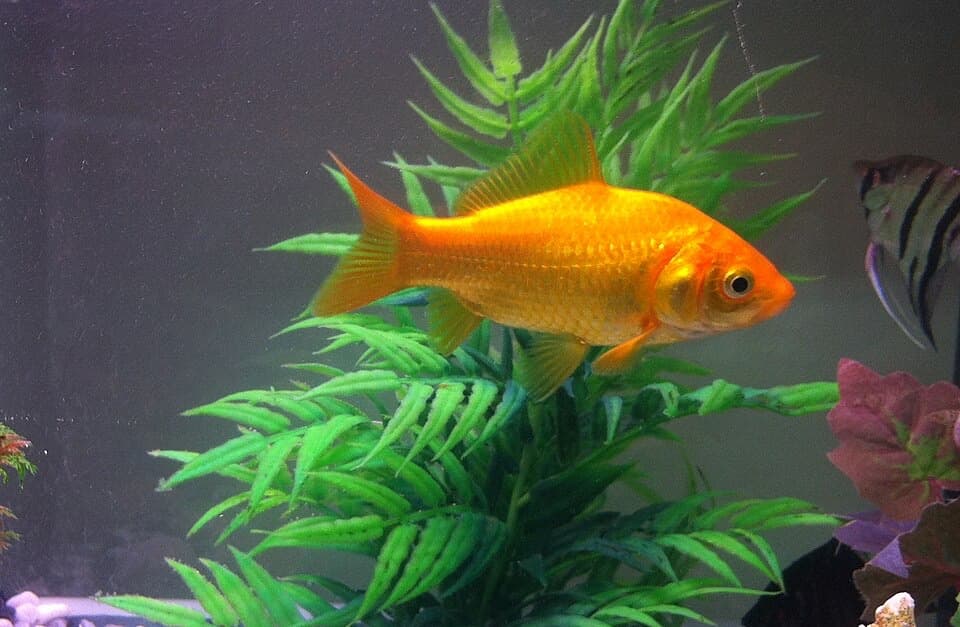
Common goldfish
Also known as Comet goldfish, Shubunkin, Single-tailed goldfish
- Adult size
- Commonly 20–30 cm; can grow larger in ponds
- Lifespan
- 10–20 years
- Origin
- China; the comet was developed in the United States and the shubunkin in Japan
- Company
- Keep in a group; best in a pond
- Hardy
- Active
- Sociable
- Hungry
About the Common goldfish
The common goldfish and its single-tailed relatives, the long-finned comet and the calico-patterned shubunkin, are the slim, fast-swimming forms of the goldfish. They are close to the shape of their wild ancestors and are tough, active fish.
These are the goldfish most often won at fairs or sold as starter fish, yet they are among the least suitable fish for a small tank. They commonly grow to 20–30 cm and can live for well over a decade, with some individuals reaching much greater ages.
Because of their size, energy and hardiness, single-tailed goldfish are best suited to garden ponds. Kept properly, they become large, characterful fish that recognise feeding times and the people who care for them.
Temperament
Common goldfish, comets and shubunkins are peaceful, social fish that enjoy the company of their own kind. They are fast and boisterous at feeding time, so they should not be mixed with slow fancy goldfish. They will eat anything small enough to fit in their mouths, including fry and small fish. In ponds they generally get along well with other coldwater fish of similar size.
Tank & water
Single-tailed goldfish outgrow almost all home aquariums, so a well-filtered garden pond is the ideal long-term home. A pond should be deep enough that part of it stays unfrozen in winter, with good filtration and shaded areas in summer. If kept indoors temporarily, they need a very large tank with powerful filtration, far beyond the size of a typical starter set. Goldfish bowls are unsuitable: they cannot hold enough water to dilute waste or give room to swim.
Diet
Feed a good-quality goldfish or pond pellet as the main diet, adjusting the amount with the seasons. In ponds, goldfish eat less as the water cools and should be fed sparingly or not at all in the coldest months, when their metabolism slows. Peas, greens and small invertebrates add variety, and pond fish will also graze algae and insects naturally.
Behaviour & tank mates
These goldfish are strong, restless swimmers that need long stretches of open water to stay fit. Ponds with plants, shallow margins and hiding places from herons offer plenty of natural interest. Many goldfish learn to come to the surface when their owner approaches. Always keep them in groups rather than alone.
Tank maintenance
In a pond, clean filters as needed with pond water, remove fallen leaves and top up with dechlorinated water. In a tank, weekly partial water changes and gravel vacuuming are essential because single-tailed goldfish produce a great deal of waste.
Health
Common goldfish are hardy but can develop white spot, fin rot, ulcers, parasites and swim bladder problems, particularly when water quality slips or after the stress of moving. Pond fish are most vulnerable in spring, when their immune systems are still sluggish but parasites are becoming active. Quarantine new fish before adding them to an established pond or tank, and seek advice from an aquatic vet or specialist for persistent problems.
Prone to
- White spot (ich)
- Fin rot
- Ulcers and bacterial infections
- External parasites
- Swim bladder problems
Call a vet if you notice
- Fish gasping at the surface, especially on hot nights — test the water and add aerationEmergency
- Open sores or red patches on the body
- Rubbing or flicking against surfaces
- Fish hanging alone near the bottom
- Swollen body with raised scales
An aquatic vet or experienced aquatic specialist is best placed to help. Find one before you need them.
Common questions
How big do goldfish get?
Single-tailed goldfish commonly reach 20–30 cm and can get bigger in a large pond. The idea that they stay small to fit their container is a myth; cramped fish simply become stunted and unhealthy.
Can I release my goldfish into a lake or river?
Never release goldfish into the wild. They can grow very large, damage habitats, spread disease and outcompete native wildlife, and releasing them is illegal in many places. A local aquatic shop or fish rescue may be able to rehome them.
How long do goldfish live?
Well-kept goldfish commonly live for 10 to 20 years, and some live considerably longer. Short lifespans are usually caused by small tanks and poor water quality.
Can goldfish stay in a pond over winter?
Yes, as long as the pond is deep enough that it does not freeze solid and a hole is kept open in any ice for gas exchange. Stop or greatly reduce feeding when the water is very cold.
Written by the Petopedia editorial team to our editorial standards. General guidance, not veterinary advice.