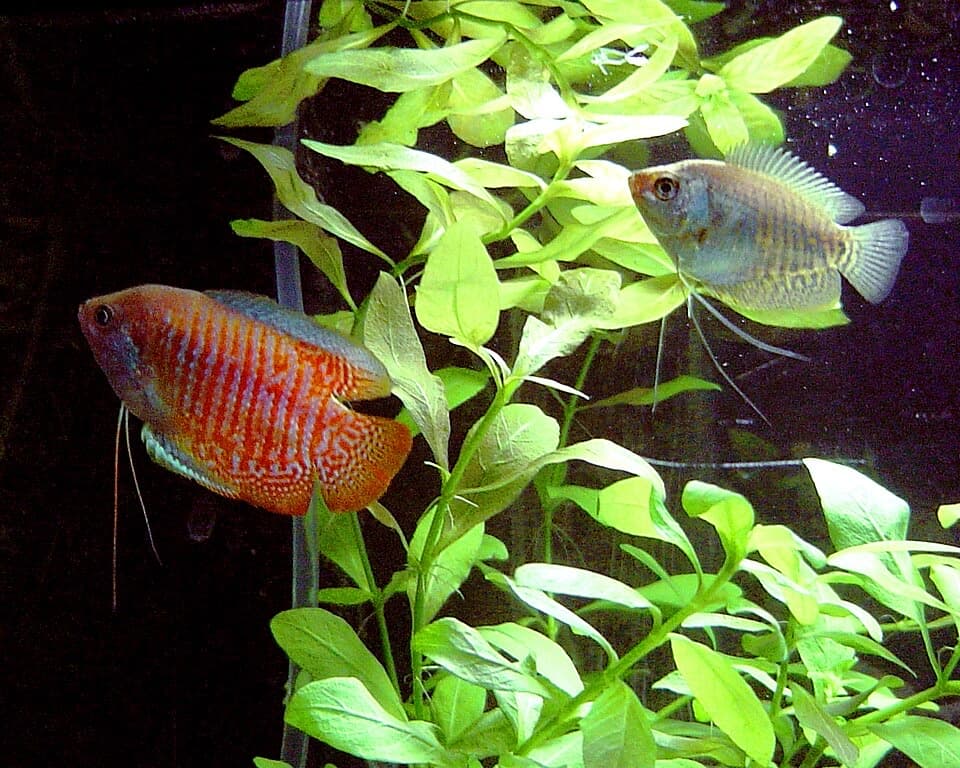
Dwarf gourami
Also known as Trichogaster lalius, Powder blue gourami, Flame gourami
- Adult size
- About 5–9 cm
- Lifespan
- 2–4 years
- Origin
- South Asia, including India and Bangladesh
- Company
- Keep one male per tank; can live alone
- Colourful
- Calm
- Territorial
- Sensitive
About the Dwarf gourami
Dwarf gouramis are small labyrinth fish, with males showing striking blue and red striped patterns. Breeders have produced variants such as the powder blue and flame dwarf gourami.
They are very popular but have earned a reputation for being less robust than they once were. This is partly due to a serious virus that has spread through many commercially farmed stocks.
Choosing healthy fish from reputable sources, and observing them before buying, is particularly important with this species.
Temperament
Dwarf gouramis are generally peaceful with other species but males can be territorial towards each other and towards similar-looking fish. In most home tanks, one male is safest. They should not be housed with fin-nippers or bettas.
Tank & water
A tank of at least around 60 litres suits a dwarf gourami, with water at roughly 24–28°C. Gentle filtration, plenty of plants and some floating cover make them feel secure. A lid helps keep the air above the water warm. Stable, clean water is particularly important for this species.
Diet
Dwarf gouramis are omnivores that accept flake, small pellets and frozen or live foods. Include some plant-based food alongside meaty items such as bloodworm and brine shrimp. Feed small portions once or twice daily.
Behaviour & tank mates
Dwarf gouramis explore the upper and middle levels of the tank and enjoy weaving through plants. Floating plants give males the chance to build bubble nests. Peaceful, small to medium tank mates help them feel relaxed.
Tank maintenance
Change about a quarter of the water each week and vacuum the substrate. Avoid sudden swings in temperature or chemistry, as stress may make this species more vulnerable to disease.
Health
Dwarf gourami iridovirus is a serious viral disease that can cause loss of colour, lethargy, swelling and sores, and there is no known cure. They are also prone to bacterial infections, white spot and fin rot. Quarantine is especially important, and an aquatic vet or experienced aquatic specialist should be consulted if a dwarf gourami becomes unwell.
Prone to
- Dwarf gourami iridovirus
- Bacterial infections
- White spot (ich)
- Fin rot
Call a vet if you notice
- Gasping or rapid breathing at the surface — test the waterEmergency
- Sudden loss of colour and lethargy
- Swollen belly or bulging sides
- Open sores or red patches
- Hiding constantly and refusing food
An aquatic vet or experienced aquatic specialist is best placed to help. Find one before you need them.
Common questions
Why do dwarf gouramis die so easily?
Many farmed dwarf gouramis carry a virus known as dwarf gourami iridovirus, which has no cure. Buying healthy stock from reputable sources and quarantining new fish reduces the risk.
Can I keep two male dwarf gouramis?
Males are often territorial and may chase or fight, so one per tank is usually the safest choice. Two males are only worth trying in a large, heavily planted tank with plenty of visual barriers.
Can a dwarf gourami live with a betta?
This is generally not recommended. Both are labyrinth fish with similar shapes and habits, and they are likely to see each other as rivals and fight.
Written by the Petopedia editorial team to our editorial standards. General guidance, not veterinary advice.