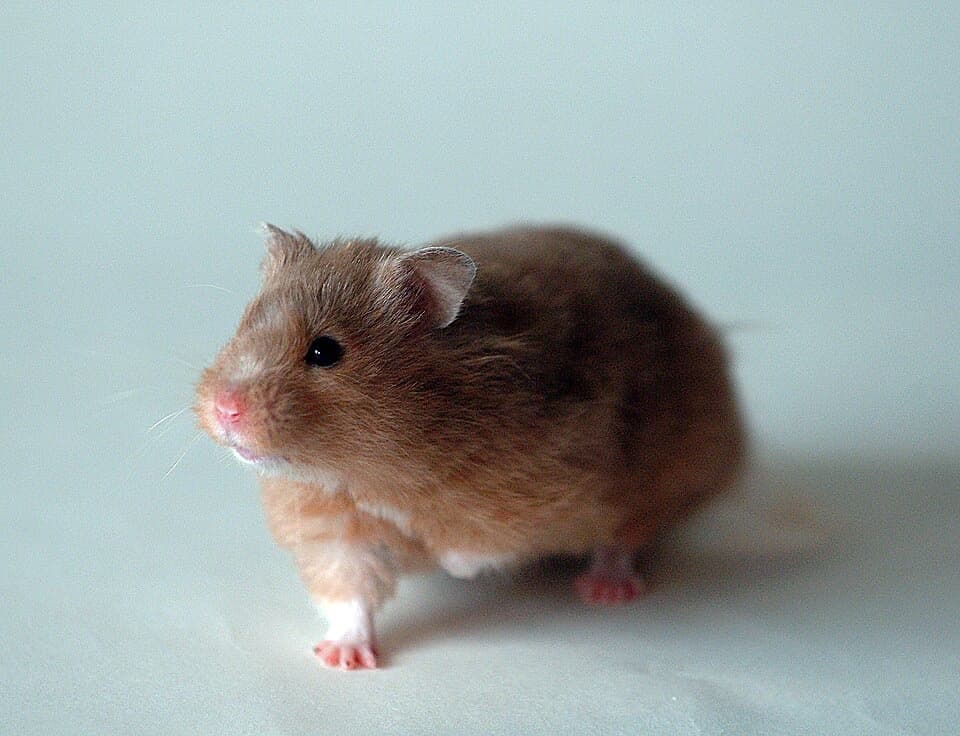
Syrian hamster
Also known as Golden hamster, Teddy bear hamster
- Adult size
- About 13–18 cm long
- Lifespan
- 2–3 years
- Origin
- Syria and southern Turkey
- Company
- Must live alone
- Curious
- Active
- Solitary
- Nocturnal
About the Syrian hamster
The Syrian hamster is the largest and most commonly kept pet hamster, originally from arid areas of northern Syria and southern Turkey. Most pet Syrians are thought to descend from a small number of animals captured in the region in 1930.
Syrians come in many colours and coat types, including long-haired 'teddy bear' varieties. They are solitary animals and must live alone once mature, as adults will fight, sometimes causing serious injury.
Temperament
Syrian hamsters are generally curious, active and, with gentle handling, quite tame. They are mostly active at night and in the evening, so they may be grumpy if woken during the day. Each hamster has its own personality; some are bold and confident, others more cautious.
Housing
Syrians need a large enclosure with a big continuous floor area, far bigger than most traditional pet-shop cages, and deep bedding of at least 20 cm or more so they can burrow. A solid-surface wheel large enough to keep the back straight while running, typically around 28 cm in diameter or more, is important. Keep the enclosure in a quiet room at a stable temperature, out of direct sunlight and draughts.
Diet
Feed a good-quality hamster mix or lab block, scattered to encourage foraging, alongside small amounts of fresh vegetables. Hamsters are omnivores and benefit from occasional protein such as plain cooked egg. Avoid sugary, sticky or citrus foods, and always provide fresh water.
Exercise & enrichment
Provide hides, tunnels, chew items, sand baths and varied textures to explore. Change the layout and scatter food to mimic natural foraging. Handle Syrians gently and close to the ground, letting them walk onto your hand rather than grabbing from above.
Grooming
Short-haired Syrians groom themselves and rarely need help. Long-haired varieties may need gentle brushing and checks for debris in the coat. Spot-clean toilet areas regularly and check teeth and nails.
Health
Wet tail, a serious diarrhoeal illness often linked to stress in young hamsters, is an emergency. Syrians can also develop overgrown teeth, cheek pouch problems, skin conditions and tumours as they age. A vet experienced with small mammals should see any hamster that seems unwell.
Prone to
- Wet tail
- Overgrown teeth
- Cheek pouch impaction
- Skin conditions
- Tumours in older hamsters
Call a vet if you notice
- Wet, dirty fur around the tail or diarrhoeaEmergency
- Not eating or drinking
- Swollen cheek pouches that do not empty
- Lumps or swellings
- Lethargy or hunched posture
A vet with experience of exotic pets is best placed to help. Find one before you need them.
Common questions
Can Syrian hamsters live together?
No. Adult Syrians are solitary and will fight if housed together. Each one needs its own enclosure.
What size wheel does a Syrian hamster need?
A solid-surface wheel big enough for the hamster to run with a straight back, typically around 28 cm in diameter or larger.
How long do Syrian hamsters live?
Most live around 2 to 3 years, and some a little longer with good care.
Written by the Petopedia editorial team to our editorial standards. General guidance, not veterinary advice.