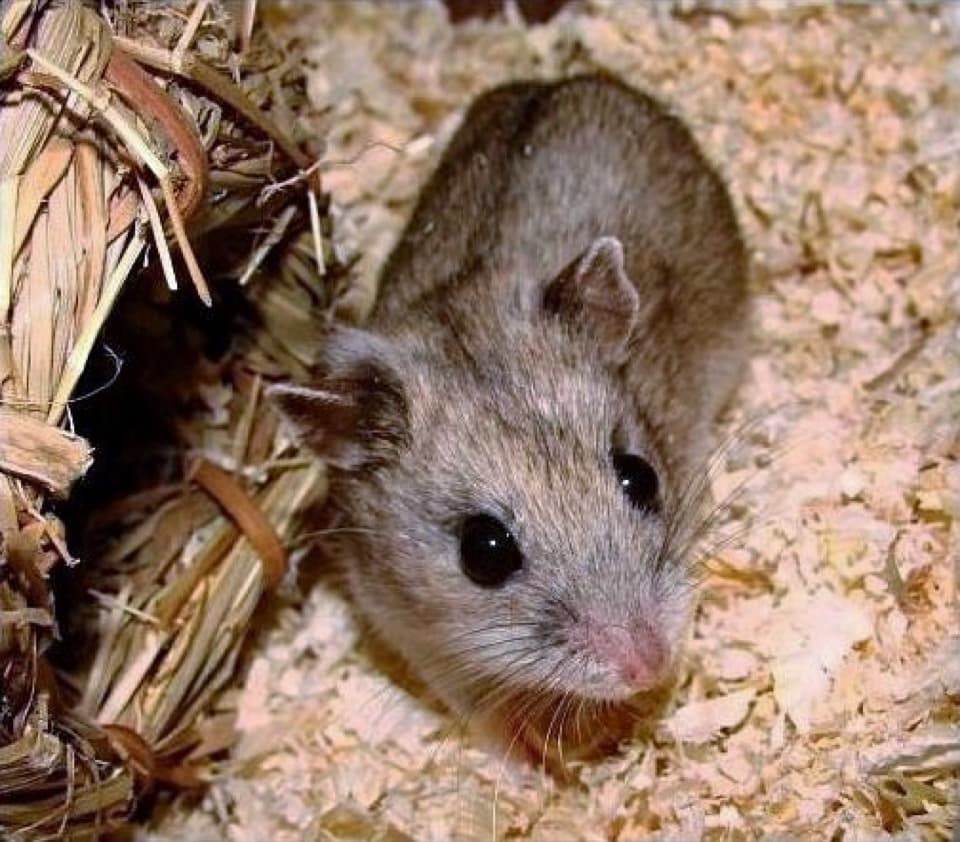
Chinese hamster
Also known as Chinese striped hamster
- Adult size
- About 10–12 cm long, including a short tail
- Lifespan
- 2–3 years
- Origin
- Northern China and Mongolia
- Company
- Usually best alone as adults
- Agile
- Gentle
- Shy
- Slender
About the Chinese hamster
The Chinese hamster is a slender, mouse-like hamster with a longer tail than the dwarf hamsters and a dark stripe down its back. It is native to dry areas of northern China and Mongolia, and it is not a true dwarf hamster, though it is small.
Chinese hamsters are agile climbers and can be very gentle once tame. Keeping them is restricted in some places, so check local rules before getting one.
Temperament
Chinese hamsters are often shy at first but can become very tame with patient handling, often gripping fingers with their tails and paws. They are agile and quick. Adults are usually best housed alone, as they can become territorial.
Housing
Provide a large enclosure with deep bedding for burrowing and climbing opportunities such as low branches and platforms. A solid-surface wheel of suitable size, often around 20 cm or larger, is important. Keep them in a quiet, stable room away from sunlight and draughts.
Diet
Feed a quality hamster mix or lab block, scattered to encourage foraging, plus small amounts of vegetables and occasional protein. Avoid sugary treats, as Chinese hamsters have been reported to be susceptible to diabetes. Fresh water must always be available.
Exercise & enrichment
Climbing structures, tunnels, hides, chew items and sand baths keep them active. They enjoy exploring complex layouts. Handle them gently over a soft surface, allowing them to climb onto your hands.
Grooming
Chinese hamsters groom themselves and rarely need help. Check teeth and nails occasionally and spot-clean the enclosure regularly.
Health
Chinese hamsters may be prone to diabetes, so a low-sugar diet is sensible. They can also suffer from wet tail, dental problems and injuries from falls. Adults housed together may fight.
Prone to
- Diabetes
- Wet tail
- Dental problems
- Injuries from falls
Call a vet if you notice
- Wet tail or diarrhoeaEmergency
- Increased thirst or urination
- Not eating or weight loss
- Limping or injuries after a fall
- Lumps or swellings
A vet with experience of exotic pets is best placed to help. Find one before you need them.
Common questions
Is a Chinese hamster a dwarf hamster?
Not strictly. It is small, but it belongs to a different genus from the true dwarf hamsters and has a longer tail and slimmer body.
Can Chinese hamsters live together?
Adults are usually best housed alone, as they can become territorial and fight.
Are Chinese hamsters legal to keep everywhere?
No. Some places restrict keeping them, so check local regulations before buying one.
Written by the Petopedia editorial team to our editorial standards. General guidance, not veterinary advice.