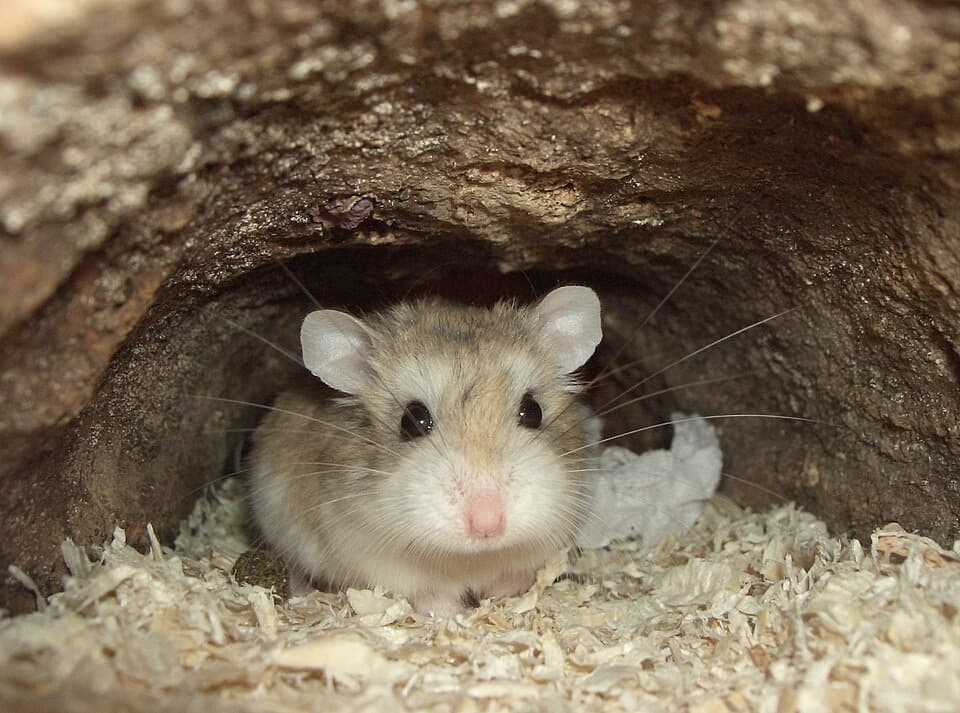
Roborovski hamster
Also known as Robo, Roborovski dwarf hamster
- Adult size
- About 4.5–5 cm long
- Lifespan
- 2–3 years
- Origin
- Deserts of Mongolia, northern China and nearby regions
- Company
- Often best alone; same-sex littermates sometimes coexist but can fall out
- Speedy
- Busy
- Timid
- Tiny
About the Roborovski hamster
The Roborovski is the smallest of the commonly kept hamsters, and one of the fastest. It comes from desert regions of Central Asia, including Mongolia and northern China.
Robos are entertaining to watch but are not usually hands-on pets, as they are very quick and can easily slip from your hands. They suit owners who enjoy observing natural behaviour.
Temperament
Roborovskis are energetic, busy and generally timid with people. They rarely bite but often dislike being held and may jump or run away. Watching them dig, run and forage is often more rewarding than handling.
Housing
Despite their small size, Robos need a large enclosure with deep bedding for burrowing and plenty of floor space. A solid-surface wheel of an appropriate size, often recommended to be at least 20 cm, lets them run comfortably. Sand baths are especially important for this desert species.
Diet
Feed a quality dwarf hamster mix or blocks, scattered to encourage foraging, plus small amounts of fresh vegetables and occasional protein. Avoid sugary or sticky foods. Fresh water must always be available.
Exercise & enrichment
Provide hides, tunnels, chew items, sand baths and foraging opportunities. They enjoy digging and exploring complex layouts. If handling is necessary, do so over a soft surface close to the ground.
Grooming
Robos keep themselves clean, especially with access to a sand bath. Check teeth and nails occasionally and spot-clean the enclosure regularly.
Health
Roborovskis are generally considered hardy and are thought to be less prone to diabetes than some other dwarf hamsters. They can still suffer from wet tail, dental problems and injuries from falls. Pairs or groups may fight, so watch for injuries if they live together.
Prone to
- Wet tail
- Dental problems
- Injuries from falls or fighting
- Skin problems
Call a vet if you notice
- Wet, dirty tail area or diarrhoeaEmergency
- Bite wounds from a cage mate
- Not eating or weight loss
- Lumps or swellings
- Lethargy or hiding constantly
A vet with experience of exotic pets is best placed to help. Find one before you need them.
Common questions
Can Roborovski hamsters live together?
Some same-sex littermates live together, but fallouts happen and can lead to injury. Many keepers prefer housing them alone to avoid fighting.
Do Roborovski hamsters like to be held?
Most do not enjoy handling and are very fast, so they can easily escape or fall. They are better suited to being watched.
How small is a Roborovski hamster?
Adults usually measure around 4.5–5 cm long, making them the smallest commonly kept hamster.
Written by the Petopedia editorial team to our editorial standards. General guidance, not veterinary advice.