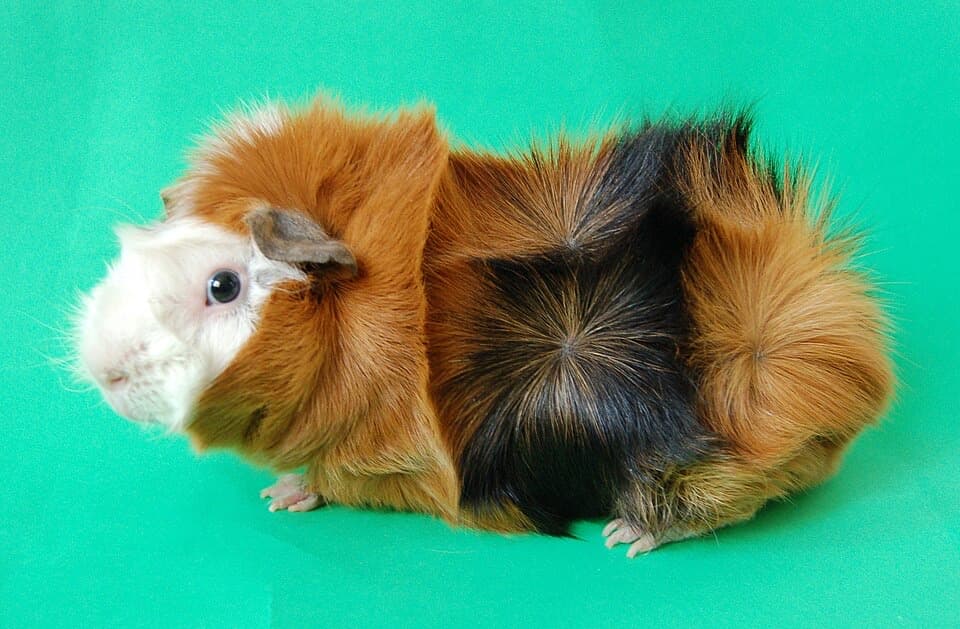
Abyssinian guinea pig
Also known as Aby
- Adult size
- About 20–25 cm long; 0.7–1.2 kg
- Lifespan
- 5–7 years
- Origin
- South America (developed as a breed in Britain); not from Abyssinia
- Company
- Keep in pairs or small groups
- Energetic
- Mischievous
- Inquisitive
- Vocal
About the Abyssinian guinea pig
The Abyssinian is recognisable by its rosettes, swirls of hair that create a tousled, ridged coat. Despite its name, it has no connection with Abyssinia (modern Ethiopia); the name's origin is unclear, and the breed was refined in Britain from South American stock.
Abyssinians are among the oldest recognised guinea pig breeds and are popular as both pets and show animals. They are known for their lively, cheeky personalities.
Temperament
Abyssinians are often described as energetic, mischievous and inquisitive, sometimes more so than other breeds. They can be boisterous and may take a little longer to settle into handling. Many become very interactive and vocal once they trust their owners.
Housing
Provide a large, solid-floored enclosure with plenty of floor space, as these active guinea pigs like to run and explore. Include several hides and tunnels so companions can have their own space. Keep them in a stable temperature, away from draughts, direct sun and damp.
Diet
Offer unlimited hay, a daily portion of fresh vegetables rich in vitamin C, and a measured amount of guinea pig pellets. Fresh water must always be available. Avoid sudden diet changes, which can upset digestion.
Exercise & enrichment
Their energy makes floor time, tunnels and obstacle-style layouts especially valuable. Scatter feeding and hay piles encourage foraging. Patient, gentle handling helps these lively guinea pigs learn to relax in your arms.
Grooming
The rosetted coat is coarse and medium-short, needing a brush once or twice a week to remove loose hair and debris. Trim nails regularly and check skin around the rosettes for scurf or scratching.
Health
Abyssinians share common guinea pig problems such as scurvy, dental overgrowth and respiratory infections. Skin mites and fungal skin infections may be harder to spot among the rosettes, so check the skin regularly. Any change in appetite or weight should prompt a vet visit.
Prone to
- Vitamin C deficiency
- Dental overgrowth
- Respiratory infections
- Skin mites and fungal infections
Call a vet if you notice
- Refusing foodEmergency
- Breathing difficulty or noisy breathingEmergency
- Bald patches, flaky skin or constant scratching
- Drooling or difficulty chewing
- Lethargy or hunched posture
A vet with experience of exotic pets is best placed to help. Find one before you need them.
Common questions
Why do Abyssinian guinea pigs have rosettes?
Their coat grows from several whorls, creating swirls of hair. Show standards prize an even, symmetrical arrangement of rosettes.
Are Abyssinian guinea pigs good for beginners?
Yes, their coat is easy to manage, though they can be lively. Patience with handling pays off.
Do Abyssinian guinea pigs need grooming?
A quick brush once or twice a week is usually enough. Regular checks also help spot skin problems hidden in the rosettes.
Written by the Petopedia editorial team to our editorial standards. General guidance, not veterinary advice.