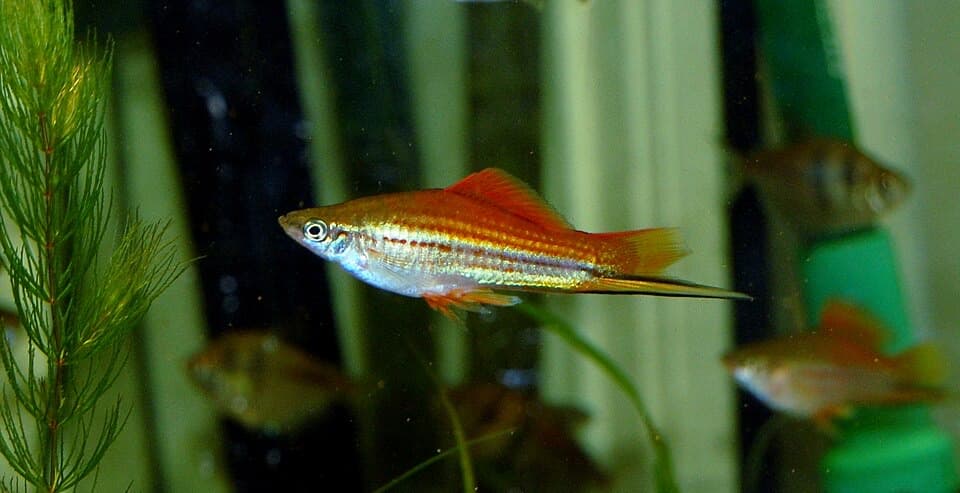
Swordtail
Also known as Green swordtail, Xiphophorus hellerii
- Adult size
- About 10–14 cm including the male's sword
- Lifespan
- 3–5 years
- Origin
- Mexico and Central America
- Company
- Best kept as one male with several females
- Energetic
- Fast
- Hardy
- Bold
About the Swordtail
Swordtails are named for the long, sword-like extension on the lower edge of the male's tail. Popular aquarium forms include red, green, black, pineapple and lyretail varieties.
They are the largest of the common livebearers and are quick, energetic swimmers. Like platies, to which they are closely related, they breed readily in the home aquarium.
Females have occasionally been seen to develop male characteristics later in life, a curiosity that has long interested aquarists, though the reasons are not fully understood.
Temperament
Swordtails are usually peaceful with other fish, but males can be aggressive towards each other, especially in smaller tanks. Keeping one male with several females, or a larger group with plenty of space, helps reduce squabbles. They can be kept with other robust, peaceful community fish and are fast enough to cope with active tank mates.
Tank & water
Their size and speed mean swordtails need a tank of at least around 100 litres, with a good length for swimming. Keep the water at roughly 22–28°C, moderately hard and slightly alkaline, with efficient filtration. A tight lid is important, as swordtails are capable jumpers. Plants around the edges and open water in the middle suit them well.
Diet
Swordtails are omnivores and readily accept quality flake, pellets and small frozen or live foods. Include vegetable-based foods or algae wafers, as plant matter is a natural part of their diet. Feed once or twice a day in amounts eaten within a couple of minutes.
Behaviour & tank mates
Swordtails are active swimmers that patrol the middle and upper parts of the tank, so open swimming lanes matter more than clutter. Dense planting at the back gives females somewhere to retreat from males. They enjoy foraging on plants and surfaces between meals.
Tank maintenance
Weekly partial water changes of about a quarter keep water quality steady. Remove excess fry if the tank is becoming overcrowded, and clean the filter in tank water when flow slows.
Health
Swordtails are prone to the same common problems as other livebearers, including white spot, fin rot and bacterial infections. Jumping injuries happen in uncovered tanks, and male fighting can lead to damaged fins. Quarantine new arrivals and seek help from an aquatic vet or experienced specialist if fish show signs of illness.
Prone to
- White spot (ich)
- Fin rot
- Bacterial infections
- Injuries from fighting or jumping
Call a vet if you notice
- Gasping at the surface — test the waterEmergency
- Torn fins that become red or white at the edges
- White spots spreading across the body
- Lethargy and loss of appetite
- Swollen body with scales sticking out
An aquatic vet or experienced aquatic specialist is best placed to help. Find one before you need them.
Common questions
Can I keep two male swordtails together?
It is possible in a large tank with plenty of females and plants, but males often fight. In smaller tanks, one male is safer.
Can swordtails live with platies?
Yes, they share similar needs and generally get along. They can also interbreed, producing hybrid young.
Why is my female swordtail growing a sword?
Occasionally older females develop male features, including a sword. This is an unusual but recognised event in the species, and its causes are not completely understood.
Written by the Petopedia editorial team to our editorial standards. General guidance, not veterinary advice.