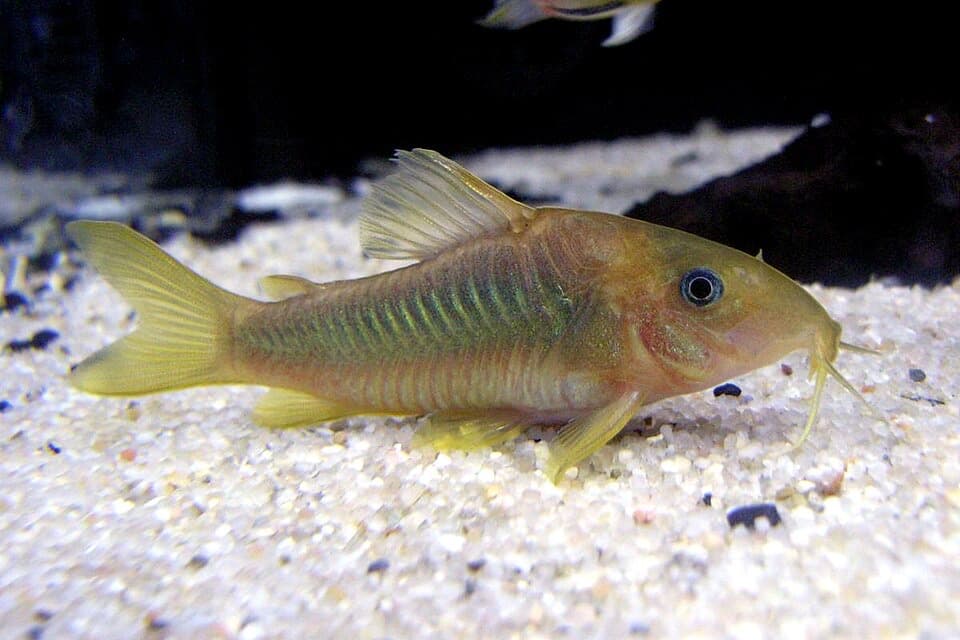
Corydoras catfish
Also known as Cory catfish, Cories, Armoured catfish
- Adult size
- About 2.5–7 cm depending on species
- Lifespan
- 5–10 years
- Origin
- Rivers and streams across much of South America
- Company
- Keep in a group of at least 6 of the same species
- Peaceful
- Sociable
- Busy
- Endearing
About the Corydoras catfish
Corydoras are small, armour-plated catfish that spend their days rummaging along the bottom with their sensitive whisker-like barbels. There are many species, including the bronze, peppered, panda and sterbai corydoras, varying in size, pattern and preferred temperature.
They are among the most popular bottom-dwellers for community tanks, partly for their gentle nature and partly for their endearing habits, such as darting to the surface for a gulp of air or resting together in a heap.
Corydoras are sometimes bought as 'cleaners', but they need proper food of their own and should not be expected to live on leftovers.
Temperament
Corydoras are entirely peaceful and very sociable, and they are happiest in groups of their own species. Kept alone or in pairs they become shy and stressed. They suit almost any calm community tank but should not be kept with large fish that might harass or eat them.
Tank & water
A group of smaller species needs at least around 60 litres, with more for larger types. Most species do well at roughly 22–26°C, though some prefer cooler or warmer water, so check the needs of the particular species. Fine sand or smooth, rounded gravel is important, as sharp substrate can wear down their barbels. Provide plants, wood and shaded areas, and ensure good water quality near the bottom.
Diet
Corydoras need sinking foods such as quality catfish pellets or wafers, as they rarely feed at the surface. Frozen or live bloodworm, brine shrimp and daphnia are relished. Feed after the lights dim if faster fish are taking all the food.
Behaviour & tank mates
Foraging through sand is their main occupation, so a soft, open substrate area lets them sift happily. A group of the same species will shoal, rest and forage together. Leaf litter and wood create interesting places to explore.
Tank maintenance
Weekly partial water changes and regular vacuuming of the substrate are important, as corydoras spend all their time in contact with the bottom. Dirty substrate is a common cause of barbel damage and infection.
Health
Eroded or shortened barbels are often a sign of sharp gravel or dirty substrate. Corydoras can also suffer from white spot, bacterial infections and stress-related illness, and some species release a toxin when very stressed, so they should be transported in plenty of water and not bagged alone with other fish. Their fin spines can catch in nets, so care is needed when moving them. Test the water and consult an aquatic vet or specialist if they become unwell.
Prone to
- Barbel erosion
- White spot (ich)
- Bacterial infections
- Red blotches on the belly from poor water
Call a vet if you notice
- Repeated, frantic dashes to the surface for air — test the waterEmergency
- Worn, red or missing barbels
- Red patches on the belly or fins
- Lying on its side and not moving
- Rapid breathing and refusing food
An aquatic vet or experienced aquatic specialist is best placed to help. Find one before you need them.
Common questions
How many corydoras should I keep together?
A group of at least six of the same species is a widely recommended minimum. They are more confident and active in groups.
Why does my cory swim to the surface?
Corydoras naturally gulp air from the surface now and then. Very frequent trips, however, can indicate poor water quality or low oxygen.
Do corydoras clean the tank?
Not really. They eat some leftover food but need their own sinking food, and the tank still needs regular cleaning.
Do corydoras need sand?
Sand is ideal because they sift through it while foraging. Smooth, rounded fine gravel can work, but sharp gravel can damage their barbels.
Written by the Petopedia editorial team to our editorial standards. General guidance, not veterinary advice.