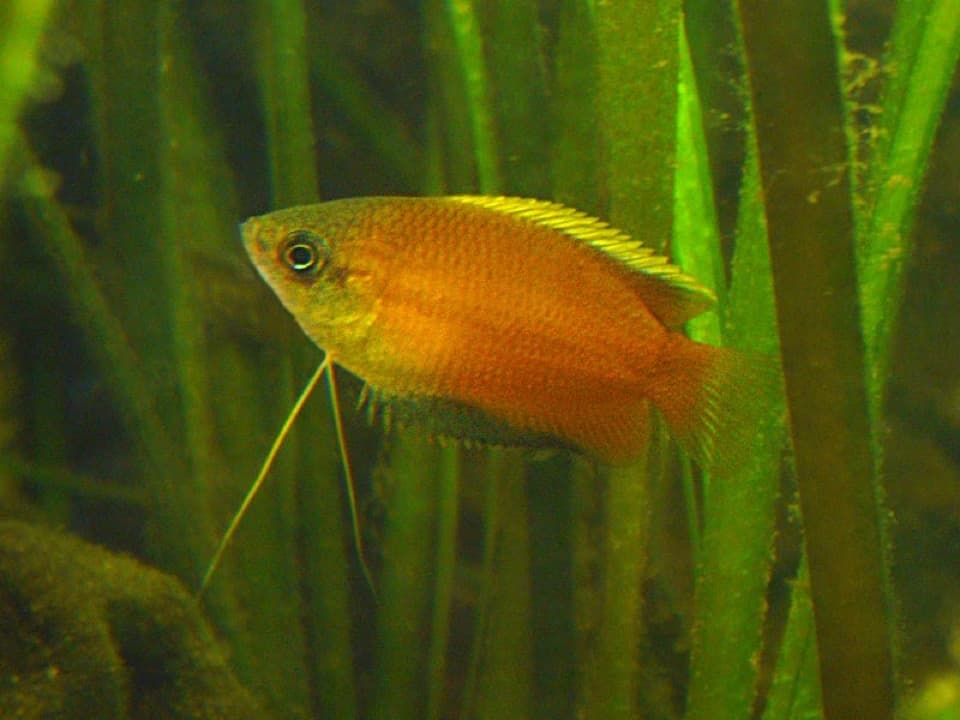
Honey gourami
Also known as Trichogaster chuna
- Adult size
- About 4–5 cm
- Lifespan
- 4–8 years
- Origin
- India and Bangladesh
- Company
- Can be kept as a pair or small group
- Gentle
- Shy
- Curious
- Peaceful
About the Honey gourami
The honey gourami is a small, gentle labyrinth fish whose males turn a rich honey-orange with a dark throat when in breeding colour. Females are paler with a brownish stripe.
Like bettas, honey gouramis can breathe air from the surface. They are one of the calmest gouramis and are often recommended for peaceful community tanks.
Males build bubble nests among floating plants, and watching their courtship displays is part of the pleasure of keeping them.
Temperament
Honey gouramis are shy and peaceful, rarely bothering other fish. They can be kept singly, in pairs or in small groups, though males may squabble mildly. Avoid fin-nippers and boisterous species, which will stress them.
Tank & water
A tank of around 40–60 litres suits a pair or small group, with water at roughly 22–28°C. Gentle filtration is important, as they prefer still or slow-moving water. Floating plants, dense planting and subdued light help them feel secure. Keep a lid on the tank to maintain warm, humid air above the surface, which their labyrinth organ uses.
Diet
Honey gouramis are omnivores that accept quality flake and small pellets. Small frozen or live foods such as bloodworm, daphnia and brine shrimp help keep them in condition. Feed small amounts once or twice daily, making sure faster tank mates do not take everything.
Behaviour & tank mates
Floating plants give them places to explore near the surface and to build bubble nests. They are curious and spend time inspecting plants and decor. Calm, small tank mates such as rasboras and corydoras make good company.
Tank maintenance
Weekly water changes of around 20–25% are sufficient for most set-ups. Keep the flow from the filter outlet gentle when refilling and during maintenance.
Health
Honey gouramis are generally hardier than dwarf gouramis but can still develop white spot, fin rot and bacterial infections. Cold water or draughts across the surface can make them more vulnerable to illness. Quarantine new fish and seek advice from an aquatic vet or specialist for persistent problems.
Prone to
- White spot (ich)
- Fin rot
- Bacterial infections
Call a vet if you notice
- Breathing at the surface constantly and rapidly — test the waterEmergency
- White spots on the body
- Ragged or discoloured fins
- Hiding and not feeding for several days
- Swollen body or raised scales
An aquatic vet or experienced aquatic specialist is best placed to help. Find one before you need them.
Common questions
Can honey gouramis live with bettas?
It is not usually recommended, as both are labyrinth fish and bettas may see gouramis as rivals. It sometimes works in large tanks, but there is a real risk of aggression.
How many honey gouramis should I keep?
A pair or a small group works well. If keeping more than one male, give plenty of space and plants.
Are honey gouramis good for beginners?
Yes, they are among the easier gouramis, being peaceful and fairly hardy. They do best in a calm, established tank.
Written by the Petopedia editorial team to our editorial standards. General guidance, not veterinary advice.