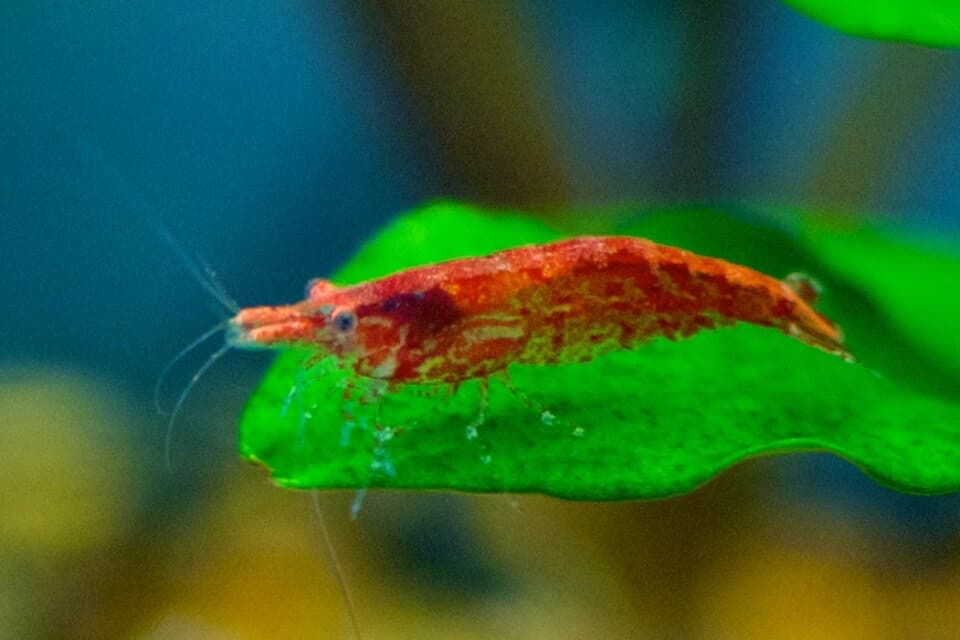
Cherry shrimp
Also known as Red cherry shrimp, Neocaridina davidi, Neocaridina shrimp
- Adult size
- About 2–3 cm
- Lifespan
- 1–2 years
- Origin
- Taiwan and parts of mainland China; red forms are selectively bred
- Company
- Keep in a colony of 10 or more
- Peaceful
- Busy
- Colourful
- Delicate
About the Cherry shrimp
Cherry shrimp are tiny freshwater shrimp bred in a range of colours, the best known being bright red. Wild-type shrimp are a more muted brownish-green, and the vivid colours seen today come from selective breeding.
They are popular in planted tanks and small aquariums because they are peaceful, busy and fascinating to watch as they pick over every surface. In stable conditions they breed readily, with females carrying eggs under their tails.
Although they are among the easier invertebrates, they are very sensitive to sudden changes in water and to certain chemicals.
Temperament
Cherry shrimp are completely peaceful and spend their time grazing. However, they are small enough to be eaten by many fish, and even small fish may pick off the baby shrimp. They do best in a shrimp-only tank or with very small, peaceful fish and snails.
Tank & water
A colony can be kept in a tank of around 20 litres or more, though larger tanks are more stable. They tolerate a broad temperature range, roughly 18–27°C, with many keepers aiming for the low to mid twenties. A gentle sponge filter is ideal, as it cannot suck up babies and provides grazing surfaces. Add shrimp only to a fully cycled, mature tank with plenty of plants such as mosses.
Diet
Cherry shrimp graze on biofilm, algae and decaying plant matter, so a mature tank provides much of their food. Supplement with specialist shrimp foods, algae wafers and blanched vegetables in small amounts. Remove uneaten food within a few hours to avoid fouling the water.
Behaviour & tank mates
Mosses, fine-leaved plants, leaf litter and wood provide grazing areas and places to hide, especially during moulting. Watching shrimp forage, moult and carry eggs is part of the fun. A colony in a densely planted tank shows the most natural behaviour.
Tank maintenance
Small, regular water changes of around 10–20% are safer than large ones, as sudden changes in chemistry can trigger failed moults. Always dechlorinate and match the temperature carefully.
Health
Cherry shrimp are very sensitive to copper, which is found in some plant fertilisers and fish treatments, so check any product before adding it to a shrimp tank. Problems moulting, often seen as a white ring around the body, can be linked to unstable water or mineral imbalances. Sudden deaths usually indicate a water quality issue, so test the water first and seek advice from an experienced shrimp keeper or aquatic specialist.
Prone to
- Failed moults
- Copper poisoning
- Sudden deaths from water quality issues
- Parasites
Call a vet if you notice
- Several shrimp dying in a short time — test the waterEmergency
- Shrimp swimming frantically around the tank
- A white ring around the body that does not resolve
- Shrimp losing colour or becoming lethargic
- Unusual growths on the body
An aquatic vet or experienced aquatic specialist is best placed to help. Find one before you need them.
Common questions
Can cherry shrimp live with fish?
They can be kept with very small, peaceful fish, but many fish will eat shrimp, especially babies. A shrimp-only tank is the safest option.
How fast do cherry shrimp breed?
In stable conditions they breed readily, with females carrying eggs for a few weeks. Babies are tiny copies of the adults.
Why are my cherry shrimp dying?
Sudden deaths are often caused by water quality issues, copper or sudden changes in temperature or chemistry. Test the water and review any products added.
Written by the Petopedia editorial team to our editorial standards. General guidance, not veterinary advice.