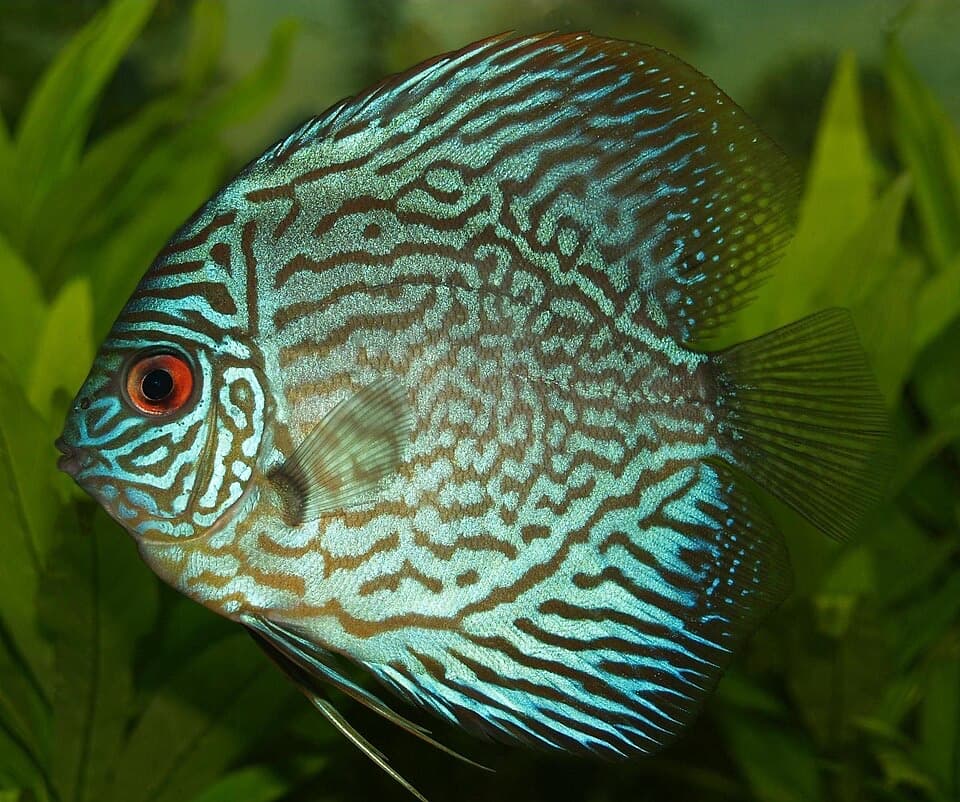
Discus
Also known as Symphysodon, Pompadour fish
- Adult size
- About 15–20 cm across
- Lifespan
- 10–15 years
- Origin
- Slow-moving rivers and flooded forests of the Amazon basin
- Company
- Keep in a group, commonly 5 or more
- Regal
- Nervous
- Sensitive
- Social
About the Discus
Discus are round, flattened cichlids with dazzling colours, from wild-type browns and greens with blue streaks to bred forms in solid red, turquoise, white and pigeon-blood patterns. Their size and presence have earned them a reputation as a showpiece fish.
In the wild they gather in groups among sunken branches in warm, very soft and acidic water. Most aquarium discus today are captive-bred, which makes them somewhat more adaptable than wild fish, but they remain sensitive to poor or unstable water.
Discus parents feed their newly free-swimming young on a mucus they secrete from their skin, an unusual form of parental care among fish. Keeping discus well takes time, equipment and dedication, so they are best suited to experienced aquarists.
Temperament
Discus are calm but nervous fish that startle easily and dislike busy, boisterous tank mates. They are social and live in groups in which a clear pecking order develops, so a single fish or a pair in a big tank may become withdrawn. Suitable companions must tolerate very warm water and be gentle, such as cardinal tetras or certain corydoras species that like high temperatures.
Tank & water
A group of adult discus needs a large tank, with around 250 litres or more often suggested, and depth to suit their tall bodies. They need warm water of roughly 28–31°C, which is hotter than most community fish prefer. Soft, slightly acidic water and highly efficient filtration help, and stability matters more than chasing exact numbers. Some keepers use bare-bottomed tanks for easier cleaning, while others prefer planted tanks with heat-tolerant plants.
Diet
Discus are mainly carnivorous and need a high-quality diet built around specialist discus pellets or granules, with frozen foods such as bloodworm, brine shrimp and mysis for variety. Juveniles need several small meals a day to grow properly, while adults are usually fed two or three times daily. Siphon out leftovers promptly, because rich foods foul warm water quickly.
Behaviour & tank mates
Discus feel safest in a quiet room away from slamming doors and heavy foot traffic. Tall plants or upright pieces of wood give them vertical cover similar to the flooded forest roots of their homeland. Keeping a proper group lets you watch their social interactions, colour changes and, sometimes, pairing and breeding.
Tank maintenance
Many discus keepers carry out large water changes several times a week to keep nitrate and other wastes very low. Replacement water must closely match the tank's temperature and chemistry to avoid shock.
Health
Discus are prone to stress-related illness, internal parasites, bacterial infections and hole-in-the-head, where small pits form around the face and along the lateral line. A discus that turns dark, hides in a corner or stops eating is often unwell or stressed. Quarantine new discus carefully, test water regularly and involve an aquatic vet or experienced discus specialist early when problems appear.
Prone to
- Hole-in-the-head
- Internal parasites
- Bacterial infections
- Stress-related illness
- Gill flukes
Call a vet if you notice
- Gasping at the surface or breathing through one gill — test the waterEmergency
- Turning very dark and hiding in a corner
- Refusing food for more than a day or two
- White, jelly-like or stringy droppings
- Pits or lesions on the head
- Cloudy eyes or a white film on the skin
An aquatic vet or experienced aquatic specialist is best placed to help. Find one before you need them.
Common questions
Are discus fish hard to keep?
Discus are among the more demanding freshwater fish. They need warm, very clean, stable water and frequent water changes, so they are best kept by people who already have experience with tropical fish.
What temperature do discus need?
Discus need warm water, usually around 28–31°C. Many common community fish are uncomfortable at that temperature, so tank mates must be chosen with care.
Why is my discus turning black?
Discus darken when stressed, frightened, ill or when water conditions are poor. Test the water and look for other signs such as hiding or not eating, and seek advice if it continues.
Can discus live with angelfish?
Some keepers do house them together, but angelfish can be pushier at feeding time and may carry diseases that affect discus. Many experienced keepers prefer to keep them separately.
Written by the Petopedia editorial team to our editorial standards. General guidance, not veterinary advice.