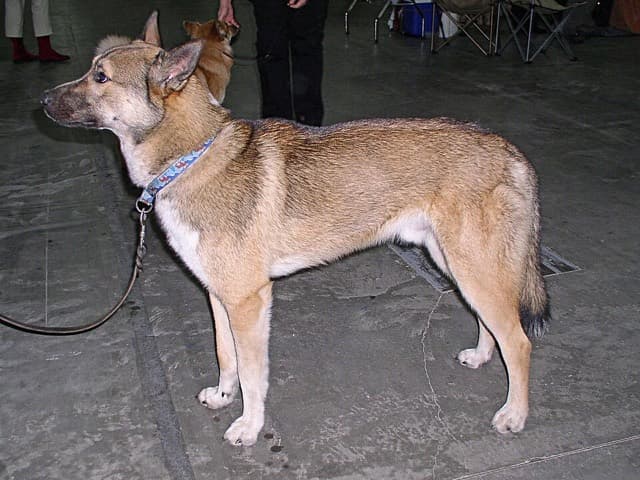
East Siberian Laika
Also known as Vostotchno-Sibirskaïa Laïka · Laika de Siberie Orientale · Ostsibirischer Laïka · Laika de Siberia Oriental
Russian Federation, Nordic Hunting Dogs
- Size
- Large
- Height
- —
- Weight
- —
- Life expectancy
- —
- Independent
- Alert
- Hardy
- Strong hunting drive
Heights and weights are typical adult ranges; individual dogs vary.
About the East Siberian Laika
The East Siberian Laika is a Russian spitz-type hunter, one of several laika breeds developed across Siberia to find elk, bear and fur-bearing game, and to pull sledges. It is a medium-large, sturdy dog with a dense coat, erect ears and a curled tail. Outside Russia and nearby regions it is rare, and it is a dog for experienced owners with space.
Temperament
Typically independent, alert and very keen on hunting, with a strong prey drive. Often reserved with strangers and wary of other dogs. It needs early socialisation and an experienced, patient owner.
Exercise
Needs a lot of daily exercise, well over an hour, with walks and chances to explore. Keep on a lead or in secure areas near wildlife.
Grooming
Dense double coat that sheds heavily at least twice a year. Brush weekly, and daily when moulting.
Care & wellbeing
Plan for secure fencing, as it can wander after scents. Check teeth and ears, keep weight lean and avoid heat during exercise.
Living with a East Siberian Laika
Typical tendencies for the breed. Upbringing, training and the individual matter as much.
History
A Russian Laika from eastern Siberia, developed as a hardy hunting dog for forest game across wide taiga regions. It is independent and energetic, and was valued by hunters for its stamina and persistence.
Health
There's limited reliable published information on health issues in the East Siberian Laika. Breed clubs and your vet are the best sources.
Not every East Siberian Laika is affected, and this isn't a diagnosis. Read about common conditions and when to see a vet.
Cost to keep
Higher than average- Food, insurance and medicines cost more for a big dog
- Little or no professional grooming needed
- A commitment of many years
A relative guide, not a price — costs vary a lot by country, insurer and lifestyle.
Is a East Siberian Laika right for you?
Could suit
- Active owners who enjoy long walks, running or hiking
Think twice if
- You can't give well over an hour of exercise a day, every day
- This is your first dog — an independent breed can be a challenge to train
- You need a dog you can easily lift or carry
Not sure? Try the breed finder or read choosing the right dog breed.
Common questions
How much exercise does a East Siberian Laika need?
As a guide, around 90–120 minutes a day, split between walks, play and sniffing time. Puppies and older dogs need shorter, gentler sessions.
How much grooming does a East Siberian Laika need?
Brushing a few times a week. Check ears, teeth and nails as part of the routine.
Are East Siberian Laikas easy to train?
Often independent-minded, so training needs patience, consistency and high-value rewards.
Do East Siberian Laikas shed?
Quite a lot. Regular brushing keeps loose hair under control — expect more around spring and autumn.
Are East Siberian Laikas good with children?
Many get on well with children. Always supervise young children with any dog, and teach them to give the dog space.
Can a East Siberian Laika live in a flat?
It's usually a challenge — as long as they get enough daily exercise and time outdoors.
Written by Petopedia as general guidance, not veterinary advice. Ask your vet about health screening for this breed.
Breed details
- Country of origin
- Russian Federation
- Type
- Nordic Hunting Dogs
- Internationally recognised
- 1980