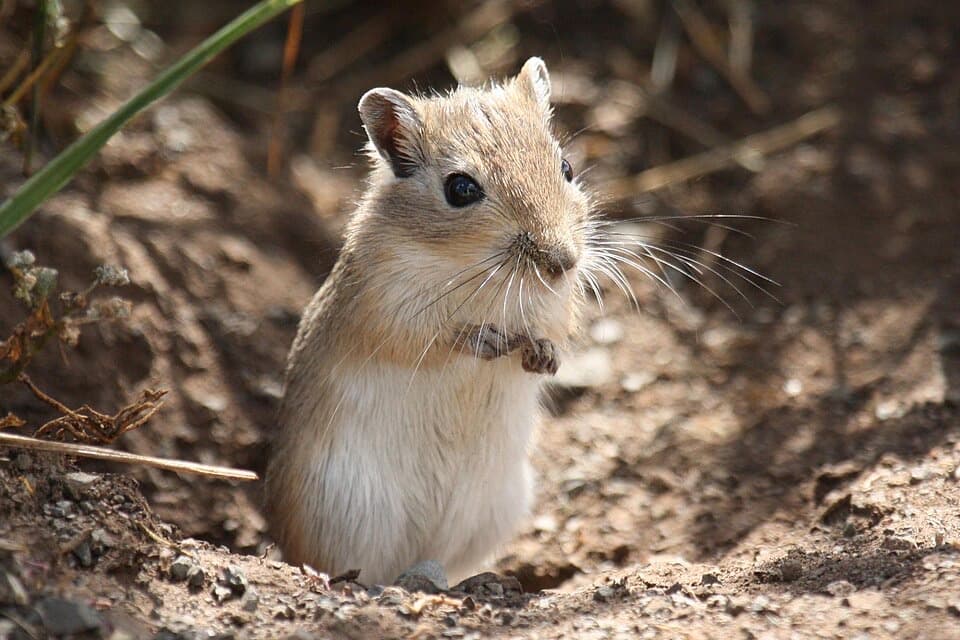
Mongolian Gerbil
Also known as Gerbil, Mongolian jird
- Adult size
- 10–12 cm long excluding tail, 50–80 g
- Lifespan
- 3–4 years
- Origin
- Mongolia and northern China
- Company
- Same-sex pairs or small groups
- Curious
- Active
- Friendly
- Low-odour
About the Mongolian Gerbil
The Mongolian gerbil is a small desert rodent from the steppes of Mongolia and northern China, where it lives in family groups in burrows.
Gerbils are active, curious and low-odour, making them good pets for people who enjoy watching animals dig and tunnel. They are active in short bursts through the day and night.
Temperament
Gerbils are curious, active and generally friendly, and rarely bite when handled gently. They are social and should be kept in same-sex pairs or small groups, introduced carefully. Gerbils thump their hind feet when excited or alarmed. They are less likely to sleep through the day than hamsters.
Housing
A glass tank or tank-topper cage with deep bedding for digging is ideal, at least around 75 cm long for a pair. Bedding should be deep enough to hold tunnels, ideally 20 cm or more. Provide a sand bath with chinchilla sand, not dust. Avoid wire floors.
Diet
Feed a complete gerbil food, with small amounts of fresh vegetables. Sunflower seeds are popular but fatty, so use them as treats. Provide fresh water daily. Do not overfeed treats.
Exercise & enrichment
Gerbils love digging, tunnelling and chewing. Provide deep bedding, tunnels and cardboard to shred. A solid wheel is safe. Handle gently and regularly.
Grooming
Gerbils groom themselves and need a sand bath. Check teeth and nails. Clean the tank regularly.
Health
Some gerbils have seizures, often triggered by stress or sudden handling. Tail slip can happen if they are grabbed by the tail, and older gerbils may develop tumours of the scent gland on the belly. Sore noses can develop from burrowing or stress. Regular health checks help.
Prone to
- Seizures
- Tail slip
- Dental problems
- Tumours
Call a vet if you notice
- Prolonged seizureEmergency
- Tail injury or slip
- Overgrown teeth
- Lumps
- Weight loss
A vet with experience of exotic pets is best placed to help. Find one before you need them.
Common questions
Do gerbils smell?
Gerbils come from a dry climate and produce small amounts of concentrated urine, so they have very little odour compared with many rodents.
Can a gerbil live alone?
Gerbils are social and are happier in same-sex pairs or small family groups. Introducing adult strangers needs care, as gerbils can fight.
Why is my gerbil having a fit?
Some gerbils have seizures triggered by stress or sudden handling. They usually pass within minutes, but a vet should check the gerbil, and a fit that does not stop is an emergency.
Why does my gerbil thump its feet?
Foot thumping is a signal to other gerbils, often of alarm or excitement.
Written by the Petopedia editorial team to our editorial standards. General guidance, not veterinary advice.