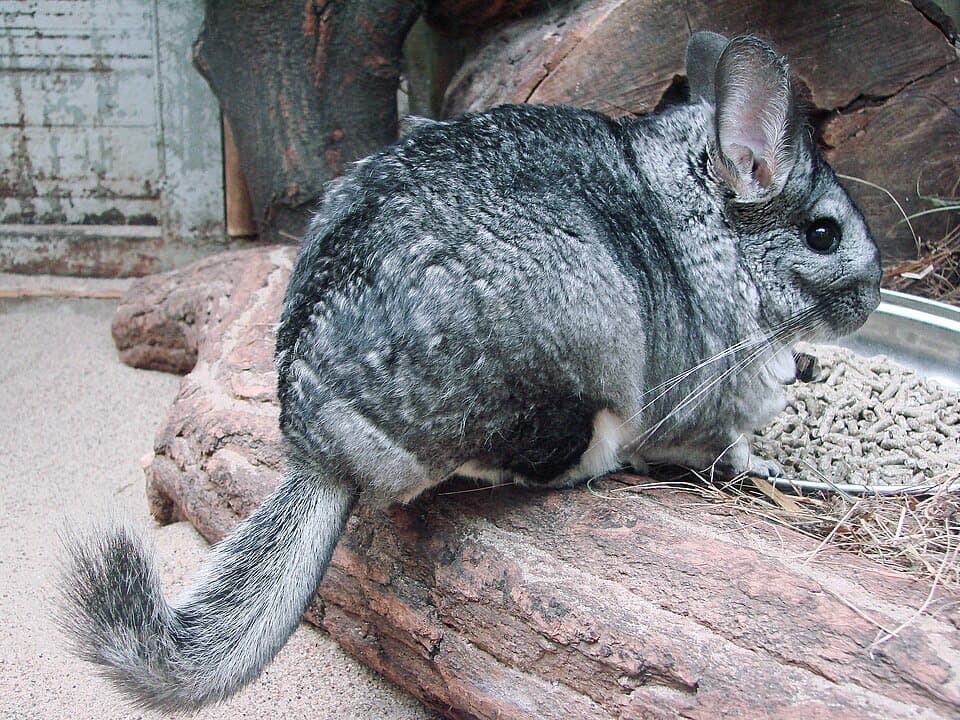
Chinchilla
Also known as Long-tailed chinchilla
- Adult size
- 25–35 cm long excluding tail, 400–800 g
- Lifespan
- 10–20 years
- Origin
- Andes mountains of South America
- Company
- Best in pairs or small same-sex groups
- Curious
- Lively
- Gentle
- Nocturnal
About the Chinchilla
Chinchillas are rodents from the high Andes, adapted to cool, dry mountain conditions with extremely dense fur. Wild chinchillas are endangered due to historical fur hunting.
Pet chinchillas are mostly descended from the long-tailed chinchilla. They are active at dusk and night, need cool temperatures, dust baths and a high-fibre diet, and can live for well over a decade.
Temperament
Chinchillas are curious and lively but often dislike being held tightly. With patience they can become tame and enjoy sitting on people. They are best kept in pairs or small groups of the same sex. They are crepuscular, most active in the early morning and evening.
Housing
Chinchillas need a tall, multi-level cage with solid ledges, as they love jumping; aim for at least around 90 cm wide, 60 cm deep and 120 cm tall for a pair. They overheat easily, so keep them in a cool room, ideally below about 22 °C, away from direct sun and radiators. Avoid wire floors that can hurt feet. Allow daily supervised exercise in a safe room.
Diet
Chinchillas need unlimited good-quality hay, which keeps teeth and gut healthy. Add a small amount of chinchilla pellets daily. Treats should be minimal, as sugary or fatty foods can cause digestive problems. Keep a supply of clean water topped up.
Exercise & enrichment
Chinchillas need space to jump, wooden chews to gnaw and hiding places. Daily exercise outside the cage in a chinchilla-proof room is beneficial. Avoid exercise wheels with rungs; solid wheels of large diameter are safer. Handle gently and let them come to you.
Grooming
Chinchillas need a dust bath several times a week to keep fur clean and dry; never bathe them in water. Check teeth and nails regularly. Clean the cage frequently.
Health
Dental disease from overgrown teeth is very common and can cause drooling, weight loss and eye discharge. Heatstroke is a serious risk in warm conditions. Fur slip, where patches of fur are lost when grabbed, is a defence mechanism. Digestive problems such as bloat or reduced droppings need prompt attention.
Prone to
- Dental disease
- Heatstroke
- Fur slip
- Bloat
- Reduced droppings (gut stasis)
Call a vet if you notice
- Panting, lethargy or red ears in warm weatherEmergency
- No droppings or not eating for 12 hoursEmergency
- Drooling or wet chin
- Weight loss
- Eye discharge
A vet with experience of exotic pets is best placed to help. Find one before you need them.
Common questions
Why do chinchillas need dust baths?
Their dense fur holds moisture, which can cause fungal infections. Dust baths keep fur clean and dry.
Can chinchillas get wet?
They should not be bathed in water, as their fur takes a long time to dry.
Are chinchillas good pets for children?
They are often better suited to older children and adults who can handle them gently.
Written by the Petopedia editorial team to our editorial standards. General guidance, not veterinary advice.