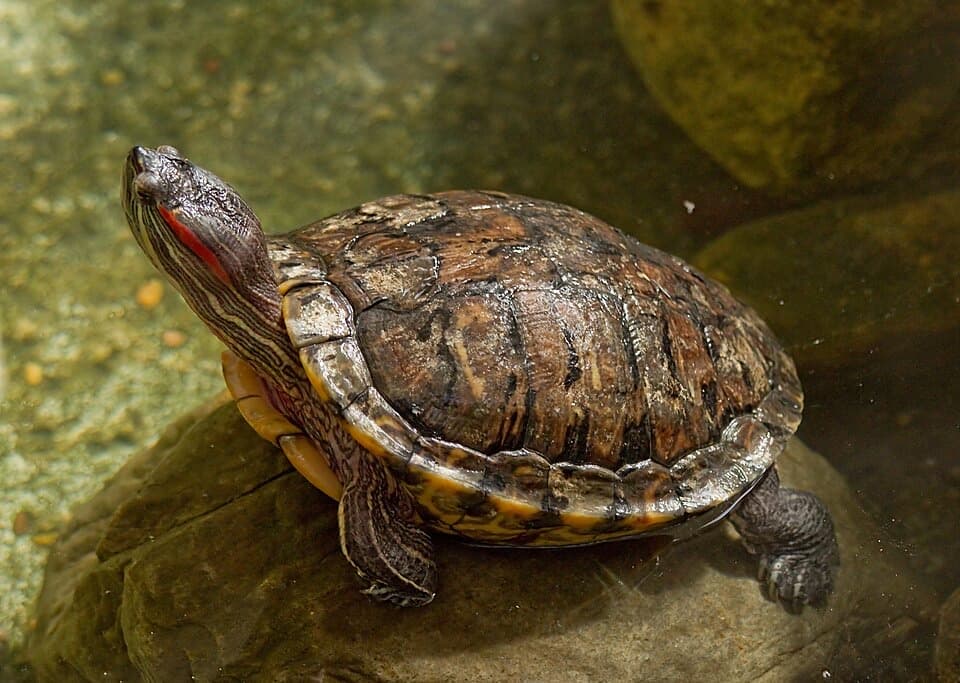
Red-eared slider
Also known as Red-eared terrapin, Trachemys scripta elegans
- Adult size
- Females 25–30 cm shell length; males 15–23 cm
- Lifespan
- 20–40 years
- Origin
- South-central United States and north-eastern Mexico, centred on the Mississippi River basin
- Company
- Can share very large set-ups, but watch for bullying and nipping
- Alert
- Aquatic
- Active
- Long-lived
About the Red-eared slider
The red-eared slider is a freshwater turtle named for the red stripe behind each eye and its habit of sliding off logs into the water when disturbed. For decades it was sold in enormous numbers as a tiny hatchling pet.
That small coin-sized turtle becomes an adult needing hundreds of litres of filtered water, and may live 30 years or more. Unwanted pets released into rivers and ponds have established populations on several continents, and the species is now regarded as one of the world's most damaging invasive animals. In the EU and UK, sale and breeding are restricted, and releasing them is illegal in many countries, so anyone who can no longer keep one should contact a reptile rescue.
Temperament
Sliders are alert and active, and many quickly learn to swim to the front of the tank when someone approaches. They do not enjoy being handled and may scratch with strong claws or bite when lifted. Basking in a row under a lamp is a characteristic sight.
Enclosure, heat & light
An adult female needs a tank or indoor pond of several hundred litres with deep swimming water, and males somewhat less; a hatchling tank will be outgrown within a few years. Strong external filtration and regular partial water changes are essential, as turtles produce a lot of waste. Provide a fully dry basking area with a heat lamp and UVB above it, with water and basking temperatures controlled by thermostats and checked with thermometers. Secure outdoor ponds can suit them in summer where the climate allows, but must be escape-proof.
Diet
Young sliders eat mainly animal protein, shifting towards a diet with much more plant matter as adults. Good foods include aquatic plants such as duckweed, leafy greens, quality turtle pellets and occasional insects or whole small fish. Overfeeding protein can contribute to shell deformities and obesity. Feeding in a separate tub helps keep the main tank clean.
Enrichment & handling
A long swimming area, floating plants, a variety of basking spots and live plants to graze on encourage natural behaviour. Floating vegetables or pellets among plants promote foraging. Handle only when needed, holding the shell firmly at the sides and away from your face.
Shedding & hygiene
Sliders shed thin scute layers from the shell as they grow, which should come away cleanly. Dirty water leads to shell and skin infections, so maintain filtration and water changes. Wash your hands after touching the turtle, its water or equipment, and never clean tanks in a kitchen sink.
Health
Common problems include shell rot, swollen eyes linked to vitamin A deficiency, respiratory infections that can show as lopsided swimming, and metabolic bone disease without UVB. Female sliders can produce eggs without a male and need a laying area to avoid egg binding. Turtles commonly carry salmonella, which is why the United States restricted the sale of small turtles in the 1970s, so hygiene is especially important with young children.
Prone to
- Shell rot
- Vitamin A deficiency
- Respiratory infection
- Metabolic bone disease
- Egg binding
- Salmonella carriage
Call a vet if you notice
- Swollen or closed eyes
- Swimming lopsided or unable to dive
- Soft, pitted or smelly patches on the shell
- Wheezing, mucus or open-mouth breathing
- Not eating for over a week at correct temperatures
- Cracked shell or a female straining to layEmergency
A vet with experience of exotic pets is best placed to help. Find one before you need them.
Common questions
How big do red-eared sliders get?
Females commonly reach 25–30 cm in shell length and males around 15–23 cm. They grow from coin-sized hatchlings within a few years, so plan for the adult tank from the start.
How long do red-eared sliders live?
With good care they often live 20–40 years. Many people are surprised to find their childhood turtle needs care well into their own adulthood.
Can I release my red-eared slider into a pond?
No. Released sliders harm native wildlife, often suffer in unsuitable climates, and release is illegal in many countries. Contact a reptile rescue or exotics vet for help rehoming instead.
Do red-eared sliders carry salmonella?
They commonly do, even when healthy. Wash hands after contact with the turtle or its water, keep equipment out of the kitchen and supervise young children closely.
Written by the Petopedia editorial team to our editorial standards. General guidance, not veterinary advice.