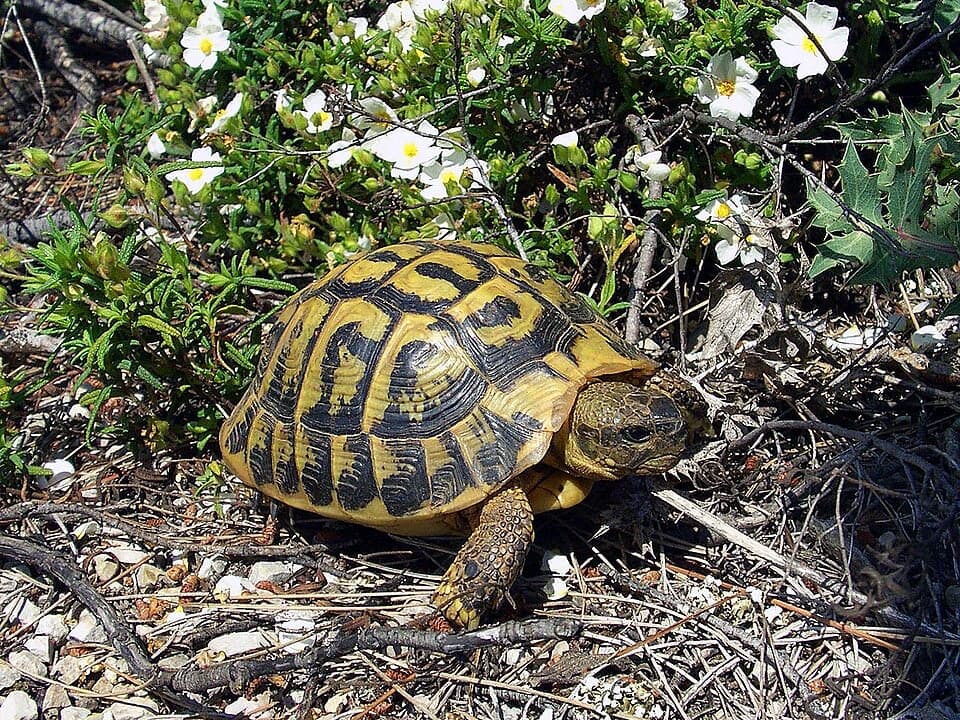
Hermann's tortoise
Also known as Testudo hermanni
- Adult size
- 15–25 cm shell length
- Lifespan
- 40–75 years
- Origin
- Southern Europe, from north-eastern Spain through southern France and Italy to the Balkans
- Company
- Often kept alone; males may harass females and fight each other
- Curious
- Long-lived
- Active
- Grazing
About the Hermann's tortoise
Hermann's tortoise is a small Mediterranean tortoise with a domed, yellow and black shell, found in dry scrub, meadows and open woodland across southern Europe. Western and eastern populations differ in size and colour, and many keepers recognise them separately.
These tortoises can live for many decades, often outliving their first owners, so planning for long-term care is part of taking one on. Wild populations are protected, and in the UK and EU most Hermann's tortoises need paperwork proving captive breeding before they can be sold.
Temperament
Hermann's tortoises are curious and active, particularly in warm weather, and many learn to recognise their keepers at feeding time. Males can be persistent and pushy towards females, sometimes ramming or biting. They are not cuddly, and most prefer not to be picked up often.
Enclosure, heat & light
An adult needs a large, secure outdoor enclosure in suitable weather, with sunny basking areas, shade, plants to graze, and a heated, weatherproof shelter. Indoors, an open-topped tortoise table of generous size is usually preferred to a glass tank, which can overheat and restrict ventilation. Provide a basking lamp over one end and cooler areas elsewhere, using a thermostat and thermometer, plus UVB whenever the tortoise is indoors. A substrate such as a soil and sand mix allows digging.
Diet
They should eat high-fibre, low-protein plants, especially broad-leaved weeds such as dandelion, plantain, clover and sow thistle, plus suitable flowers. Fruit, bread, meat and pet foods are unsuitable and can cause digestive problems and abnormal shell growth. Provide a calcium supplement as advised and fresh water in a shallow dish. A tortoise-safe planted outdoor area allows natural grazing.
Enrichment & handling
Varied terrain with slopes, rocks, logs, plants to hide in and areas to dig all encourage natural behaviour. Scattering food encourages foraging. When lifting, support the shell from beneath with both hands and keep the tortoise low to the ground.
Shedding & hygiene
Tortoises do not need bathing in soap, but regular shallow warm soaks can encourage drinking and passing waste. Beaks and nails usually wear naturally on rough surfaces; overgrowth needs vet attention. Wash your hands after handling or cleaning, and supervise young children closely.
Health
Common problems include shell pyramiding from poor diet or dry conditions, metabolic bone disease, respiratory infections, parasites and overgrown beaks. Hibernation is natural but must only be attempted with a healthy tortoise after a vet check, and with careful temperature control. Never hibernate an unwell or underweight tortoise.
Prone to
- Shell pyramiding
- Metabolic bone disease
- Respiratory infection
- Intestinal parasites
- Overgrown beak and nails
Call a vet if you notice
- Runny nose, bubbles or wheezing
- Eyes swollen or closed
- Soft shell or shell damage
- Not eating after emerging from hibernation
- Bleeding or prolapse from the ventEmergency
- Any shell crack or injury from a predator, fall or lawnmowerEmergency
A vet with experience of exotic pets is best placed to help. Find one before you need them.
Common questions
Do Hermann's tortoises need to hibernate?
Hibernation is natural for them, but it carries risks if the tortoise is unwell or temperatures aren't controlled. Always have a vet health check first and get guidance on how to hibernate safely.
How long do Hermann's tortoises live?
Many live for 50 years or more with good care, and some much longer. Plan for a tortoise that may outlive you, including who will look after it in future.
Can Hermann's tortoises eat fruit?
No, fruit is not part of their natural diet and can upset digestion. Stick to weeds, flowers and other high-fibre leaves.
Do I need paperwork for a Hermann's tortoise?
In the UK and EU, Hermann's tortoises are protected and most need documentation showing they were captive-bred before they can be sold. Ask the seller for the correct paperwork.
Written by the Petopedia editorial team to our editorial standards. General guidance, not veterinary advice.