Peruvian guinea pig
- Adult size
- About 20–25 cm long, not including hair; 0.7–1.2 kg
- Lifespan
- 5–7 years
- Origin
- South America (refined as a breed in Europe)
- Company
- Keep in pairs or small groups
- Alert
- Curious
- Bold
- Long-haired
About the Peruvian guinea pig
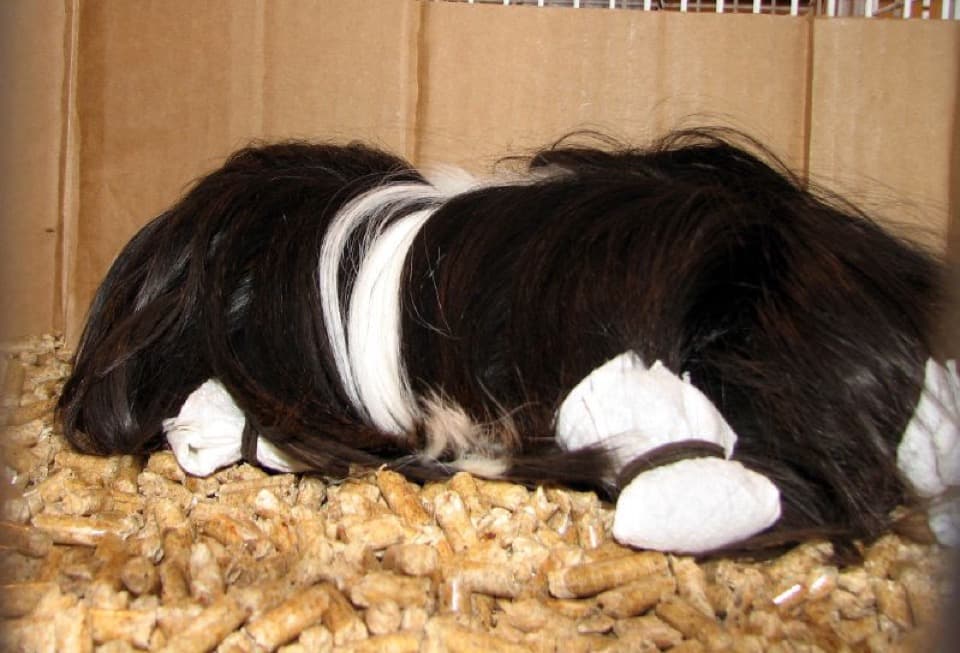
The Peruvian is a long-haired guinea pig whose silky coat grows forward over the face as well as down the body, sometimes reaching considerable lengths in show animals. It is one of the oldest long-haired breeds and was developed from South American stock.
Show Peruvians are often kept with their hair wrapped to protect it. Pet Peruvians usually have their coats trimmed short, which makes daily life far easier for both guinea pig and owner.
Temperament
Peruvians are often described as alert, curious and fairly bold. Many become used to handling because of their grooming routine. Like all guinea pigs, they are social and happiest with companions.
Housing
Provide a spacious enclosure with clean, dry bedding that will not tangle in the coat; fleece liners are popular with long-haired breeds. Clean frequently, as the long coat picks up urine and debris. Keep them away from heat, as the long coat can make them uncomfortable in warm weather.
Diet
Unlimited hay, daily vitamin C-rich vegetables and a measured portion of guinea pig pellets form a healthy diet. Fresh water must always be available. Hay racks can help keep hay out of the coat.
Exercise & enrichment
Hides, tunnels and foraging opportunities are as important for Peruvians as any guinea pig. Floor time in a clean, safe area allows exercise without snagging the coat. Grooming time can become positive bonding if kept calm and rewarded.
Grooming
The long coat needs daily brushing to prevent matting, and most pet owners trim it regularly to a manageable length, especially around the rear. Check nails, teeth and the bottom often.
Health
Matted or soiled hair can lead to skin infections and, in warm weather, flystrike. Long hair can hide weight loss and skin problems, so weigh them regularly. They are also prone to common guinea pig issues such as scurvy, dental problems and respiratory infections.
Prone to
- Matting and skin infections
- Flystrike
- Hidden weight loss
- Vitamin C deficiency
- Dental problems
Call a vet if you notice
- Not eatingEmergency
- Maggots or a soiled, smelly rearEmergency
- Breathing difficultyEmergency
- Sore, red or crusty skin under the coat
- Weight loss detected on the scales
A vet with experience of exotic pets is best placed to help. Find one before you need them.
Common questions
How long does Peruvian guinea pig hair grow?
It grows continuously, and in show animals it can become very long. Pet owners usually trim it to keep it clean and manageable.
Can I cut my Peruvian guinea pig's hair?
Yes, careful trimming is common for pets. Use rounded scissors and take care near the skin, or ask a vet or experienced groomer to show you.
Are Peruvian guinea pigs good for children?
Their grooming needs make them better suited to older children with adult help, or to adults who enjoy daily grooming.
Written by the Petopedia editorial team to our editorial standards. General guidance, not veterinary advice.