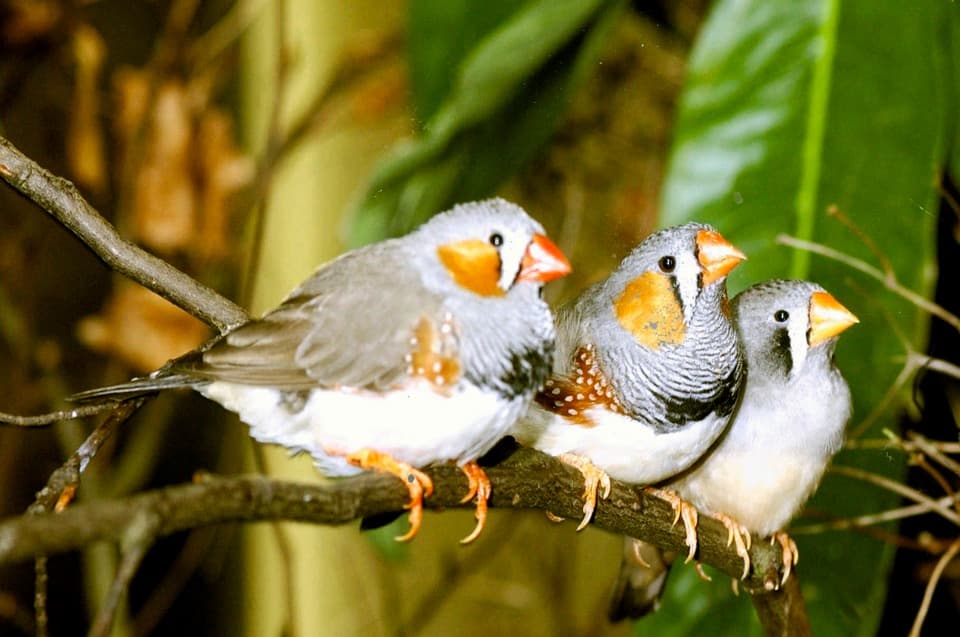
Zebra Finch
Also known as Australian zebra finch
- Adult size
- about 10 cm long, 12–15 g
- Lifespan
- 5–9 years
- Origin
- Australia
- Company
- Keep in pairs or groups; not a handling pet
- Lively
- Sociable
- Hardy
- Busy
About the Zebra Finch
The zebra finch is a tiny, lively finch from the arid grasslands of Australia. Males have orange cheek patches, striped throats and chestnut flanks, and both sexes have bright orange-red beaks.
Zebra finches are easy to keep and great fun to watch. They are not handling pets but thrive in pairs or groups in a long flight cage or aviary.
Temperament
Zebra finches are busy, sociable birds that hop and call constantly with a nasal, toy-trumpet beep. Males sing a short, buzzy song learned from their fathers. They are not usually tameable for handling and are stressed by being caught. They breed readily, which can lead to overcrowding if pairs are not managed.
Cage & housing
A long flight cage of at least around 75 cm for a pair, or an aviary for a group, allows the flight they need. Bar spacing should be about 1 cm. Place perches at either end with open space between, and offer a covered area for roosting. Avoid nest boxes unless you plan to breed, as hens may lay clutch after clutch.
Diet
Feed a finch seed mix as a base, with daily greens such as chickweed or chopped kale, and occasional egg food. Sprouted seed is a good addition. Calcium from cuttlebone or grit is essential, especially for laying hens. Clean, fresh water should be given daily.
Company & enrichment
Flight is their main exercise, so space is key. Swings and natural branches add interest. Zebra finches prefer the company of their own kind to toys. A shallow bath is usually popular.
Nails, beak & bathing
Provide a bath dish regularly. Overgrown nails or beaks may need trimming by an avian vet. Clean the cage floor frequently.
Health
Zebra finches can suffer from air sac mites, egg binding and overgrown beaks or nails. Hens that breed continuously can become depleted of calcium. Respiratory infections occur in poor conditions. Tiny birds deteriorate quickly, so a fluffed-up finch needs a vet the same day.
Prone to
- Air sac mites
- Egg binding
- Overgrown beak or nails
- Respiratory infections
Call a vet if you notice
- Fluffed and inactiveEmergency
- Straining to layEmergency
- Breathing difficulty
- Overgrown beak or nails
- Diarrhoea
A vet with experience of exotic pets is best placed to help. Find one before you need them.
Common questions
Can zebra finches be kept alone?
They are very social and should be kept in pairs or groups.
Do zebra finches like to be handled?
Generally not. They are best enjoyed by watching.
How do I stop my zebra finches breeding?
Removing nest boxes and nesting material usually reduces breeding. Keeping same-sex pairs is another option.
Written by the Petopedia editorial team to our editorial standards. General guidance, not veterinary advice.