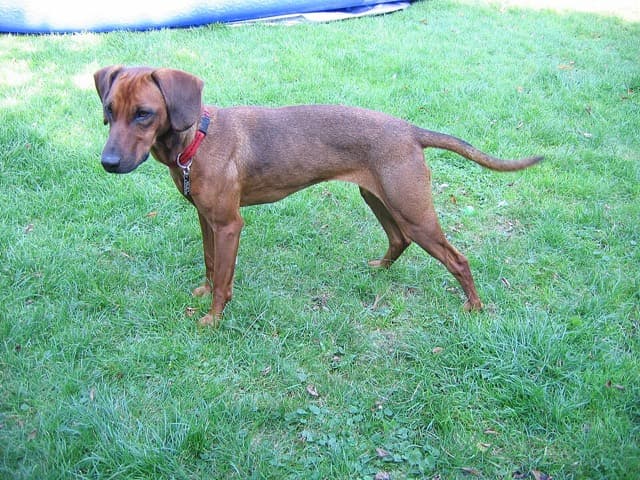
Tyrolean Hound
Also known as Tiroler Bracke · Brachet Tyrolien · Sabueso del Tirol
Austria, Scent hounds
- Size
- Medium
- Height
- 42–48 cm
- Weight
- 15–22 kg
- Life expectancy
- 12–14 yrs
- Tenacious
- Friendly
- Vocal
- Athletic
- Affectionate
Heights and weights are typical adult ranges; individual dogs vary.
About the Tyrolean Hound
The Tyrolean Hound, or Tiroler Bracke, is an Austrian scent hound used in alpine country to follow hare and fox and to trail wounded game. It is a medium-sized, sturdy dog with a dense, short coat, typically red or black and tan with white markings. It is a hunter's hound, bred to work steadily on steep ground.
Temperament
Friendly, affectionate and tenacious on a trail. It is generally good with family, and has the independence and vocal nature of scent hounds.
Exercise
Needs lots of daily exercise and the opportunity to use its nose, such as long walks and scent work.
Grooming
The short, dense coat is looked after with a weekly brush. Check it after days out in undergrowth.
Care & wellbeing
Check the drop ears regularly and keep them clean. Keep weight lean and nails trimmed. A secure fence and good recall training matter, as it may follow scent for long distances.
Daily needs at a glance
For a typical 18.5 kg adult- Water
- 740 ml–1.1 L
- a day
- Energy
- ≈ 1,000 kcal
- a day, neutered adult
- Exercise
- 90–120 min
- a day
- Grooming
- An occasional brush is plenty
Starting points from the same formulas as our calculators. Your pet's age, weight, activity and food all change the numbers. Work it out for your pet
Living with a Tyrolean Hound
Typical tendencies for the breed. Upbringing, training and the individual matter as much.
History
A scent hound from the Tyrol in Austria, developed for hunting hare and fox in mountainous terrain. It has stamina, a good nose and a resonant voice, and is mainly kept as a hunting dog.
Health
There's limited reliable published information on health issues in the Tyrolean Hound. Breed clubs and your vet are the best sources.
Not every Tyrolean Hound is affected, and this isn't a diagnosis. Read about common conditions and when to see a vet.
Cost to keep
About average- Moderate food and insurance costs
- Little or no professional grooming needed
- A 12–14 year commitment
A relative guide, not a price — costs vary a lot by country, insurer and lifestyle.
Is a Tyrolean Hound right for you?
Could suit
- Active owners who enjoy long walks, running or hiking
- People who'd rather not spend much time grooming
Think twice if
- You can't give well over an hour of exercise a day, every day
Not sure? Try the breed finder or read choosing the right dog breed.
Common questions
How big does a Tyrolean Hound get?
Adult Tyrolean Hounds typically stand about 42–48 cm at the shoulder and weigh around 15–22 kg. Individuals vary, and males are often larger than females.
How long do Tyrolean Hounds live?
Typically 12–14 years. Keeping them lean, active and up to date with vet checks gives the best chance of a long, healthy life.
How much exercise does a Tyrolean Hound need?
As a guide, around 90–120 minutes a day, split between walks, play and sniffing time. Puppies and older dogs need shorter, gentler sessions.
How much grooming does a Tyrolean Hound need?
An occasional brush is plenty. Check ears, teeth and nails as part of the routine.
Are Tyrolean Hounds easy to train?
Generally trainable with consistent, reward-based practice.
Do Tyrolean Hounds shed?
A moderate amount. Regular brushing keeps loose hair under control.
Are Tyrolean Hounds good with children?
Many get on well with children. Always supervise young children with any dog, and teach them to give the dog space.
Can a Tyrolean Hound live in a flat?
It's usually a challenge — as long as they get enough daily exercise and time outdoors.
Written by Petopedia as general guidance, not veterinary advice. Ask your vet about health screening for this breed.
Breed details
- Country of origin
- Austria
- Type
- Scent hounds
- Internationally recognised
- 1954