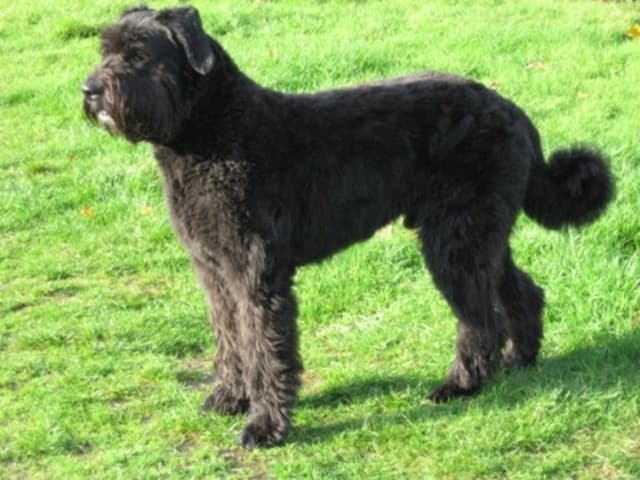
Bouvier des Flandres
Also known as Bouvier des Flandres-Vlaamse Koehond · Flandrischer Treibhund · Boyero de Flandes
Belgium, France, Cattledogs (except Swiss Cattledogs)
- Size
- Large
- Height
- 59–70 cm
- Weight
- 27–40 kg
- Life expectancy
- 10–12 yrs
- Steady
- Loyal
- Protective
- Intelligent
Heights and weights are typical adult ranges; individual dogs vary.
About the Bouvier des Flandres
The Bouvier des Flandres is a large herding and farm dog from Flanders, on the border between Belgium and France. It was developed to drive cattle and pull small carts, and later served as a guard and service dog. It has a powerful, compact build and a rough, shaggy double coat with a beard and moustache. Today it is also a family companion.
Temperament
Usually steady, intelligent and loyal, with a calm, protective nature. It can be reserved with strangers and strong-willed, so early socialisation and firm, fair training are important.
Exercise
Needs good daily exercise, such as long walks and training activity, and enjoys having a job. It is an athletic dog, though moderate in pace compared with many herding breeds.
Grooming
The thick, rough coat needs regular brushing a few times a week and professional trimming. Beard areas need frequent cleaning.
Care & wellbeing
Large, deep-chested dogs benefit from careful feeding routines and joint care.
Daily needs at a glance
For a typical 33.5 kg adult- Water
- 1.3 L–2 L
- a day
- Energy
- ≈ 1,560 kcal
- a day, neutered adult
- Exercise
- 60–90 min
- a day
- Grooming
- Brushing most days
Starting points from the same formulas as our calculators. Your pet's age, weight, activity and food all change the numbers. Work it out for your pet
Living with a Bouvier des Flandres
Typical tendencies for the breed. Upbringing, training and the individual matter as much.
History
A strong, rugged herding and farm dog from Flanders, on the border of Belgium and France. It was used to drive cattle, pull carts and guard property. Its harsh shaggy coat and bearded face suit outdoor work, and the breed has also served as a police and service dog.
Health
The breed can be prone to
- Hip dysplasia
- Laryngeal paralysis
- Eye problems
- Bloat (gastric dilatation-volvulus)
Health tests to ask a breeder about
- Hip and elbow scores
- Eye tests
- Heart check
Not every Bouvier des Flandres is affected, and this isn't a diagnosis. Read about common conditions and when to see a vet.
Cost to keep
Higher than average- Food, insurance and medicines cost more for a big dog
- Regular professional grooming adds up
- A 10–12 year commitment
- Budget for breed-related health checks or insurance
A relative guide, not a price — costs vary a lot by country, insurer and lifestyle.
Is a Bouvier des Flandres right for you?
Could suit
- Owners who can manage a good walk or two each day
- First-time owners prepared to train consistently
Think twice if
- You don't have time for frequent brushing or the cost of professional grooming
- You need a dog you can easily lift or carry
Not sure? Try the breed finder or read choosing the right dog breed.
Common questions
How big does a Bouvier des Flandres get?
Adult Bouvier des Flandress typically stand about 59–70 cm at the shoulder and weigh around 27–40 kg. Individuals vary, and males are often larger than females.
How long do Bouvier des Flandress live?
Typically 10–12 years. Keeping them lean, active and up to date with vet checks gives the best chance of a long, healthy life.
How much exercise does a Bouvier des Flandres need?
As a guide, around 60–90 minutes a day, split between walks, play and sniffing time. Puppies and older dogs need shorter, gentler sessions.
How much grooming does a Bouvier des Flandres need?
Brushing most days. Check ears, teeth and nails as part of the routine.
Are Bouvier des Flandress easy to train?
Usually quick to learn with reward-based training.
Do Bouvier des Flandress shed?
A moderate amount. Regular brushing keeps loose hair under control.
Are Bouvier des Flandress good with children?
Many get on well with children. Always supervise young children with any dog, and teach them to give the dog space.
Can a Bouvier des Flandres live in a flat?
It's usually a challenge — as long as they get enough daily exercise and time outdoors.
What health problems do Bouvier des Flandress have?
The breed can be prone to hip dysplasia, laryngeal paralysis, eye problems. Not every Bouvier des Flandres is affected — ask a breeder about health testing, and your vet about what to watch for.
Written by Petopedia as general guidance, not veterinary advice. Ask your vet about health screening for this breed.
Breed details
- Country of origin
- Belgium, France
- Type
- Cattledogs (except Swiss Cattledogs)
- Internationally recognised
- 1955