Bloat in Dogs (GDV): The Signs and What to Do Immediately
In short
If your dog is retching but bringing up little or nothing, and their belly looks swollen or feels tight, go to the nearest vet now and phone ahead on the way. Bloat can become fatal within hours, so do not wait to see if it settles, and do not try to treat it at home.
Call your vet now if
- Your dog keeps trying to vomit but little or nothing comes up, or only foamy saliva
- Their belly looks swollen, bloated or feels tight like a drum
- They are restless, pacing, unable to settle or keep getting up and lying down
- They are drooling more than usual
- They seem to be in pain, stand hunched, or do not want their belly touched
- Their gums look pale, grey or bluish
- They are breathing fast or seem to be struggling to breathe
- They are weak, wobbly or collapse
You do not need every one of these signs to act. Unproductive retching on its own, especially in a large or deep-chested dog, is reason enough to go now.
What bloat is
"Bloat" is a word people use for a stomach that has filled with gas, fluid or food and swollen up. In its most serious form, called gastric dilatation-volvulus or GDV, the swollen stomach also twists on itself. That twist traps the contents inside and can cut off blood supply to the stomach and other organs. It also presses on major blood vessels, which affects circulation to the rest of the body.
Not every swollen stomach has twisted, but you cannot tell the difference at home. Only a vet, usually with an examination and imaging such as an X-ray, can work out what is happening. That is why any suspicion of bloat is treated as an emergency.
Which dogs are most at risk
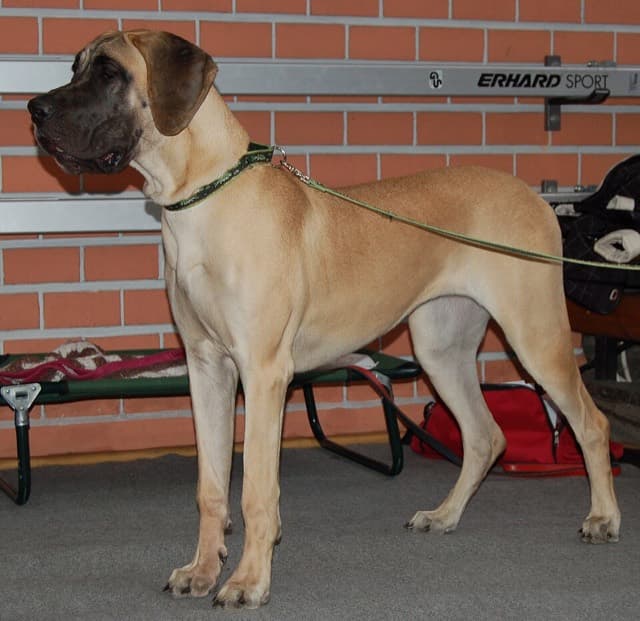
Large and giant breeds with deep, narrow chests are most often affected. Examples include Great Danes, German Shepherds, Standard Poodles, Weimaraners, Irish Setters, Dobermanns, Bloodhounds and Akitas, though this is not a complete list. Older dogs, dogs that eat quickly and dogs with a close relative who has had bloat are often described as being at higher risk too.
However, any dog can be affected, including smaller breeds and mixed breeds. If your dog shows the signs above, do not talk yourself out of going because they are not a "typical" bloat breed.
What to do right now
- Phone the nearest vet practice, or an out-of-hours emergency vet if your own practice is closed. Tell them you think your dog may have bloat. This lets the team prepare for your arrival. If you cannot get through quickly, set off anyway and keep trying on the way.
- Go now. Do not wait to see whether it passes, and do not wait until morning. With GDV, time matters a great deal.
- Move your dog gently. Let them walk to the car if they can do so comfortably. If they are large and unable to walk, ask someone to help you lift them while supporting the chest and back end, avoiding pressure on the belly.
- Keep them calm and still on the journey. Have someone sit with them if possible, and drive carefully.
- Do not give food, water, treats or anything by mouth. If they are drinking a little on their own before you leave, that is not a reason to delay, but do not encourage it.
- Bring any useful information. If you can, note when the signs started, when they last ate, and anything unusual they might have eaten. Do not let gathering this slow you down.
What not to do
- Do not try to relieve it at home. There is no safe home treatment for bloat. Trying to release gas, making your dog vomit, rubbing or pressing on the belly, or giving any remedy or human medicine can cause harm and wastes valuable time.
- Do not wait for more signs. Some dogs look only mildly uncomfortable at first and then deteriorate quickly.
- Do not walk them around to "help it move". Keep them as calm and still as you can.
What happens at the vet
Your vet will examine your dog, check their circulation and heart, and usually take an X-ray to see whether the stomach has twisted. Treatment depends on what they find. A dog with GDV usually needs stabilising first, with fluids and pain relief, then surgery to return the stomach to its normal position and check for damage. During surgery many vets also fix the stomach to the body wall to make a future twist less likely.
This is serious surgery, and your vet will talk you through the options, the likely outlook for your dog and the costs. Many dogs do recover well, especially when they reach a vet quickly.
Reducing the risk
Nobody can fully prevent bloat, and research into its causes is still ongoing. The evidence for many of the commonly shared tips is mixed. With that in mind, these general steps are often suggested, and are worth discussing with your vet:
- Feed several smaller meals rather than one large meal a day.
- Avoid vigorous exercise right around mealtimes. Many owners allow a calm period before and after eating.
- Slow down fast eaters, for example with a slow-feeder bowl or by spreading food out.
- Keep mealtimes calm, particularly in multi-dog homes where dogs may compete for food.
If you have a large, deep-chested breed, ask your vet about your dog's individual risk. For some high-risk dogs, vets may discuss a preventive surgical procedure, often at the same time as neutering. This is a decision to make with your vet, not something to rush.
Knowing the signs is the best protection
The most useful thing you can do as an owner is learn the signs and act on them without hesitation. If you are ever unsure, phone your vet and describe what you are seeing. A vet would always rather see a dog that turns out to be fine than see a dog with bloat too late. For a wider list of warning signs, see our guide to signs your pet needs a vet, and for general advice on staying calm in an emergency, read pet first aid basics.
Written by the Petopedia editorial team to our editorial standards. This is general information, not veterinary advice — if you're worried about your pet, contact your vet.