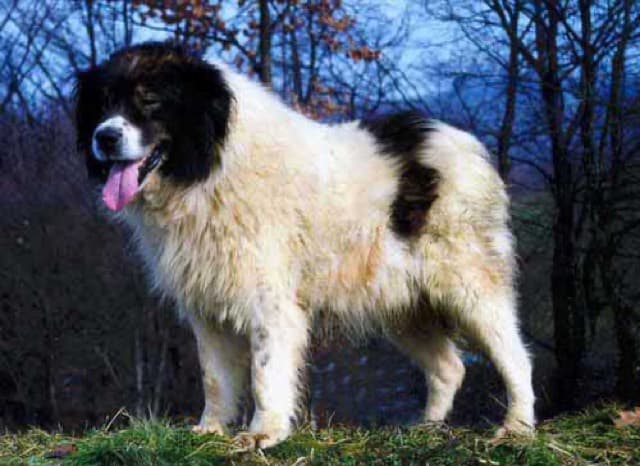
Bosnian and Herzegovinian - Croatian Shepherd Dog
Also known as Tornjak · Berger de Bosnie-Herzegovine Et de Croatie · Bosnisch-Herzegowinischer-Kroatischer Schäferhund · Pastor de Bosnia y Herzegovina - Croacia
Bosnia and Herzegovina, Croatia, Molossian type
- Size
- Large
- Height
- —
- Weight
- —
- Life expectancy
- —
- Loyal
- Protective
- Calm
- Independent
Heights and weights are typical adult ranges; individual dogs vary.
About the Bosnian and Herzegovinian - Croatian Shepherd Dog
The Bosnian and Herzegovinian - Croatian Shepherd Dog, known as the Tornjak, is a mountain livestock guardian from the Balkans. It was developed to protect flocks and farms in upland country, and it has a thick, long, weatherproof coat and a strong, sturdy build with a bushy tail. It is a large dog with a calm presence that remains primarily a working guardian.
Temperament
Generally calm, loyal and protective, with a natural watchfulness towards strangers. It tends to be gentle and devoted with its own family, but can be independent, so early socialisation and steady training are important.
Exercise
Moderate to high daily exercise: long walks and space to roam in a secure area. It is not a high-speed athlete but needs regular activity and a job or purpose.
Grooming
The long, thick double coat needs brushing a few times a week, more often during heavy moulting.
Care & wellbeing
Its thick coat collects ticks, burrs and seeds from rough pasture, so run your hands through it after walks. Provide shade and water in summer, and give a strong, quiet guardian a good fence and a calm routine.
Living with a Bosnian and Herzegovinian - Croatian Shepherd Dog
Typical tendencies for the breed. Upbringing, training and the individual matter as much.
History
A large shepherd and guardian from the Balkans, developed to protect flocks and farmsteads from predators and intruders. It is a robust, protective mountain-type dog shaped by rural life in the region. It is rare outside its home countries.
Health
There's limited reliable published information on health issues in the Bosnian and Herzegovinian - Croatian Shepherd Dog. Breed clubs and your vet are the best sources.
Not every Bosnian and Herzegovinian - Croatian Shepherd Dog is affected, and this isn't a diagnosis. Read about common conditions and when to see a vet.
Cost to keep
Higher than average- Food, insurance and medicines cost more for a big dog
- Regular professional grooming adds up
- A commitment of many years
A relative guide, not a price — costs vary a lot by country, insurer and lifestyle.
Is a Bosnian and Herzegovinian - Croatian Shepherd Dog right for you?
Could suit
- Owners who can manage a good walk or two each day
Think twice if
- You don't have time for frequent brushing or the cost of professional grooming
- You need a dog you can easily lift or carry
Not sure? Try the breed finder or read choosing the right dog breed.
Common questions
How much exercise does a Bosnian and Herzegovinian - Croatian Shepherd Dog need?
As a guide, around 60–90 minutes a day, split between walks, play and sniffing time. Puppies and older dogs need shorter, gentler sessions.
How much grooming does a Bosnian and Herzegovinian - Croatian Shepherd Dog need?
Brushing most days. Check ears, teeth and nails as part of the routine.
Are Bosnian and Herzegovinian - Croatian Shepherd Dogs easy to train?
Generally trainable with consistent, reward-based practice.
Do Bosnian and Herzegovinian - Croatian Shepherd Dogs shed?
A moderate amount. Regular brushing keeps loose hair under control.
Are Bosnian and Herzegovinian - Croatian Shepherd Dogs good with children?
Many get on well with children. Always supervise young children with any dog, and teach them to give the dog space.
Can a Bosnian and Herzegovinian - Croatian Shepherd Dog live in a flat?
It's usually a challenge — as long as they get enough daily exercise and time outdoors.
Written by Petopedia as general guidance, not veterinary advice. Ask your vet about health screening for this breed.
Breed details
- Country of origin
- Bosnia and Herzegovina, Croatia
- Type
- Molossian type
- Internationally recognised
- 2017