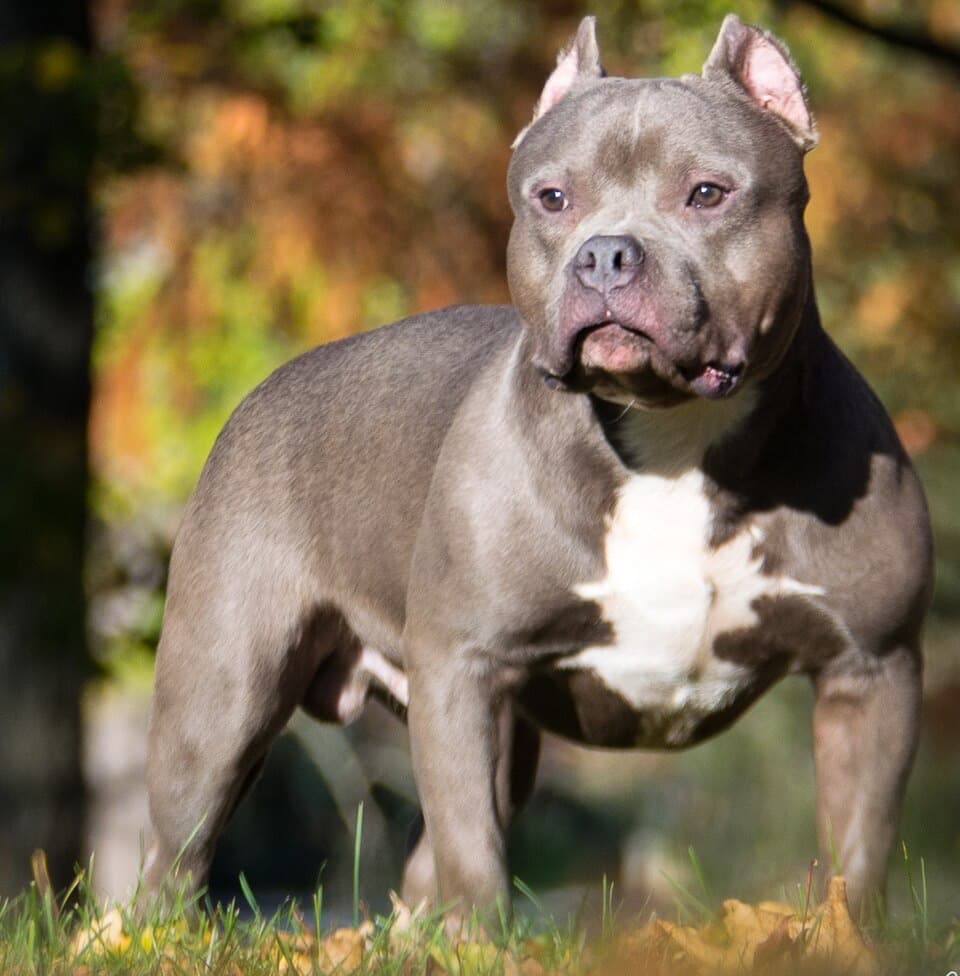
American Bully
Also known as Bully · Xl Bully · Pocket Bully
United States, Bull and bully breeds
- Size
- Medium
- Height
- 33–57 cm
- Weight
- 14–55 kg
- Life expectancy
- 10–13 yrs
- Muscular
- Sociable
- Loyal
- Steady
Heights and weights are typical adult ranges; individual dogs vary.
About the American Bully
The American Bully is a modern companion breed with a compact, heavily muscled body and a wide chest. It comes in several size categories, usually called pocket, standard, classic and XL, so two American Bullies can look very different. The breed has become hugely popular since the 2000s, and also controversial, particularly the largest dogs.
Temperament
Breeders aimed for an outgoing, friendly dog that enjoys being with its family, and many individuals are exactly that. As with any strong dog, behaviour depends heavily on genetics, upbringing and training, and the sheer weight of the bigger types means poor manners can quickly become dangerous. Careful socialisation with other dogs is wise.
Exercise
Most need a moderate amount of daily exercise, such as a couple of brisk walks plus play. Heavier, shorter-faced dogs can overheat quickly, so avoid strenuous activity in warm weather.
Grooming
The short coat is easy to keep: a weekly brush and a wipe of any skin folds is usually enough. Keep nails short, as these heavy dogs put a lot of pressure on their feet.
Care & wellbeing
Look for a breeder who prioritises sound movement, healthy breathing and a stable temperament over extreme size or bulk. In England, Wales and Scotland, XL Bully type dogs became subject to legal restrictions in 2024, and other countries regulate bull-breed types too; check the law where you live and get legal advice if unsure. Noisy breathing, collapse or struggling in heat need a vet straight away.
Daily needs at a glance
For a typical 34.5 kg adult- Water
- 1.4 L–2.1 L
- a day
- Energy
- ≈ 1,590 kcal
- a day, neutered adult
- Exercise
- 60–90 min
- a day
- Grooming
- An occasional brush is plenty
Starting points from the same formulas as our calculators. Your pet's age, weight, activity and food all change the numbers. Work it out for your pet
Living with a American Bully
Typical tendencies for the breed. Upbringing, training and the individual matter as much.
History
The American Bully was developed in the United States from the 1980s and 1990s, mainly from American Pit Bull Terriers and American Staffordshire Terriers, with other bulldog-type breeds thought to have been added. The goal was a heavier, more companion-focused dog. The ABKC began registering the breed in 2004 and the UKC recognised it in 2013. The XL type later became the focus of public concern in the UK after a number of serious attacks.
Health
The breed can be prone to
- Hip and elbow dysplasia
- Breathing difficulty in shorter-faced dogs
- Heat intolerance
- Skin allergies
- Cherry eye
Health tests to ask a breeder about
- Hip and elbow scoring
- Heart examination
- Eye examination
Not every American Bully is affected, and this isn't a diagnosis. Read about common conditions and when to see a vet.
Cost to keep
About average- Moderate food and insurance costs
- Little or no professional grooming needed
- A 10–13 year commitment
- Budget for breed-related health checks or insurance
A relative guide, not a price — costs vary a lot by country, insurer and lifestyle.
Is a American Bully right for you?
Could suit
- Owners who can manage a good walk or two each day
- People who'd rather not spend much time grooming
Not sure? Try the breed finder or read choosing the right dog breed.
Common questions
How big does a American Bully get?
Adult American Bullys typically stand about 33–57 cm at the shoulder and weigh around 14–55 kg. Individuals vary, and males are often larger than females.
How long do American Bullys live?
Typically 10–13 years. Keeping them lean, active and up to date with vet checks gives the best chance of a long, healthy life.
How much exercise does a American Bully need?
As a guide, around 60–90 minutes a day, split between walks, play and sniffing time. Puppies and older dogs need shorter, gentler sessions.
How much grooming does a American Bully need?
An occasional brush is plenty. Check ears, teeth and nails as part of the routine.
Are American Bullys easy to train?
Generally trainable with consistent, reward-based practice.
Do American Bullys shed?
A little. Regular brushing keeps loose hair under control.
Are American Bullys good with children?
Many get on well with children. Always supervise young children with any dog, and teach them to give the dog space.
Can a American Bully live in a flat?
It's usually a challenge — as long as they get enough daily exercise and time outdoors.
What health problems do American Bullys have?
The breed can be prone to hip and elbow dysplasia, breathing difficulty in shorter-faced dogs, heat intolerance. Not every American Bully is affected — ask a breeder about health testing, and your vet about what to watch for.
Written by Petopedia as general guidance, not veterinary advice. Ask your vet about health screening for this breed.
Breed details
- Country of origin
- United States
- Type
- Bull and bully breeds
- Recognition
- Recognised by the UKC and ABKC; not recognised by the FCI, AKC or The Kennel Club