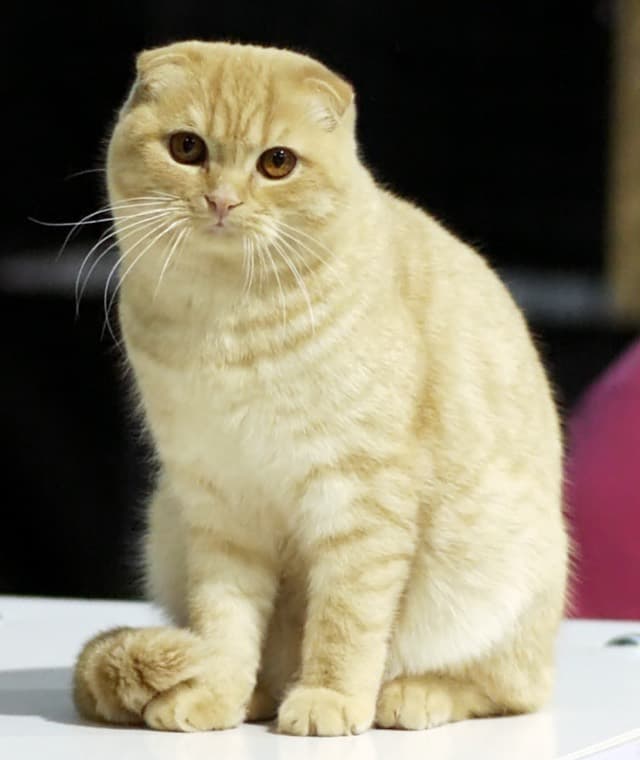
Scottish Fold
Scotland
- Size
- Medium
- Weight
- 3–6 kg
- Life expectancy
- 11–14 yrs
- calm
- affectionate
- adaptable
- quiet
Weights are typical adult ranges; individual cats vary.
About the Scottish Fold
The Scottish Fold originated from a farm cat with folded ears found in Scotland in 1961. The fold is caused by a dominant gene that affects cartilage throughout the body, not only the ears. Folds have a rounded head, large eyes and short or long coats; kittens from fold matings may also have straight ears.
Temperament
Calm, affectionate and adaptable. Scottish Folds tend to be quiet companions who enjoy company and are usually fine with children and other pets.
Play & activity
Moderate play needs, though any stiffness or reluctance to jump should be noticed. Gentle play and low climbing options suit them.
Grooming
Brush weekly for shorthaired cats and two or three times a week for longhairs. Check ears regularly, as the fold can trap wax.
Care & wellbeing
The fold gene is linked to osteochondrodysplasia, a painful disorder of cartilage and bone, and many vets and some registries discourage breeding it. Watch for stiffness, a short thick tail or reluctance to move, and consider a straight-eared cat instead.
Daily needs at a glance
For a typical 4.5 kg adult- Water
- 180 ml–270 ml
- a day
- Energy
- ≈ 260 kcal
- a day, neutered adult
- Active play
- 15–20 min
- a day
- Grooming
- A brush once a week
Starting points from the same formulas as our calculators. Your pet's age, weight, activity and food all change the numbers. Work it out for your pet
Living with a Scottish Fold
Typical tendencies for the breed. Upbringing, training and the individual matter as much.
History
The Scottish Fold began with a cat found in Scotland with ears that folded forward, caused by a gene that affects cartilage. The gene can also cause painful joint disease. It is sweet-natured and adaptable.
Health
The breed can be prone to
- Osteochondrodysplasia (cartilage and bone problems)
- Arthritis
- Hypertrophic cardiomyopathy (HCM)
Health tests to ask a breeder about
- Breeder health records
- Heart scans for HCM
Not every Scottish Fold is affected, and this isn't a diagnosis. Read about common conditions and when to see a vet.
Cost to keep
About average- Moderate food and insurance costs
- Little or no professional grooming needed
- A 11–14 year commitment
- Budget for breed-related health checks or insurance
A relative guide, not a price — costs vary a lot by country, insurer and lifestyle.
Is a Scottish Fold right for you?
Could suit
- Quieter homes and relaxed routines
- People who'd rather not spend much time grooming
- People who want an affectionate, people-focused cat
Common questions
How big does a Scottish Fold get?
Adult Scottish Folds typically weigh around 3–6 kg. Individuals vary, and males are often larger than females.
How long do Scottish Folds live?
Typically 11–14 years. Keeping them lean, active and up to date with vet checks gives the best chance of a long, healthy life.
How active is a Scottish Fold?
Expect to spend around 15–20 minutes a day on play, ideally in short sessions with toys they can chase and pounce on.
How much grooming does a Scottish Fold need?
A brush once a week. Check ears, teeth and nails as part of the routine.
Are Scottish Folds affectionate?
Typically very people-focused and affectionate. Every cat is an individual, and early handling shapes how sociable they become.
Do Scottish Folds shed?
A moderate amount. Regular brushing keeps loose hair under control.
Are Scottish Folds good with children?
They usually do well with children. Always supervise young children with any cat, and teach them to give the cat space.
Can a Scottish Fold live in a flat?
Usually, yes — with plenty of play, climbing space and enrichment.
What health problems do Scottish Folds have?
The breed can be prone to osteochondrodysplasia (cartilage and bone problems), arthritis, hypertrophic cardiomyopathy (hcm). Not every Scottish Fold is affected — ask a breeder about health testing, and your vet about what to watch for.
Written by Petopedia as general guidance, not veterinary advice.