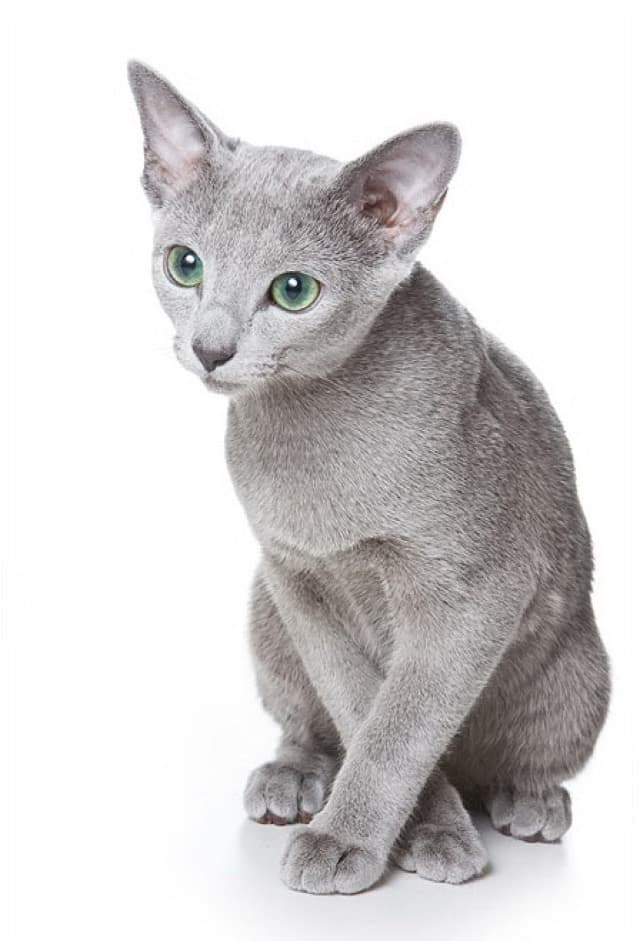
Russian Blue
Russia
- Size
- Medium
- Weight
- 3–5.5 kg
- Life expectancy
- 14–18 yrs
- gentle
- reserved
- loyal
- quiet
Weights are typical adult ranges; individual cats vary.
About the Russian Blue
The Russian Blue is thought to have come from Russia's northern ports and reached Britain in the nineteenth century, though its earliest history is not well recorded. After the Second World War breeders used other breeds to rebuild numbers. It is a fine-boned cat with a dense, plush double coat of silver-tipped blue and vivid green eyes.
Temperament
Quiet, gentle and reserved with strangers but loving with its family. Russian Blues like routine, dislike chaos and are often content to entertain themselves.
Play & activity
Moderately active. Enjoys chase and puzzle games and can stay playful for years, though it prefers calm sessions to rough play.
Grooming
The dense double coat sheds lightly. Weekly brushing is enough for most of the year.
Care & wellbeing
A generally sturdy breed. Many are enthusiastic eaters, so portion control helps prevent weight gain.
Daily needs at a glance
For a typical 4.3 kg adult- Water
- 172 ml–258 ml
- a day
- Energy
- ≈ 250 kcal
- a day, neutered adult
- Active play
- 20–30 min
- a day
- Grooming
- An occasional brush is plenty
Starting points from the same formulas as our calculators. Your pet's age, weight, activity and food all change the numbers. Work it out for your pet
Living with a Russian Blue
Typical tendencies for the breed. Upbringing, training and the individual matter as much.
History
The Russian Blue is a blue-grey short-coated cat said to come from the northern port region of Russia. Its dense, plush coat and green eyes are distinctive. It is quiet, shy with strangers and loyal to its family.
Health
There's limited reliable published information on health issues in the Russian Blue. Breed clubs and your vet are the best sources.
Not every Russian Blue is affected, and this isn't a diagnosis. Read about common conditions and when to see a vet.
Cost to keep
About average- Moderate food and insurance costs
- Little or no professional grooming needed
- A 14–18 year commitment
A relative guide, not a price — costs vary a lot by country, insurer and lifestyle.
Is a Russian Blue right for you?
Could suit
- Homes that can offer daily play sessions
- People who'd rather not spend much time grooming
- Owners ready for a long commitment — often well into their teens
Common questions
How big does a Russian Blue get?
Adult Russian Blues typically weigh around 3–5.5 kg. Individuals vary, and males are often larger than females.
How long do Russian Blues live?
Typically 14–18 years. Keeping them lean, active and up to date with vet checks gives the best chance of a long, healthy life.
How active is a Russian Blue?
Expect to spend around 20–30 minutes a day on play, ideally in short sessions with toys they can chase and pounce on.
How much grooming does a Russian Blue need?
An occasional brush is plenty. Check ears, teeth and nails as part of the routine.
Are Russian Blues affectionate?
Usually friendly, with a balance of company and independence. Every cat is an individual, and early handling shapes how sociable they become.
Do Russian Blues shed?
A moderate amount. Regular brushing keeps loose hair under control.
Are Russian Blues good with children?
They usually do well with children. Always supervise young children with any cat, and teach them to give the cat space.
Can a Russian Blue live in a flat?
Usually, yes — with plenty of play, climbing space and enrichment.
Written by Petopedia as general guidance, not veterinary advice.