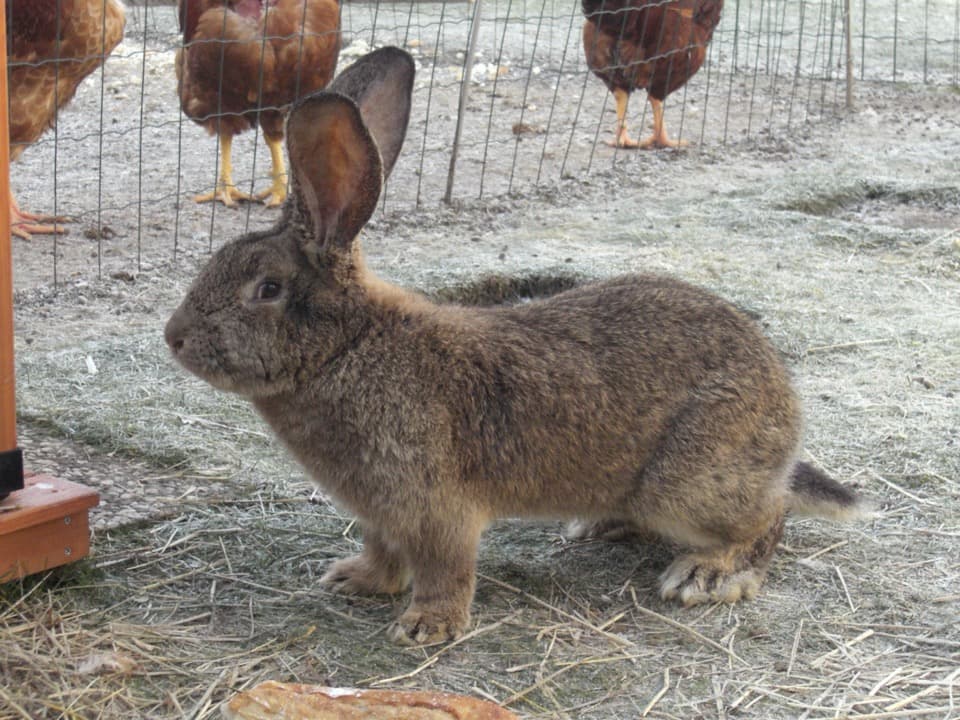
Flemish Giant
- Adult size
- Often 6–9 kg; some individuals larger
- Lifespan
- 5–8 years
- Origin
- Belgium (Flanders)
- Company
- Keep in a neutered pair with a similarly sized rabbit
- Gentle
- Placid
- Sociable
- Large
About the Flemish Giant
The Flemish Giant is one of the largest rabbit breeds, with a long, powerful body and upright ears. It is thought to have developed in the Flanders region of Belgium, perhaps several centuries ago, although its precise ancestry is uncertain.
Originally bred for meat and fur, Flemish Giants are now often kept as house rabbits and are sometimes described as gentle giants. Their size brings big rewards and big responsibilities: more space, more food and higher vet costs than a small rabbit.
Temperament
Most Flemish Giants are placid and tolerant, and many enjoy lying beside their owners to be stroked. Their calm nature can make them good with sensible older children, though their weight means they are difficult and risky to lift. They are often very sociable with other rabbits and can live happily alongside a similarly sized companion.
Housing
Everything must be scaled up: a giant rabbit needs a very large floor area, doorways and shelters it can pass through easily, and a ceiling high enough to stand fully upright. Many owners keep them as free-roaming house rabbits. Soft flooring is important to protect their joints and feet, and large litter trays, such as cat-sized or bigger, work best.
Diet
A Flemish Giant eats a large volume of hay every day, which should always be freely available. Provide generous portions of leafy greens, and pellets measured to body weight rather than given freely, as obesity puts strain on joints and the heart. Growing youngsters should be fed under guidance from a vet familiar with rabbits.
Exercise & enrichment
They need space to move about and stretch, even if they are less inclined to wild sprints than small breeds. Large cardboard boxes, low ramps and big tunnels suit them better than climbing platforms. Lift them only when necessary, using both arms to support the whole body, or teach them to hop into a carrier.
Grooming
Their dense coat needs a weekly brush and more during moults, when the sheer volume of fur can be considerable. Large rabbits may struggle to reach their rear end, so check daily for soiling, and keep nails trimmed.
Health
Giant breeds are prone to sore hocks, arthritis and spinal problems as they age, partly due to their weight. Obesity worsens all of these and can contribute to flystrike. Some vets also report heart problems in giant rabbits, so regular check-ups and early attention to breathing changes or lethargy are sensible.
Prone to
- Sore hocks
- Arthritis and spinal problems
- Obesity
- Flystrike
- Possible heart disease
Call a vet if you notice
- Not eating or no droppingsEmergency
- Struggling to stand, dragging the back legs or sudden weaknessEmergency
- Maggots or a soiled rear endEmergency
- Breathing fast or with effort at rest
- Swollen, bald or ulcerated hocks
A vet with experience of exotic pets is best placed to help. Find one before you need them.
Common questions
How big do Flemish Giant rabbits get?
Adults commonly weigh 6–9 kg, and some grow larger. They can measure well over 75 cm when stretched out.
How long do Flemish Giants live?
Giant breeds tend to have shorter lives than small rabbits, often around 5 to 8 years. Good weight control and joint care can help them stay comfortable for longer.
Can a Flemish Giant live in a hutch?
No standard hutch is large enough for a giant rabbit to live in. They need a very large enclosure or free run of a rabbit-proofed room or home.
Written by the Petopedia editorial team to our editorial standards. General guidance, not veterinary advice.