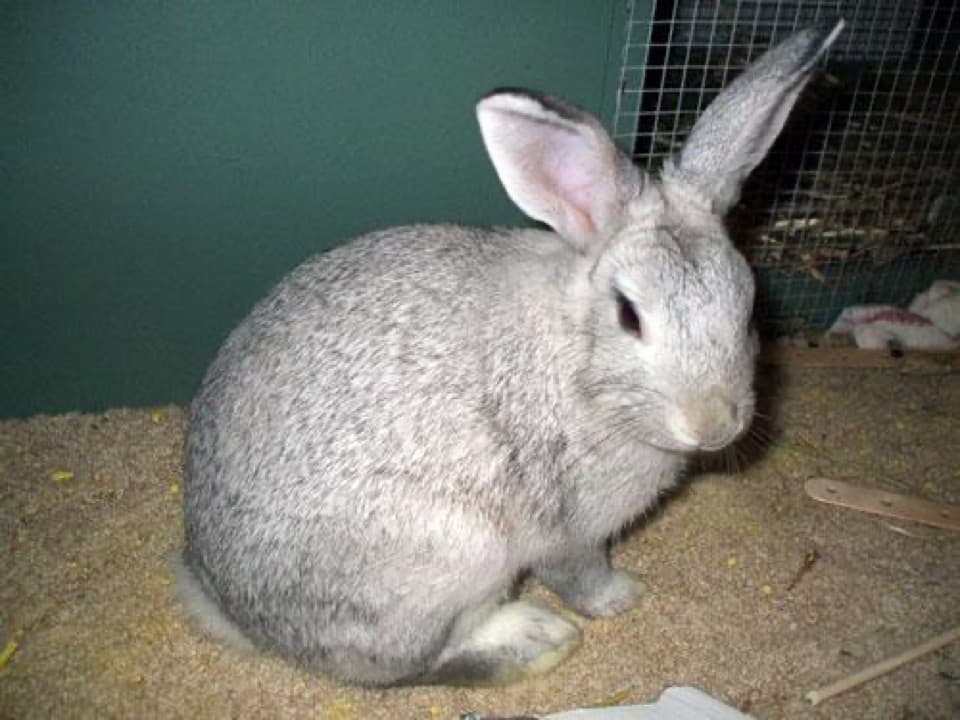
Chinchilla rabbit
Also known as Standard Chinchilla, American Chinchilla, Giant Chinchilla
- Adult size
- About 2.3–3.4 kg (Standard); American and Giant varieties larger
- Lifespan
- 5–10 years
- Origin
- France
- Company
- Keep in a neutered pair or group
- Calm
- Gentle
- Easy-going
- Soft
About the Chinchilla rabbit
Chinchilla rabbits are named for their soft grey coat, which resembles that of the chinchilla, a separate rodent species. The original breed was developed in France in the early 20th century and became popular for its fur.
Several related breeds exist: the Standard Chinchilla is medium-sized, the American Chinchilla is larger and the Giant Chinchilla larger still. The American Chinchilla in particular is now considered rare.
Temperament
Chinchilla rabbits are usually calm, gentle and easy-going. Many enjoy human company and tolerate handling well. Their relaxed nature makes them a good fit for many households.
Housing
Housing should match the size of the variety: even the Standard type needs a large enclosure or rabbit-safe room, while the bigger varieties need more space again. Cushioned flooring protects their feet, and shelters should allow them to stand fully upright. Outdoor setups must be secure and protected from heat.
Diet
Hay or grass should form most of the diet and be available at all times. Add leafy greens daily and portion pellets according to size and activity. Keep treats small and provide fresh water.
Exercise & enrichment
They enjoy exploring, foraging and lounging in boxes or tunnels. Daily exercise and gentle interaction keep them content. Handle carefully, especially the larger varieties, supporting the whole body.
Grooming
Their dense coat benefits from weekly brushing, more during moults. Check nails, teeth, feet and the rear end routinely.
Health
Chinchilla rabbits are not known for major breed-specific problems. Heavier varieties may be prone to sore hocks and obesity, and all are susceptible to dental disease and gut stasis. Neutering and vaccination against myxomatosis and RHD where available are recommended.
Prone to
- Sore hocks in larger varieties
- Dental disease
- Gastrointestinal stasis
- Obesity
Call a vet if you notice
- Not eating or no droppingsEmergency
- Painful-looking hunched posture
- Sores on the underside of the feet
- Runny nose or laboured breathing
- Fly eggs or maggotsEmergency
A vet with experience of exotic pets is best placed to help. Find one before you need them.
Common questions
Is a Chinchilla rabbit the same as a chinchilla?
No. The chinchilla is a different rodent species. Chinchilla rabbits are domestic rabbits named for their similar grey coat colour.
How big do Chinchilla rabbits get?
It depends on the variety. Standard Chinchillas are medium-sized, while American and Giant Chinchillas are considerably larger.
Are Chinchilla rabbits good pets?
They are generally calm and friendly. The larger varieties need more space and budget, so choose the type that suits your home.
Written by the Petopedia editorial team to our editorial standards. General guidance, not veterinary advice.