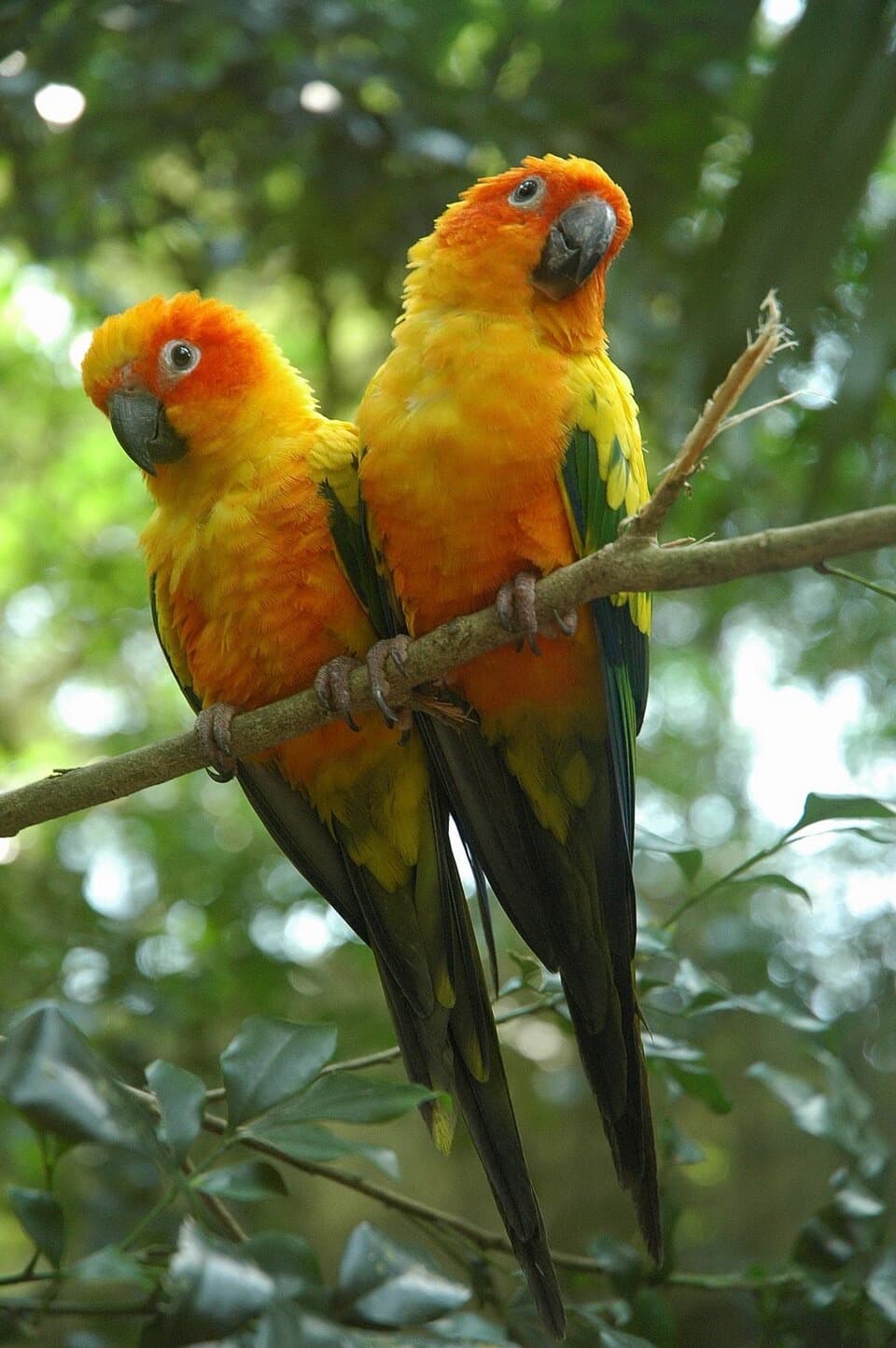
Sun Conure
Also known as Sun parakeet, Sun conure (Aratinga solstitialis)
- Adult size
- about 30 cm long, 100–130 g
- Lifespan
- 15–30 years
- Origin
- North-eastern South America (Guyana, Suriname and northern Brazil)
- Company
- Needs company for much of the day; calls loudly when left alone
- Vibrant
- Affectionate
- Very Loud
- Excitable
About the Sun Conure
The sun conure is a medium-sized parakeet from the savannah and palm forests of north-eastern South America. Young birds hatch mostly green and gradually turn the blazing yellow and orange of adults over their first year or so.
That colour made sun conures heavily trapped for the pet trade, and the species is now listed as endangered in the wild. Pet birds should always be captive-bred.
Sun conures are affectionate and goofy, but they are also one of the loudest parrots for their size. Hearing an adult call at full volume before buying is the best way to know whether one will suit your household.
Temperament
Sun conures are flock birds that like to know where their people are at all times, and they answer silence with a shrill, repeated contact call that can be heard through walls. Most become very cuddly, burrowing under a collar or into a hand for head scratches. They tend to be busy, excitable and quick to explore, and young birds go through a nippy stage while learning what beaks are for. Left alone for long hours, they are prone to screaming and feather damage.
Cage & housing
A single bird needs a cage of at least around 75 cm wide, 60 cm deep and 90 cm tall with bar spacing of about 2 cm; more for a pair. Choose a spot in the main living area, as a sun conure parked in a spare room will simply call louder. Plan on several hours a day out of the cage on a play stand or in a bird-safe room. Their lungs, like those of all parrots, are badly damaged by fumes from overheated non-stick pans, aerosols, plug-in fresheners and smoke.
Diet
Sun conures are often picky about vegetables and will happily fill up on seeds and fruit if allowed. A pellet base with a daily mix of chopped vegetables such as peppers, squash, sweet potato and leafy greens, plus a modest amount of fruit, keeps them in better health. Warm cooked foods, such as a grain and vegetable mash, are often accepted when raw vegetables are refused. Avocado, chocolate and caffeine are toxic.
Company & enrichment
These are strong fliers and acrobatic climbers that enjoy shredding cardboard, unpicking knots and emptying foraging boxes. Rewarding a soft whistle or chosen word while calmly ignoring screaming can, over weeks, shift a conure's contact call to something more bearable. Trick training, such as wave, turn around or retrieve, suits their eager-to-please side. A pair will entertain each other but will also be twice as loud.
Nails, beak & bathing
Most sun conures love water and will jump straight into a dish or sit under a fine shower. Their nails can become needle-sharp and may need blunting by an avian vet. Faded, patchy or stress-barred feathers are often a clue to a poor diet and are worth mentioning at a vet check.
Health
Feather plucking is a recognised problem in conures that are under-stimulated or kept on poor diets, and needs a medical check before it is treated as behavioural. Proventricular dilatation disease, psittacosis and chronic egg laying in hens are also seen. Beaks can overgrow if there is an underlying illness. Because birds hide symptoms, any change in droppings, voice or activity deserves prompt attention from an avian vet.
Prone to
- Feather plucking
- Proventricular dilatation disease
- Psittacosis
- Chronic egg laying
- Beak overgrowth
Call a vet if you notice
- Laboured breathing or tail bobbingEmergency
- Sitting fluffed on the cage floorEmergency
- Straining to layEmergency
- Undigested seed in droppings or repeated regurgitation
- New feather plucking or bald patches
A vet with experience of exotic pets is best placed to help. Find one before you need them.
Common questions
How loud is a sun conure?
Very loud for its size, with a piercing call that carries through walls. They call most at dawn, dusk and when they cannot see their people, so they rarely suit flats or close neighbours.
Why is my young sun conure green?
Juveniles hatch with much more green plumage and develop full yellow and orange colouring over roughly their first year. This is normal.
Are sun conures cuddly?
Most are very affectionate and enjoy head scratches and snuggling. Over-stroking the back and under the wings can encourage hormonal behaviour, so stick to the head and neck.
Why are sun conures endangered?
Large numbers were trapped from the wild for the pet trade, and habitat loss has added pressure. Choosing captive-bred birds avoids adding to the problem.
Written by the Petopedia editorial team to our editorial standards. General guidance, not veterinary advice.