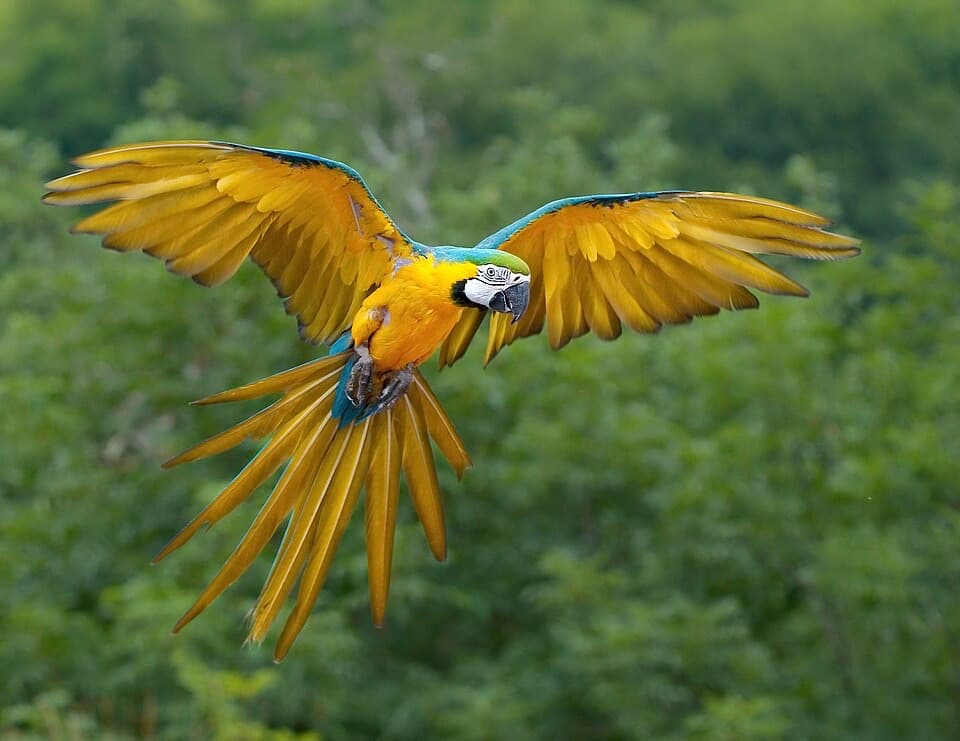
Blue-and-gold Macaw
Also known as Blue-and-yellow macaw
- Adult size
- 80–90 cm long, 900–1,300 g
- Lifespan
- 35–60 years
- Origin
- Central and South America
- Company
- Highly social; needs hours of interaction daily and an experienced keeper
- Bold
- Playful
- Very Loud
- Affectionate
About the Blue-and-gold Macaw
The blue-and-gold macaw is a large parrot with vivid blue upperparts, golden underparts and a long tail, found in forests and swamps across northern South America and Panama. Its powerful beak can crack hard nuts with ease.
Macaws are spectacular but extremely demanding pets. They are very loud, need a great deal of space and daily interaction, and can live for 50 years or more, so they suit only dedicated, experienced keepers with suitable homes.
Temperament
Blue-and-golds are generally sociable, playful and curious, and many enjoy interacting with the whole family. They can learn words and phrases, though their voice is less clear than a grey's. Their calls are ear-splitting and can carry a long way. Without enough attention they may scream persistently or pluck feathers.
Cage & housing
A macaw needs a very large, heavy-duty cage, at least around 1.5 m wide, 1 m deep and 1.5 m tall, or ideally a room-sized aviary. Bar spacing should be around 2.5–4 cm and the cage strong enough to resist their beak. Plan for several hours out of the cage every day. Keep them away from non-stick cookware fumes, aerosols and smoke, which can kill parrots quickly.
Diet
Feed a quality pellet as a base with abundant fresh vegetables, fruit and some nuts in the shell, which macaws need more of than smaller parrots. Nuts also provide great foraging work. Avoid avocado, chocolate, caffeine, alcohol and salty human food. Fresh water should be changed at least daily.
Company & enrichment
Macaws destroy toys at an impressive rate, so budget for a constant supply of wood, rope and cardboard to chew. Foraging boxes, nuts to crack and training sessions keep them mentally busy. Flapping and climbing provide exercise. Training with positive reinforcement is important to manage a bird capable of serious bites.
Nails, beak & bathing
Macaws benefit from regular showers. Nails can be sharp and may need trimming by an avian vet. Their bare facial skin can blush pink when excited, which is normal.
Health
Macaws can develop proventricular dilatation disease, a nervous system disorder affecting digestion, as well as feather plucking, beak problems and obesity. Respiratory infections and aspergillosis also occur. Regular avian vet checks are important throughout their long lives. Undigested food in droppings or regurgitation should be checked quickly.
Prone to
- Proventricular dilatation disease
- Feather plucking
- Aspergillosis
- Obesity
- Beak malformations
- Psittacosis
Call a vet if you notice
- Breathing difficultyEmergency
- Exposure to fumes or smokeEmergency
- Undigested seeds in droppings or repeated regurgitation
- Weight loss
- Feather damage or plucking
- Swelling or injury to the beak
A vet with experience of exotic pets is best placed to help. Find one before you need them.
Common questions
How loud are blue-and-gold macaws?
Extremely loud. Their calls can be heard from a long distance, and they typically scream at dawn and dusk. They are rarely suitable for flats or close neighbours.
How long do macaws live?
Blue-and-gold macaws commonly live 35 to 60 years with good care. Owners need to plan for their care in later life.
Do macaws bite?
They can, and a macaw bite can cause serious injury. Positive reinforcement training and learning their body language greatly reduce the risk.
Written by the Petopedia editorial team to our editorial standards. General guidance, not veterinary advice.