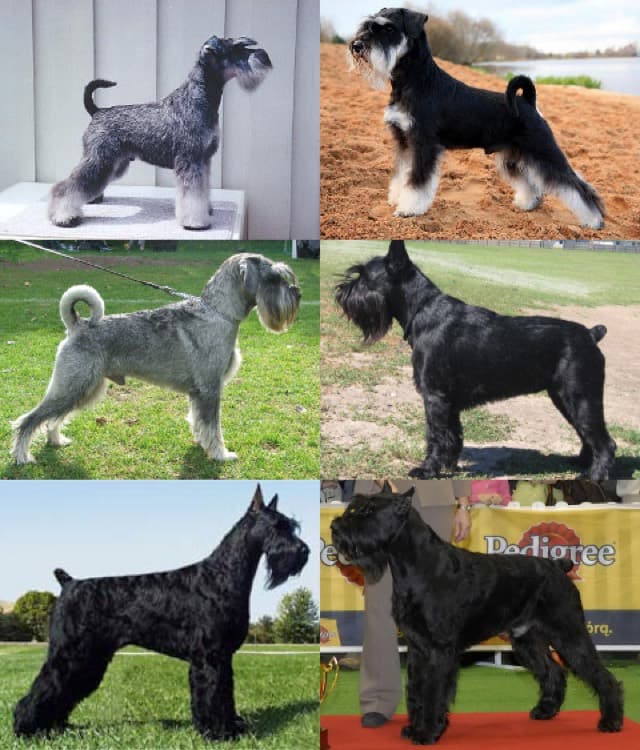
Schnauzer
Germany, Pinscher and Schnauzer type
- Size
- Medium
- Height
- 45–50 cm
- Weight
- 14–20 kg
- Life expectancy
- 13–16 yrs
- Spirited
- Intelligent
- Loyal
- Alert
Heights and weights are typical adult ranges; individual dogs vary.
About the Schnauzer
The Schnauzer, known in English as the Standard Schnauzer, is the middle-sized member of a German family that also includes the Miniature and Giant. It began as a farm dog that guarded the yard and killed rats, and it has a squarish, strong build, a bearded muzzle, bushy eyebrows and a harsh coat in pepper and salt or black. It is tough, quick-witted and adaptable.
Temperament
Spirited, intelligent and loyal, usually with a protective, alert nature. Often good with family and wary of strangers. Needs consistent training and socialisation.
Exercise
About an hour of activity a day keeps it content: brisk walks, a game with a ball, and some training work. It has a farm dog's energy and a sharp mind, so it copes badly with long stretches of nothing to do.
Grooming
Wiry double coat needs brushing a couple of times a week and professional stripping or clipping every few months. Clean the beard after meals.
Care & wellbeing
Check ears and keep weight lean. Keep the coat and skin under the beard clean and dry.
Daily needs at a glance
For a typical 17 kg adult- Water
- 680 ml–1 L
- a day
- Energy
- ≈ 940 kcal
- a day, neutered adult
- Exercise
- 90–120 min
- a day
- Grooming
- Brushing most days
Starting points from the same formulas as our calculators. Your pet's age, weight, activity and food all change the numbers. Work it out for your pet
Living with a Schnauzer
Typical tendencies for the breed. Upbringing, training and the individual matter as much.
History
A German farm dog of medium size, known for its wiry coat and bearded face, used to guard farms and kill rats. It is considered the original of the three Schnauzer breeds and is alert and sturdy.
Health
The breed can be prone to
- Hip dysplasia
- Pancreatitis
- Eye conditions
- Bladder stones
Health tests to ask a breeder about
- Hip and elbow scores
- Eye tests
- Pancreas and diet advice
Not every Schnauzer is affected, and this isn't a diagnosis. Read about common conditions and when to see a vet.
Cost to keep
About average- Moderate food and insurance costs
- Regular professional grooming adds up
- A 13–16 year commitment
- Budget for breed-related health checks or insurance
A relative guide, not a price — costs vary a lot by country, insurer and lifestyle.
Is a Schnauzer right for you?
Could suit
- Active owners who enjoy long walks, running or hiking
- First-time owners prepared to train consistently
- Owners ready for a long commitment — often well into their teens
Think twice if
- You can't give well over an hour of exercise a day, every day
- You don't have time for frequent brushing or the cost of professional grooming
Not sure? Try the breed finder or read choosing the right dog breed.
Common questions
How big does a Schnauzer get?
Adult Schnauzers typically stand about 45–50 cm at the shoulder and weigh around 14–20 kg. Individuals vary, and males are often larger than females.
How long do Schnauzers live?
Typically 13–16 years. Keeping them lean, active and up to date with vet checks gives the best chance of a long, healthy life.
How much exercise does a Schnauzer need?
As a guide, around 90–120 minutes a day, split between walks, play and sniffing time. Puppies and older dogs need shorter, gentler sessions.
How much grooming does a Schnauzer need?
Brushing most days. Check ears, teeth and nails as part of the routine.
Are Schnauzers easy to train?
Usually quick to learn with reward-based training.
Do Schnauzers shed?
A little. Regular brushing keeps loose hair under control.
Are Schnauzers good with children?
They usually do well with children. Always supervise young children with any dog, and teach them to give the dog space.
Can a Schnauzer live in a flat?
It can work — as long as they get enough daily exercise and time outdoors.
What health problems do Schnauzers have?
The breed can be prone to hip dysplasia, pancreatitis, eye conditions. Not every Schnauzer is affected — ask a breeder about health testing, and your vet about what to watch for.
Written by Petopedia as general guidance, not veterinary advice. Ask your vet about health screening for this breed.
Breed details
- Country of origin
- Germany
- Type
- Pinscher and Schnauzer type
- Internationally recognised
- 1955