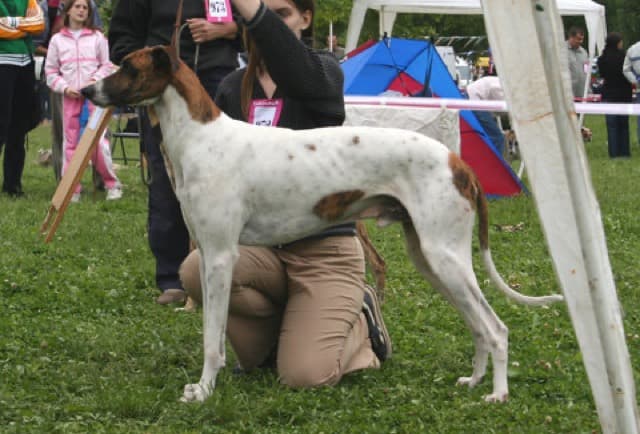
Hungarian Greyhound
Also known as Magyar Agar · Levrier Hongrois · Ungarischer Windhund · Lebrel Húngaro
Hungary, Short-haired Sighthounds
- Size
- Large
- Height
- 62–70 cm
- Weight
- 22–33 kg
- Life expectancy
- —
- Calm
- Gentle
- Athletic
- Sensitive
- Independent
Heights and weights are typical adult ranges; individual dogs vary.
About the Hungarian Greyhound
The Hungarian Greyhound, or Magyar Agar, is a sighthound from Hungary, developed to course hare and other game across open plains. It is a lean, muscular, athletic dog with a short, dense coat in many colours. It is noticeably sturdier than the English Greyhound. It is rare outside Hungary and mostly kept for coursing.
Temperament
Calm, gentle and affectionate with family, though reserved with strangers. Has a strong chase instinct. Intelligent but independent and sensitive, so training should be patient and positive.
Exercise
Needs daily walks plus regular chances to sprint in secure fields. Indoors it is usually quiet and enjoys rest.
Grooming
Short, smooth coat requires only occasional brushing. Check nails and teeth.
Care & wellbeing
Thin coat means it feels the cold, so use a coat in winter. Keep on a lead near traffic and small animals.
Daily needs at a glance
For a typical 27.5 kg adult- Water
- 1.1 L–1.7 L
- a day
- Energy
- ≈ 1,350 kcal
- a day, neutered adult
- Exercise
- 60–90 min
- a day
- Grooming
- An occasional brush is plenty
Starting points from the same formulas as our calculators. Your pet's age, weight, activity and food all change the numbers. Work it out for your pet
Living with a Hungarian Greyhound
Typical tendencies for the breed. Upbringing, training and the individual matter as much.
History
A Hungarian sighthound developed for coursing hare, with a lean, athletic build and a short coat. It is a fast, reserved, gentle dog that is calm indoors if exercised well.
Health
There's limited reliable published information on health issues in the Hungarian Greyhound. Breed clubs and your vet are the best sources.
Not every Hungarian Greyhound is affected, and this isn't a diagnosis. Read about common conditions and when to see a vet.
Cost to keep
Higher than average- Food, insurance and medicines cost more for a big dog
- Little or no professional grooming needed
- A commitment of many years
A relative guide, not a price — costs vary a lot by country, insurer and lifestyle.
Is a Hungarian Greyhound right for you?
Could suit
- Owners who can manage a good walk or two each day
- People who'd rather not spend much time grooming
Think twice if
- You need a dog you can easily lift or carry
Not sure? Try the breed finder or read choosing the right dog breed.
Common questions
How big does a Hungarian Greyhound get?
Adult Hungarian Greyhounds typically stand about 62–70 cm at the shoulder and weigh around 22–33 kg. Individuals vary, and males are often larger than females.
How much exercise does a Hungarian Greyhound need?
As a guide, around 60–90 minutes a day, split between walks, play and sniffing time. Puppies and older dogs need shorter, gentler sessions.
How much grooming does a Hungarian Greyhound need?
An occasional brush is plenty. Check ears, teeth and nails as part of the routine.
Are Hungarian Greyhounds easy to train?
Generally trainable with consistent, reward-based practice.
Do Hungarian Greyhounds shed?
A little. Regular brushing keeps loose hair under control.
Are Hungarian Greyhounds good with children?
They usually do well with children. Always supervise young children with any dog, and teach them to give the dog space.
Can a Hungarian Greyhound live in a flat?
It can work — as long as they get enough daily exercise and time outdoors.
Written by Petopedia as general guidance, not veterinary advice. Ask your vet about health screening for this breed.
Breed details
- Country of origin
- Hungary
- Type
- Short-haired Sighthounds
- Internationally recognised
- 1963